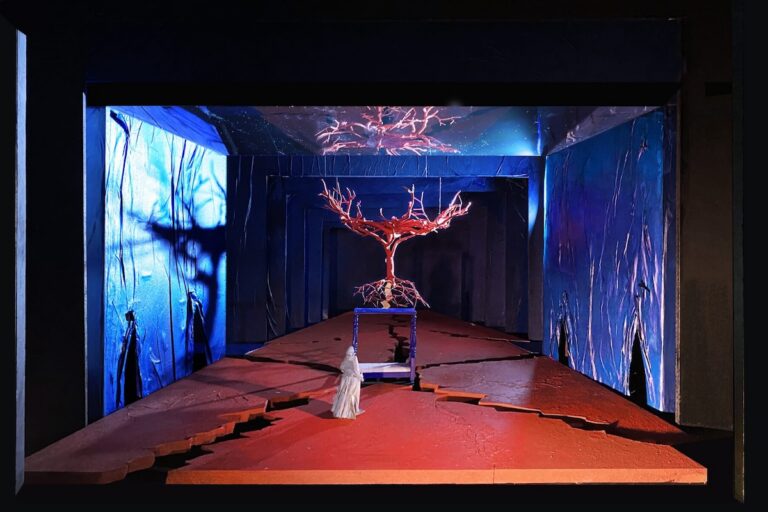


Bangarra Dance Theatre’s latest show Sheltering sets out to present the audience with a reminder of the social and cultural issues that connect people and place. The three works that make up the program span just over 10 years of Bangarra’s production history.
Keeping Grounded Bangarra

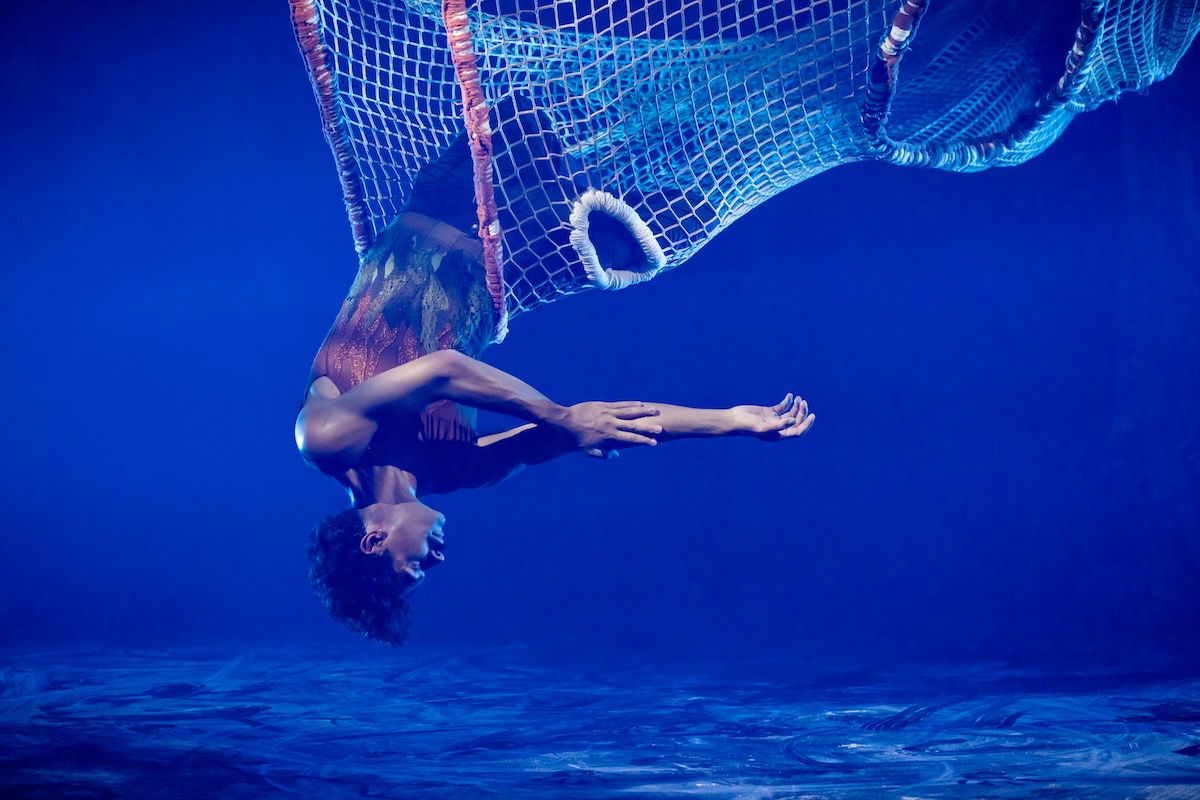
Glory Tuohy-Daniell’s Keeping Grounded in Bangarra Dance Theatre’s triple bill Sheltering. Photo © Daniel Boud

The opening work, Keeping Grounded, with choreography by Glory Tuohy-Daniell, was first shown as part of a Dance Clan program in 2023. The middle piece, a short film from Daniel Mateo called Brown Boys was also first shown in a Dance Clan program, this time in 2024, while the final work, Frances Rings’ Sheoak, was first presented in 2015.

Keeping Grounded stands out largely as a result of the set by Shana O’Brien. It consists of a large net, fishing-style, with various holes scattered across its surface. Hanging from the flies, the net moves and spreads itself out at times, and is manipulated in various ways by the cast of eight. There are moments when the dancers climb onto the net and walk across it, and they often move through the holes in an attempt to touch the floor area, representing their need and efforts to stay grounded. The visual effect is powerful and adds a clear understanding of the aim of this work.

The six-minute film, Brown Boys, is performed by Daniel Mateo, who also co-directs with Cass Mortimer Eipper. It focuses on the stereotypes and stigma that often direct the feelings of acceptance, or non-acceptance, of First Nations male youth as they transit through life. It is somewhat confronting, although Mateo says in program notes that he is “offering [the work] as a gift to Brown Boys in the hope of supporting them on their journey of becoming”. It is challenging nevertheless given some aspects of the film, in particular the strong, loud words spoken by Mateo and the close-up images that seem to crowd out towards the audience as the film unfolds.

Brown Boys Bangarra

Daniel Mateo’s film Brown Boys, part of Bangarra Dance Theatre’s triple bill Sheltering. Photo © Cass Mortimer Eipper

The final work, Rings’ Sheoak, represents the resilience of First Nations people as they engage with the world in the 21st century. Rings uses the symbolism of the endangered sheoak tree to examine the need to protect the culture of her people. Sheoak also has a strong visual effect with dancers holding and wielding large sticks representing tree branches, while its final moments depict the birth of a spirit, portraying hope for change and ongoing development.

But what continued to plague my thoughts throughout the show was the choreography. Bangarra has always had an exceptional collaborative aspect to its work and Sheltering is no exception given the powerful visual aspects of each of the works. But the choreography varies little from work to work. I began to wonder whether Bangarra had deliberately pursued the development of a particular Bangarra style similar to, say, the way some well-known contemporary choreographers created a personal style to which they constantly moved – Martha Graham and Merce Cunningham for example. What I saw from Bangarra on this occasion was highly grounded and filled with upturned feet and bent arms, often along with static or non-fluid moments. I have no objections to such a style but sometimes something more fluid or less angular and jerky would have worked well.

Sheoak Bangarra

Frances Rings’ Sheoak, one of the works in Bangarra Dance Theatre’s triple bill Sheltering. Photo © Jeff Tan

Sheltering honours David Page, whose contribution to the development of Bangarra was largely but not exclusively through his sound scores. The score for Sheoak was, in fact, composed by him. This Page brother died in 2016 and the presentation of Sheltering thus marks the 10th anniversary of his death. The printed program contains a double page spread outlining the extent of his contribution. Remarkable really.


Bangarra Dance Theatre presents Sheltering at Canberra Theatre Centre until 27 May; Sydney Opera House, 3–13 June; Arts Centre Melbourne, 18–27 June; and Queensland Performing Arts Centre, 9–18 July. More information here.

Contribute to Limelight and support independent arts journalism.