




Killing 35 workers, physically and psychologically injuring many more, and the subject of a Royal Commission, 1970’s mid-construction collapse of the West Gate Bridge is still Australia’s deadliest industrial accident.
Yet I don’t think it’s ever come up in conversation during all my decades of living in Melbourne. Dennis McIntosh’s new play about the lead-up to the disaster and its aftermath is a long-overdue reminder for the city.
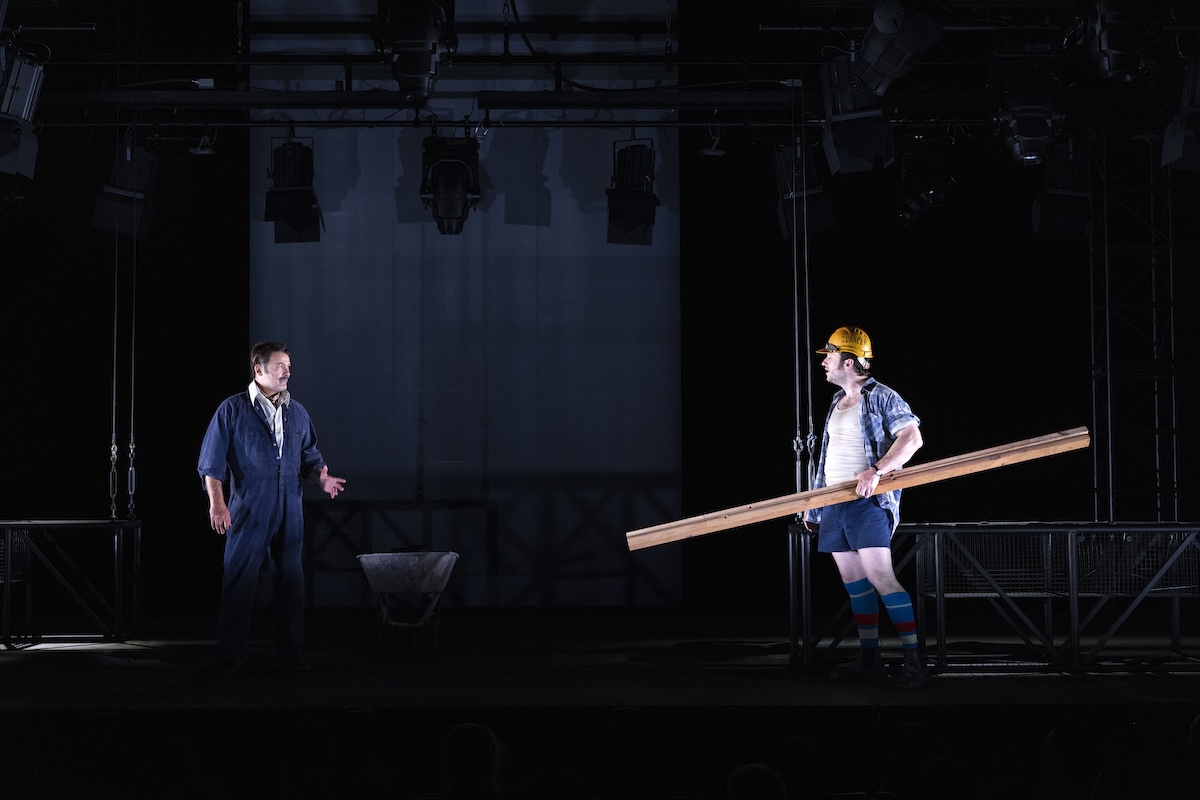
Steve Bastoni and Darcy Kent in West Gate. Photo © Pia Johnson
West Gate is in the assured hands of director Iain Sinclair, whose powerfully sparse 2019 production of Arthur Miller’s A View from the Bridge remains one of MTC’s best of the past decade.
He has gathered some of that success’s talent, from the key creatives to actors Steve Bastoni, Daniela Farinacci and Simon Maiden, for this distinctly Australian take on working-class struggle, trauma and friendship.
A longtime blue-collar worker turned writer, McIntosh knows his subject extremely well. He focuses on a handful of fictional bridge workers, whose concerns about safety put them at odds with the site’s white collars. Two engineers from different aspects of the project are also in dispute, about how to solve serious structural problems.
As work continues regardless, welder Victor takes an initially resistant young labourer called Scrapper under his wing. After disaster strikes, those left behind, including widow Frankie, struggle to find peace and justice.
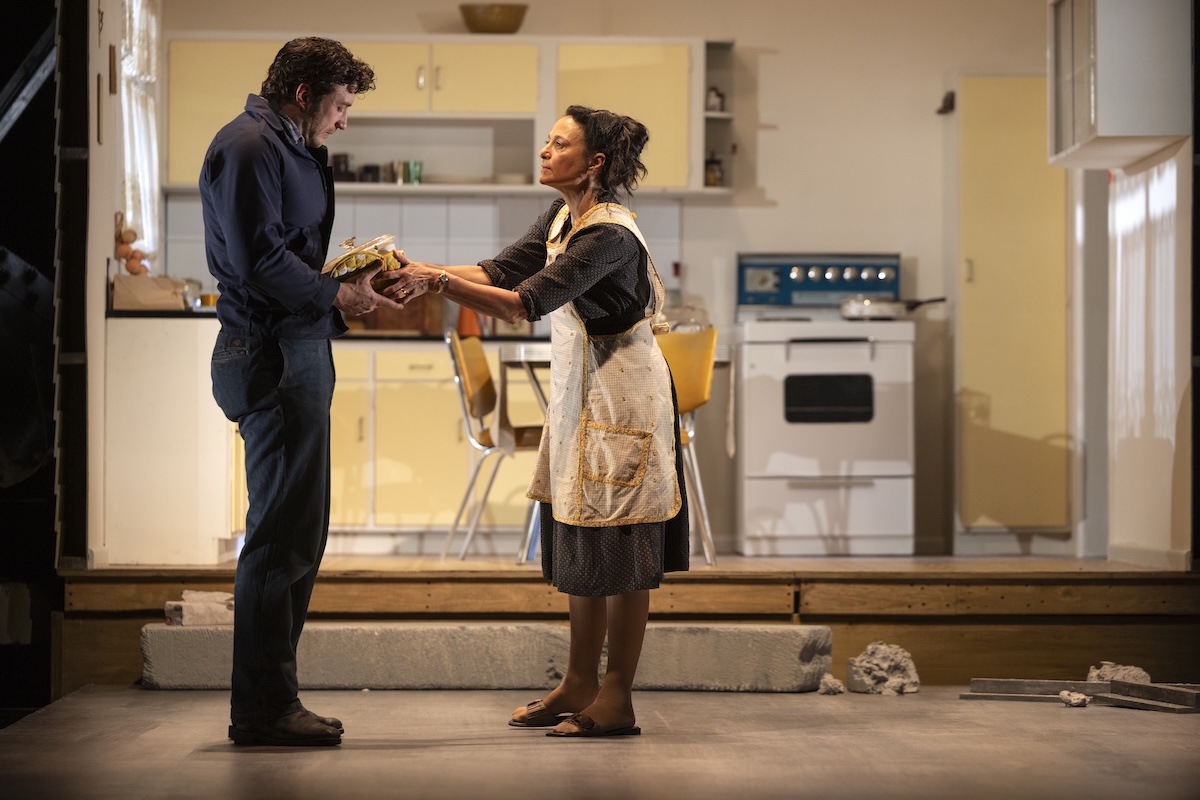
Darcy Kent and Daniela Farinacci in West Gate. Photo © Pia Johnson
McIntosh knows his subject so well he can’t help overstuffing the first half with engineering details that are a drag on the drama.
Conversely, and surprisingly given the West Gate Bridge tragedy led to monumental improvements in Australian workers’ rights and safety, he rushes through the post-collapse mistreatment of workers, their fight and eventual victory. A picket line of three has hardly formed before their demands are met.
The repeated meetings between a survivor and widow are awkwardly forced aspects of a script that nails workplace camaraderie and conflict, including with dry humour. This is what makes McIntosh’s play compelling more often than not.
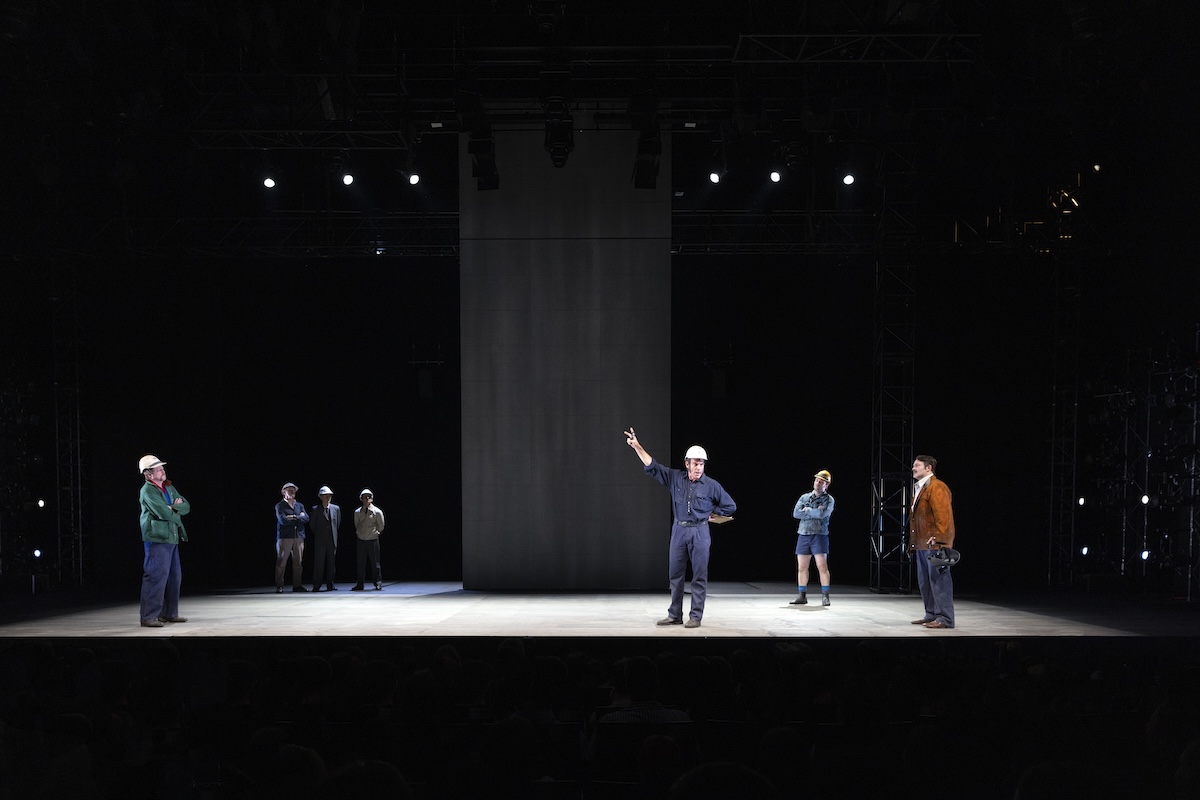
Melbourne Theatre Company’s West Gate. Photo © Pia Johnson
The cast of eight give considerable authenticity to their characters – in part thanks to various accents guided by Voice and Dialect Coach Anna McCrossin-Owen.
Bastoni’s down-to-earth Italian warmth makes him West Gate’s heart, while rising young actor Darcy Kent persuasively walks Scrapper’s character arc from mouthy to mature.
Rohan Nichol’s Pat is the epitome of old-school union rep, hard but fair, while there’s both gentleness and tenacity in Maiden’s worker Vinny. As Frankie, Farinacci delivers a piercing moment of grief before slowly revealing her mental strength and tenderness.
Peter Houghton is northern-English toughness-meets-stubbornness from the outset as senior imported engineer McAlister, while Ben Walter’s young local engineer Cooper is assertive with undertones of uncertainty. Paul English is suitably English as aloof project boss Stevenson.
Offering 1970s costumes without a flare in sight, Christina Smith has also designed a set that’s a triumph of simplicity. Surrounded by numerous shifting lighting rigs that aren’t merely functional, a large grey slab stands centre stage, representing the West Gate Bridge’s broad, flat concrete supports.
This, and lighting designer Niklas Pajanti’s shafts of harsh white on black plus the odd spark or welding flash, is all that’s required to conjure a construction site. For the play’s back half, Smith provides a dollhouse-like kitchen tellingly nestled amid the wreckage of catastrophe.
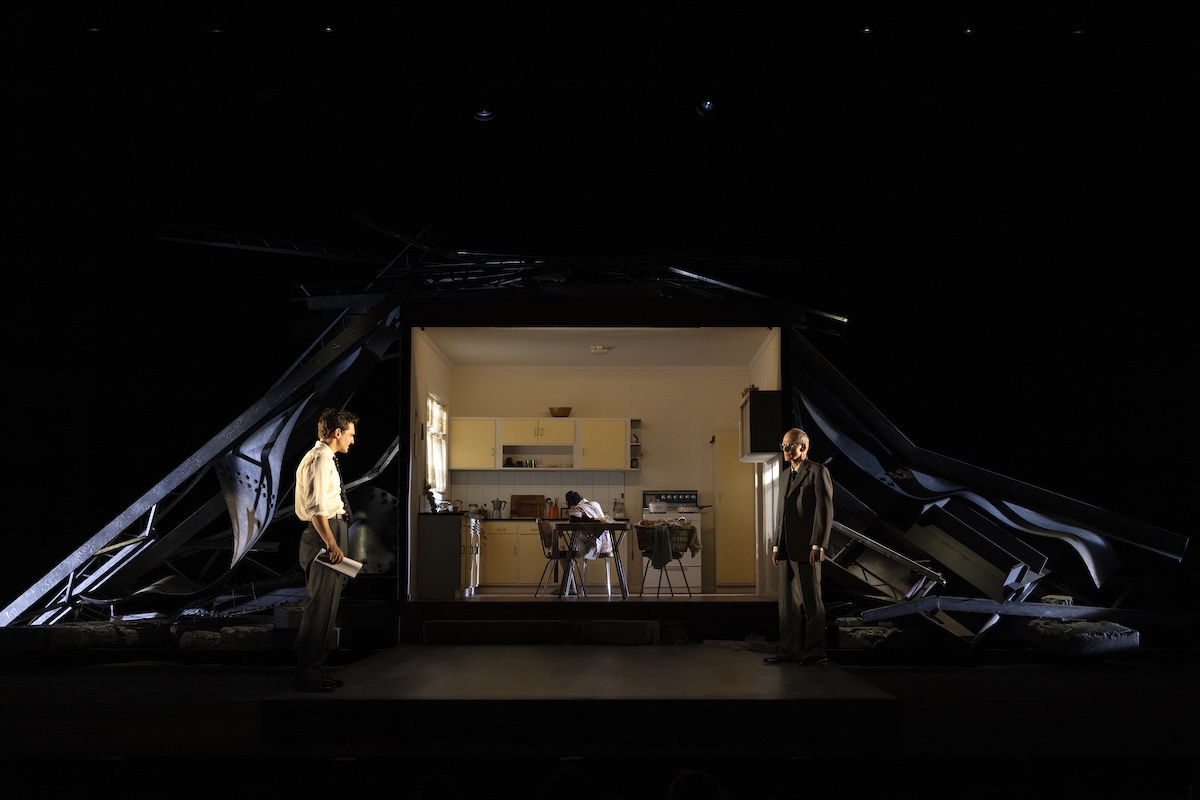
Ben Walter and Paul English in West Gate. Photo © Pia Johnson
The bridge’s collapse is represented in an extraordinary coup de théâtre: a sudden, significant change to the set, a long blackout and the loud (but not too loud) thuds and metallic screeching created by sound designer Kelly Ryall. Otherwise his contribution is pleasingly restrained, allowing actors and silences to speak.
While West Gate doesn’t land all its punches, in 105 minutes this play delivers a powerful reminder of a significant but largely forgotten moment in modern Australian history.
Having dusted off and humanised the old headlines and Royal Commission report, McIntosh leaves his audience little choice but to think of the fallen when they cross the West Gate Bridge.
West Gate play in The Sumner, Melbourne, until 18 April.







Comments
Log in to start the conversation.