
Review: From Russia With Love (The Metropolitan Orchestra)
Sydney's Met musos indulge in a little musical vodka.
May 7, 2017




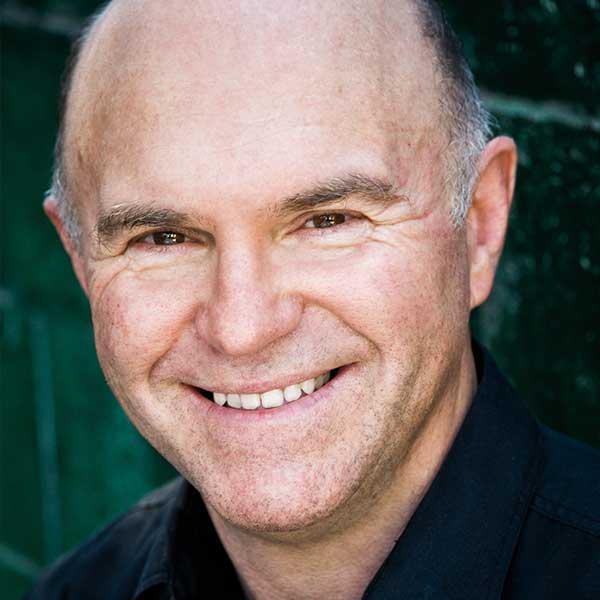
Phillip Scott is a long-time reviewer for Limelight and US music journal Fanfare. He has written four novels and the scores of several children’s shows for Monkey Baa Theatre Company. He is best known for his work as performer, writer and Musical Director for The Wharf Revue.
Sydney's Met musos indulge in a little musical vodka.
This new 2-disc set brings a selection of Glass’s music for solo piano.
Barenboim’s new piano is a concert grand made by the Belgian instrument maker Chris Maene to the pianist’s specifications. It differs from the usual Steinway D in several crucial respects, one being the use of parallel rather than crossover strings. So far this Maene piano is the only one of its kind, and Barenboim has “fallen in love with it”. I hear less tonal homogeneity across the registers, less “blend” as the pianist puts it. The bass produces great warmth, shown off in Liszt’s arrangement of the March from Wagner’s Parsifal. The tone of the upper registers resembles a Classical period fortepiano (“hollow” is too strong a word), which makes it eminently suitable for Scarlatti. I’ve not heard Barenboim in Scarlatti before; he approaches these three sonatas in an unruffled but characterful way. Like the Fazioli piano, which it also resembles in the treble, the Maene seems incapable of producing a smooth, singing legato – rather a drawback in Chopin’s Ballade No 1 and Liszt’s Funérailles – and we are used to more upper-level brightness in Beethoven’s 32 Variations and Liszt’s Mephisto Waltz. The latter is neither diabolic nor exciting, although the tone colours are attractive. Big… Continue reading Get…
An exhilarating concert, led by a vigorous violinist.
English masterpieces by Elgar and Vaughan Williams in superbly played programme.
Three's a charm for Gidon: DG fields a dream team to bring this elegiac music to life.
Made famous by The Sting, the master of ragtime and the syncopated sound died 100 years ago today.
A fine souvenir for those who attended, and an enjoyable recital for all music lovers.
Brazilian pianist Fabio Martino studied and now lives in Germany. His second solo recital disc concentrates on the big guns of the Romantic repertoire: Beethoven’s Piano Sonata No 23 (Appassionata); Liszt’s three Liebesträume, and Schumann’s Fantasy in C, Op. 17. Martino’s Appassionata is clearly conceived as a whole. He saves the surging drama for the final movement, notably the closing Presto, and deliberately understates the work’s opening movement, which proceeds prettily with no overt suggestions of significance. The work unfolds naturally: an approach I like in Beethoven. The Liszt pieces are sympathetically done, with poise and a feeling for rubato that gives them an improvisational feel. Martino seems especially in touch with the sound world of Schumann. In the rhapsodic Fantasie of 1835 he sweeps through the Sturm und Drang with passion, and is suitably restrained in the final movement. Here’s a young artist whose superlative technique is placed completely at the service of the composer. Who is Zequinha de Abreu? He wrote the song Tico Tico, made famous by an older Brazilian bombshell, Carmen Miranda. Marc-André Hamelin’s challenging arrangement provides the quirky (and, to be honest, not entirely appropriate) encore to this recital. Martino tosses it off… Continue reading…
Richard Strauss’s Elektra premiered in 1909, representing the cutting edge of modernist expressionism. Two years later, Der Rosenkavalier proved an even bigger triumph. Also to a libretto by Hugo von Hofmannsthal, this opera was crammed with tuneful waltzes in imitation of the ‘other Strauss’. Musically it seemed like a backward step, but Strauss had never aimed to be progressive. A true man of the theatre, he simply treated Hofmannsthal’s subject matter as the drama demanded. Hearing both works today, it is clear they have much in common: soaring soprano lines, restless chromatic harmonies and extremely lush orchestration. Strauss prepared two “Waltz Sequences” from Der Rosenkavalier for concert use. A longer suite was arranged by the conductor Artur Rodzinski. It was reworked later by Josef Krips, who restored the concluding music of the opera in place of Rodzinski’s inflated ending. (The Rodzinski version is performed here, but I prefer the Krips.) The suite from Elektra is new: “conceptualised” by Manfred Honeck and realised by Tomáš Ille. In both cases I miss the vocal component, especially in the Presentation of the Rose and the great final trio of Rosenkavalier. In the melodramatic Elektra, all of Strauss’s orchestral wizardry… Continue reading Get…
Virtuosity and poetry from the young Russian in a truly memorable recital.
While not demanding technically, Chopin’s Nocturnes contain pianistic pitfalls. Some artists over-prettify them – easy to do when the melodic line is highly decorated – and they can seem fragile and precious. Australian-based pianist Nancy Tsou avoids these traps by taking most at a reasonably fast pace. The popular Op. 9 No 2 in E Flat provides a good example: it is lyrical and flowing, not (as it can be) interminable. In terms of dynamic shading and rubato, Tsou’s playing reveals a genuine personal connection to the composer’s spirit. The quasi-improvisational feeling and quiet inwardness are beautifully captured. Yet Chopin’s nocturnal world was not all contemplation and nightingales. In later pieces he brought much personal angst to the form. I feel Tsou understates the drama of the C Minor Nocturne, Op. 48 No 1 and elsewhere, possibly so as not to overinflate the music. Her dynamic range never ventures above mf, a marked contrast from Maurizio Pollini (DG, 2005). Some find Pollini too determinedly unsentimental, but I respond to the backbone he finds. Tsou’s incomplete but representative selection gives us just 13 of the Nocturnes. Her instrument is… Continue reading Get unlimited digital access from $4 per month Subscribe Already…
Perlman and Argerich have only played together once before, but there is no denying their synchronicity.