


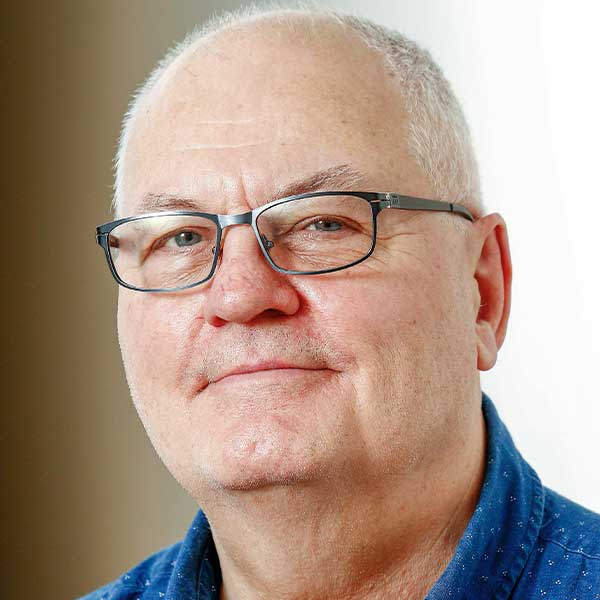
The ABC’s decision to record the complete Beethoven piano sonatas with Australia’s foremost specialist Gerard Willems was launched in the late 1990s and hailed as a first for the country. The three-year project was given an added frisson by Willems’s decision to use pianos built by Aussie Wayne Stuart rather than the ubiquitous Steinway. Wayne Stuart’s skills as a piano maker were first tested when as a young man he played dance music published by J. Albert and Son at village halls around the country. The upright pianos were in varying states of disrepair and he often had to fix and tune them before the gig. Years later when his piano company in Melbourne wasn’t going anywhere Robert Albert, head of the publishing company, asked Stuart if they could come in on a joint venture. “I was hoping for ages that you would ask me that,” Stuart replied. A couple of ARIAs later and with burgeoning sales, the next logical step – the five piano concertos – was announced with Willems being joined by Antony Walker conducting Sinfonia Australis, drawn from the cream of our orchestras. In 2010 Willems was back in the Ultimo studio tackling the mighty Diabelli Variations….
November 14, 2013
Ashkenazy relives his former Mahlerian glories while Sydney is treated to a class act on the fiddle. Continue reading Get unlimited digital access from $4 per month Subscribe Already a subscriber? Log in
November 13, 2013
Israeli conductor Asher Fisch is no stranger to our shores, being particularly associated with the West Australia and Adelaide symphony orchestras. A generous helping of his landmark 2004 recording of Richard Wagner’s Ring in Adelaide was recently re-released by Melba Recordings, and Daniel Barenboim’s former conducting protégé features in a new release from that prestige label, albeit as a pianist, performing some of Franz Liszt’s paraphrases from five of Wagner’s operas. As a bonus on this excellent and fascinating disc, Fisch performs three rare, short piano pieces Wagner wrote as thankyous to friends and patrons. Liszt started championing his future son-in-law in Weimar in the 1840s where he conducted Tannhäuser and Lohengrin. He wrote 14 paraphrases of Wagner excerpts, with varying degrees of fidelity, over the years before the pair famously fell out over Wagner’s affair and subsequent marriage to Liszt’s already-married daughter Cosima. One can only guess what Wagner must have thought of the liberties “my holy Franz” took with his music in these concert pieces – though the seven featured here are relatively reverential compared with what Liszt did to Verdi on occasions! However, we do know that the younger composer was grateful for the support. When Liszt…
October 10, 2013
Mehta puts the Australian musical diaspora through its paces with blistering results.
October 3, 2013
Dynamic New York outfit Brooklyn Rider have quite a knack of marrying interesting takes on the mainstream canon with new commissions and their own original material.
October 3, 2013
A glorious slideshow of works rolls out with a superb sense of freshness under Lisiecki’s fingers.
August 29, 2013
It’s easy to see why Berlioz’s overtures are among the most consistently popular symphonic pieces with audiences young and old. With vividly orchestrated melodies that linger in the memory, dramatic shifts of mood and high-octane rhythms, they are irresistible. This collection, featuring the Bergen Philharmonic conducted by Englishman Sir Andrew Davis, is like listening to a roll call of old favourites. It starts with a bang – the whirlwind intro to Le Corsaire – and finishes with the great rolling finale to Benvenuto Cellini. On the way it takes in two stalwarts in Les Francs-Juges and Le Carnaval Romaine, the Shakespearean sweep of Le Roi Lear, the Scottish political romance of Waverly and the comic interplay of Beatrice and Benedict. Davis controls all of this with a master’s touch and the orchestra responds in kind. The SACD recording compares favourably with older standbys like Colin Davis’s Staatskapelle Dresden performances and Adrian Boult’s 1950s versions with the LPO. Continue reading Get unlimited digital access from $4 per month Subscribe Already a subscriber? Log in
August 29, 2013
Former child prodigy Jennifer Pike, who stunned the music world by winning the BBC Musician of the Year competition at the age of 12 performing Mendelssohn’s Violin Concerto, has matured into one of the major talents of her generation. At just 23, and after studies at Oxford University, the English virtuoso impresses again with the latest in her growing discography. Accompanied by Scottish pianist Tom Poster, Pike’s 1708 Goffriller instrument sings sweetly on this beautiful and intimate program. From the hauntingly lovely opening bars of the Brahms Sonata the listener knows they are in for special treat. Pike’s phrasing throughout is full and mature – never hurried, never over the top – but with beautiful lines and pitch-perfect intonation. She and Poster enjoy a warm symbiosis which is entirely apt for the works of three composers who were locked together by fate. The interplay between the two in the Allegretto of Robert’s Sonata is a feature. Pike lingers just long enough on the sustained notes that lead into the playful passages. The disc is neatly rounded off by Three Romances by Clara. Much has been made of her abilities as a pianist and teacher – admired by Chopin, Liszt and…
August 22, 2013
The legendary Brodsky Quartet – truly one of the great string quartets of our time – is currently headed to Sydney for a mid-winter feast of Shostakovich in the Sydney Opera House Utzon Room in July (performing the marathon feat of all 15 of the Russian master’s thrillingly enigmatic quartets). By way of complete contrast this
latest release from the Brits shows the group resolutely packing its buckets and spades and heading to the Mediterranean – with
a side trip to Argentina – as if intent upon their summer hols. The trip gets under way with
Hugo Wolff’s Italian Serenade, which with its racing rhythms and strong melodies is like a train trip through the Tuscan countryside. Puccini’s moving Crisantemi, on the
other hand, is an elegiac piece, written in a single sweep over the course of one night, having heard of the death of King Umberto I’s brother, the Duke of Aosta. The opera composer was so pleased with his rare venture into the mysterious realm of chamber music that he recycled it in the tragic fourth act of Manon Lescaut. Another great Italian opera composer, Giuseppe Verdi no less, also decided to have a crack at string quartet writing, believing that the…
August 8, 2013
Those lucky enough to see and hear the Royal Concertgebouw in Sydney at the end of this year should pay particular attention when the oboe sounds the A for the big tune-up. The man producing that note will be Alexei Ogrintchouk. It might be his only solo moment for the evening, but make no mistake: this is no ordinary oboist. The 27-year-old Russian virtuoso has been steadily building an outstanding reputation as one of the leading exponents of the instrument over the past eight years with a notable series of concerts and recordings, the latest of which is this exuberant triptych of works by Mozart at his most irresistible. The centerpiece, of course, is the concerto Mozart dedicated to his friend Friedrich Ramm, oboist with the leading orchestra of his day in Mannheim, but equally delightful is the charming and engaging quartet the composer wrote for Ramm later on. Ogrintchouk is joined by the Lithuanian Chamber Orchestra in this recording on the prestige Swedish label BIS. It’s a work where Mozart is bursting with ideas – especially in the final movement where you can almost sense the composer’s excitement about his new creation. Ogrintchouk’s technique and phrasing is matchless throughout…
August 1, 2013
How to breathe new life into works as familiar and well covered as Bach’s violin concertos? The answer, seemingly, is to change the usual batting order and to reinvent a fourth concerto that gives depth to your line-up, something which is sorely lacking in our Baggy Greens at the moment. Most recordings start off with the two famous solo concertos – the E Major BWV1042 and the A Minor BWV1041 – and end with the double concerto. They may throw in the less familiar G-Minor transcription from the BWV1056 harpsichord concerto to give full value for money. This lovely recording by Freiburger Barockorchester starts with the double, perhaps to showcase its two equally talented concertmasters Petra Müllejans and Gottfried von der Goltz, but then puts the cream on the cake with its reconstructed version of the concerto for three harpsichords BWV1064. Anna Katharina Schreiber is the third soloist in a work that requires a high degree of virtuosity from all three players, especially in the outer movements. It’s generally believed that the work was originally composed for violins, and it certainly suits the instrument with some exciting overlapping runs in the outer movements. The orchestra all play on period instruments…
June 26, 2013
Aboriginal poet Samuel Wagan Watson first became aware of segregation when, as a young boy standing on the “steamy Bjelke- Petersen plateau”, he saw the black and white smoke rising from Brisbane below – black from the blue-collar battlers in their fibros and white from the white-collar class with their European cars and “chez nouveau’’ fireplaces. The metaphor permeates the 23 short poems Smoke Encrypted Whispers, which won him the Book of the Year award and Kenneth Slessor Prize for Poetry in 2005. The beautifully crafted miniatures evoke childhood memories, fear of the dark, unforgettable descriptions of places like Tigerland and Boundary Street – named to mark the Brisbane curfew zone for Aborigines in his grandparents’ time – and visits from uncles
who taught him traditional
ways. Watson also gives some fascinating insights into his writing process as well as musing on visits to Berlin and a Maori marae in Wellington. Brevity is the source of wit for Watson, and also for Queensland- based Southern Cross Soloists
led by clarinetist Paul Dean,
who commissioned 23 Brisbane composers to write two-minute pieces to respond to the poems. The result is stunningly good. At the heart of this handsomely produced 80-minute album are five…
June 20, 2013