
Review: Recording of the Month: Reinventions
An Australian vintage puts Bach and Co.’s new wine into old bottles.
June 18, 2015




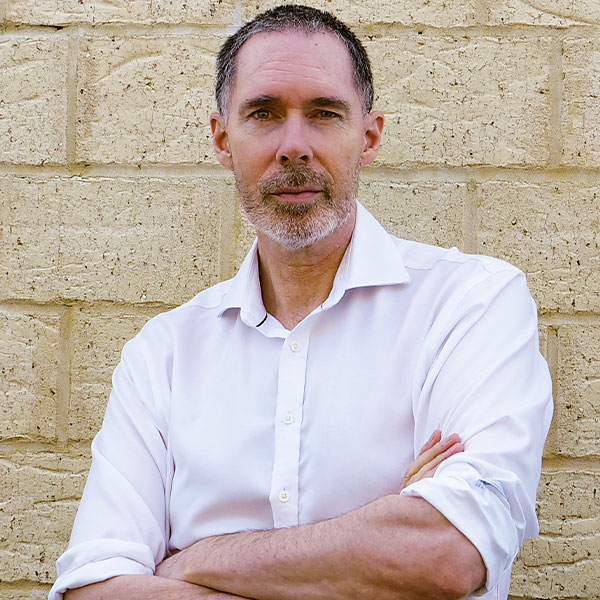
Will Yeoman is a former senior arts writer and current travel journalist for The West Australian newspaper. A regular contributor to Limelight and Gramophone, he is also Artistic Director of the York Festival and a keen classical guitarist.
An Australian vintage puts Bach and Co.’s new wine into old bottles.
“Stravinsky belongs to that group of composers whom we admire first and foremost for their intellect… but it would be a mistake to believe that this intellectual admiration excludes emotion.” So writes pianist Jean-Efflam Bavouzet in the note to his terrific new recording featuring Stravinsky’s works for piano and orchestra and which appeals to the heart as much as the head. Bavouzet won awards last year for his recording of the Prokofiev Piano Concertos. Here, joined by a very much on-form São Paulo Symphony Orchestra under the suave, alert direction of Yan Pascal Tortelier, he again demonstrates his affinity for genuine orchestral collaboration while submitting to that lapidary yet rhythmically vital realisation of line and texture so important in Stravinsky’s music. The Concerto for Piano and Wind Instruments has never sounded more like a multi-coloured riot of tessellation across which drift occasional shadows. The following Capriccio is also pure delight, Bavouzet’s playing shot through with a sparkling lyricism that he even manages to inject into the 12-tone Movements. And if the piano in Pétrouchka is merely a member of the orchestra, Bavouzet nevertheless relishes his role in contributing to one of the tightest yet most theatrically lavish performances of this…
Innovation, intimacy and insight: this is what opera should be about.
Brönnimann elicits a serene poetry to match Hardenberger’s fluent, fluid lines and leaps. Continue reading Get unlimited digital access from $4 per month Subscribe Already a subscriber? Log in
Talented 23-year-old French harpsichordist Jean Rondeau’s debut recording follows his signing to Erato last year. That he has chosen to focus on arrangements of some of JS Bach’s best-known works for other solo instruments comes as no surprise. Rondeau is a keen chamber musician and jazz improviser, and one gets the impression he admires Bach’s legendary facility as arranger and extemporiser. There are six works here: the Lute Suite No 3 arranged by Rondeau; the Violin Sonata No 3 arranged by WF Bach; Brahms’ arrangement, for piano left-hand of the D Minor Chaconne; the A Minor Flute Partita arranged by Stéphane Delplace; the Italian Concerto; and the Adagio from the Violin Sonata in C, arranged by WF Bach. JS Bach wrote the lute suites on a harpsichord-like instrument designed to imitate the sound of the lute, so they’re perfectly at home here. Rondeau’s playing is full and spacious in the slower movements, clean and energetic in the faster ones; in both cases there is a judicious application of rubato, detaché, style brisé and other forms of ornamentation. The works for solo violin and solo flute gain more from the harpsichord’s sonority… Continue reading Get unlimited digital access from $4 per month…
If you’ve been hooked on Chailly’s lean, muscular Brahms cycle with the Gewandhaus Orchestra from earlier this year, you’ll find a very different but no less satisfying experience with Thielemann and the Stattskapelle Dresden. Thielemann’s Brahms, taken from live recordings made between 2012 and 2013, is equally revelatory. Chailly achieves maximum emotional impact through absolute clarity of line and texture: his is ‘classical’ Brahms, but with grunt. Thielemann’s Brahms is, by contrast, über romantische. That’s not to imply a lack of precision or idiosyncratic liberties being taken with the score, mind: Thielemann is a master technician, but with a heart emboldened by years of conducting opera. Aided by some glorious orchestral playing – the strings rich and full-bodied, the brass heroic in the tutti climaxes, the winds flexible and focused – he builds up impasto layers with searing brushstrokes on a broad canvas. This binds the terrific climax in the First Symphony’s Finale with the dark tragedy of the Fourth Symphony’s final passacaglia, and all that lies in between, with intimations of mortality that shine through even the beautiful simplicity of the Third Symphony’s third movement. My only regret is not having had… Continue reading Get unlimited digital access from $4 per month…
“Compared to four books of pieces by Couperin and volumes upon volumes by JS Bach and his family, this is indeed a slim output. But what a wealth of genius it reveals. What excitement and wit and drama.” Thus writes Mahan Esfahani of the Baroque opera composer Jean-Philippe Rameau’s complete Pièces de Clavecin, which comprise a mere five suites and two or three stand-alone pieces. “Wealth of genius.” “Excitement and wit and drama.” Surely such phrases could also apply to the 31-year-old Iranian-American harpsichordist’s own output. He’s only made three solo harpsichord recordings so far, the first of which, devoted to CPE Bach’s Württemberg Sonatas (also for Hyperion), created a sensation when it was released in early 2014 and went on to win a slew of awards. But, along with Esfahani’s numerous acclaimed solo recitals and appearances with many of the world’s finest period instrument ensembles, it’s been enough to establish him as, well, somewhat of a genius. Playing a sensitively restored two-manual Ruckers-Hemsch harpsichord in the Music Room at Hatchlands Park in Surrey, Esfahani here takes us on a journey through Rameau’s three collections – the Premier Livre… Continue reading Get unlimited digital access from $4 per month Subscribe…
Spectacular organ playing and dynamic choreography had audience members nearly dancing in the aisles. Continue reading Get unlimited digital access from $4 per month Subscribe Already a subscriber? Log in
La Belle Excentrique could just as easily refer to the mildly eccentric French soprano Patricia Petibon as to Satie’s fantasie sérieuse for orchestra, two movements of which, arranged for piano four hands, grace this very enjoyable, very French musical potpourri. But don’t be fooled: Petibon, whose intelligence is as impressive as the formidable coloratura technique which served her so well in the baroque repertoire which for a time was her core business, also serves up some exquisitely sung chansons and mélodies by masters such as Léo Ferré and Gabrielle Fauré. There is plenty of light here – but also plenty of shade. Such extremes are even found within the Satie pieces which make up the bulk of the instrumental music: witness pianists Susan Manoff – Petibon’s regular accompanist – and David Levi having a ball with Satie’s Cancan grand-mondain from La Belle Excentrique before Manoff surfaces again with a beautiful account of the same composer’s neo-baroque Désespoir agreeable. Some of the vocal works are enhanced by cello – Satie’s famous waltz Je te veux (with cellist Christian-Pierre La Marca), violin – Ferré’s gorgeous On s’aimera (Nemanja Radulovic is the violinist) and even, as is the case with Manuel Rosenthal’s dreamlike…
Vivaldi’s most famous work readily lends itself to being performed on flute or recorder, the instruments’ pastoral and avian associations making them a natural fit for these bucolic tone poems overflowing with evocations of birdsong, peasant dances and storms. Jane Rutter and Sinfonia Australis take a hybrid approach, combining modern flute with a small period band under the brilliant Erin Helyard conducting from the harpsichord. Many of the players are Brandenburg Orchestra regulars, including Matt Bruce, Kirsty McCahon and Tommie Andersson on theorbo. The argument thus becomes less about authenticity per se and more about marrying an appropriate period style to an anachronistic tonal palette. Fortunately, it works a treat. Adopting a flexible approach to pulse and tempo throughout – both qualities can be heard right from the outset in Spring – Rutter steers a middle course between highly articulated declamation and floating lyricism in the midst of Sinfonia Australis’ sharply drawn yet delicately rendered sylvan landscapes. Of the two works included which Vivaldi actually did write for flute, the ever-popular Concerto in D Minor RV428 “Il gardellino” and the Concerto in G Minor “La notte”, Rutter uses a 19th-century instrument with an ebony joint for the latter. The sound…
You only have to hear Dawn Upshaw or Barbara Bonney sing Aaron Copland’s exquisite Twelve Poems of Emily Dickinson to know what’s wrong here.
With this new recording featuring a selection of Vivaldi’s motets for alto voice, stellar French countertenor Philippe Jaroussky comes full circle a decade or so after his previous two recordings devoted to Vivaldi’s most virtuosic music. In doing so, he similarly demonstrates the operatic and concerto-like qualities of these ostensibly devotional works. This is music that delights in virtuosity, both subtle and exultant, as a legitimate form of praise. If motets such as Clarae stellae, first performed in 1715 at the Ospedale della Pietà whose name is forever linked to that of the Red Priest’s, and Vivaldi’s Stabat Mater of 1712 demonstrate a more demure style with occasional melismatic outbursts, it’s a different story with the later Longe mala, umbrae, terrores. In the first section alone, Jaroussky must negotiate unrelenting roulades, which he does with uncompromising élan; likewise the final Alleluia which most obviously recalls an opera aria or the final movement of some lost violin concerto. But just listen to the honeyed, tender melismas in Descende, o coeli vox and Jaroussky reveals a truer, deeper artistry. So with these works, which include an exquisite introduction to a lost Miserere, a gently throbbing Salve Regina and the Domine Deus from…
Two masterpieces of Brahms’ late style, the Clarinet Quintet and the Trio for Clarinet, Piano and Cello were written in 1891 for the principal clarinetist of the Meiningen Orchestra, Richard Mühlfeld. For this recording, Fröst has separated the two with his own transcriptions of six of Brahms’ songs, including the beautiful Wie Melodien zieht es mir, which the composer revisited in his A Major Violin Sonata. The quintet and trio are major works by any standard, and Mühlfeld’s playing must have been extraordinary to have forced the middle-aged Brahms out of retirement with such spectacular results. But if you’re looking for the heart of Fröst’s approach to Brahms you’ll find its most unequivocal expression in the song transcriptions. Try Immer leiser wird mein Schlummer, where Fröst evokes a somnolent melancholy through a floating, vibrato-caressed tone, against Roland Pöntinen’s sensitive accompaniment. So – listen to the song transcriptions first. They’ll set you up nicely as fine an account of the B Minor quintet as you’ll hear anywhere. Joined by musicians of the calibre of Janine Jansen and Maxim Rysanov, Fröst infuses Brahms’ autumnal lyricism with a gentle urgency while responding to his partners’ impassioned yet poised playing with a touching sense of…