
Review: Nature (Jane Sheldon, Nicole Panizza)
You only have to hear Dawn Upshaw or Barbara Bonney sing Aaron Copland’s exquisite Twelve Poems of Emily Dickinson to know what’s wrong here.
March 6, 2015




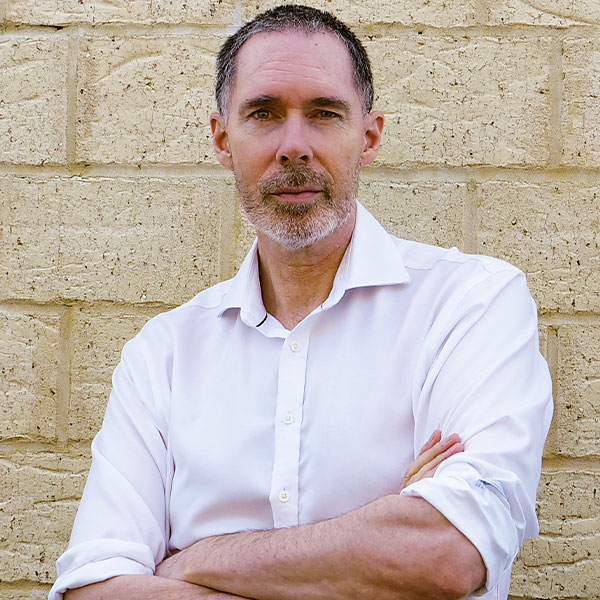
Will Yeoman is a former senior arts writer and current travel journalist for The West Australian newspaper. A regular contributor to Limelight and Gramophone, he is also Artistic Director of the York Festival and a keen classical guitarist.
You only have to hear Dawn Upshaw or Barbara Bonney sing Aaron Copland’s exquisite Twelve Poems of Emily Dickinson to know what’s wrong here.
With this new recording featuring a selection of Vivaldi’s motets for alto voice, stellar French countertenor Philippe Jaroussky comes full circle a decade or so after his previous two recordings devoted to Vivaldi’s most virtuosic music. In doing so, he similarly demonstrates the operatic and concerto-like qualities of these ostensibly devotional works. This is music that delights in virtuosity, both subtle and exultant, as a legitimate form of praise. If motets such as Clarae stellae, first performed in 1715 at the Ospedale della Pietà whose name is forever linked to that of the Red Priest’s, and Vivaldi’s Stabat Mater of 1712 demonstrate a more demure style with occasional melismatic outbursts, it’s a different story with the later Longe mala, umbrae, terrores. In the first section alone, Jaroussky must negotiate unrelenting roulades, which he does with uncompromising élan; likewise the final Alleluia which most obviously recalls an opera aria or the final movement of some lost violin concerto. But just listen to the honeyed, tender melismas in Descende, o coeli vox and Jaroussky reveals a truer, deeper artistry. So with these works, which include an exquisite introduction to a lost Miserere, a gently throbbing Salve Regina and the Domine Deus from…
Two masterpieces of Brahms’ late style, the Clarinet Quintet and the Trio for Clarinet, Piano and Cello were written in 1891 for the principal clarinetist of the Meiningen Orchestra, Richard Mühlfeld. For this recording, Fröst has separated the two with his own transcriptions of six of Brahms’ songs, including the beautiful Wie Melodien zieht es mir, which the composer revisited in his A Major Violin Sonata. The quintet and trio are major works by any standard, and Mühlfeld’s playing must have been extraordinary to have forced the middle-aged Brahms out of retirement with such spectacular results. But if you’re looking for the heart of Fröst’s approach to Brahms you’ll find its most unequivocal expression in the song transcriptions. Try Immer leiser wird mein Schlummer, where Fröst evokes a somnolent melancholy through a floating, vibrato-caressed tone, against Roland Pöntinen’s sensitive accompaniment. So – listen to the song transcriptions first. They’ll set you up nicely as fine an account of the B Minor quintet as you’ll hear anywhere. Joined by musicians of the calibre of Janine Jansen and Maxim Rysanov, Fröst infuses Brahms’ autumnal lyricism with a gentle urgency while responding to his partners’ impassioned yet poised playing with a touching sense of…
Limelight Editor’s Choice – Orchestra – September 2014 Deutsche Grammophon’s reboot of period performance imprint Archiv has definitely got off to a flying start, with stylish Spanish conductor Pablo Heras-Casado and acclaimed period instrument band Concerto Köln serving up fiery musical tapas from Baroque rock star Farinelli’s Spanish sojourn. In 1737 King Philip V invites Carlo Broschi aka Farinelli, the greatest castrato of all time, to Madrid to sing solely for him. He accepts. After Philip’s death, Ferdinand VI appoints Farinelli artistic director of the palace theatres in Madrid’s Buen Retiro and Aranjuez. In his new role as impresario, Farinelli collaborates closely with librettist Pietro Metastasio and uses his extensive Neapolitan contacts to secure the services of some of the finest composers and musicians of the day. The results are game-changing. “Farinelli secured the services of the finest composers and musicians of the day” In his 12 years in the job, Farinelli succeeded, as Michael Church writes in his program notes, in raising the profile of Spanish music from “a kind of provinciality to being a major presence in the European mainstream”. Heras-Casado, whose own Aranjuez-based group La Compania Teatro del Principe… Continue reading Get unlimited digital access from $4 per month…
The advantage a recording has over a live performance is the same as that of a printed score: freed from the shackles of time and place, one can feed as much or as little as, hunger dictates. This is often crucial with collections of works that weren’t intended to be listened to at one sitting. Yet there’s an assumption that people will listen through from beginning to end. So how to ensure the variety necessary to maintain interest? The wonderful Gywn Roberts takes her cue from historical uncertainty: for much of the Baroque period, the word “flute” could have meant either a recorder or the transverse flute proper. Thus, in this selection of works from Neapolitan composer Francesco Mancini’s 1724 collection “Solos for a flute with a Thorough Bass for the Harpsichord or for the Bass Violin” she uses a variety of instruments: two alto recorders, a voice flute (slightly lower in pitch than a treble recorder) and a transverse flute. Not only that: the continuo section continually, if you’ll excuse the pun, changes in colour and texture as Richard Stone and Adam Pearl, accompanied for the most part by Lisa Terry on cello, employ various combinations of harpsichord, organ,……
The Triumph of Time and Truth might not be a masterpiece; but it’s the work of a genius, and so cannot be ignored.
I first made the acquaintance of Handel’s harpsichord music through the medium of guitar duet. “Just listen to this,” a friend said, handing me a record of the G Major Chaconne as arranged and performed by legendary husband and wife duo Alexandre Lagoya and Ida Presti. It was a revelation. Since then I’ve heard Handel’s so-called Eight Great Suites (1720), to which Danny Driver has added for this recording the aforementioned Chaconne as well as two additional suites in C Minor and E Minor, played on harpsichord and piano by such luminaries as Sviatoslav Richter and Andrei Gavrilov, Laurence Cummings and Richard Egarr. Those of a less completist bent included Murray Perahia and Keith Jarrett. All, I felt, had something individual to say. But the question remained: did Handel’s music benefit more from the overtone-laden sonority of the plucked harpsichord or the pedaled richness and dynamically-shaded clarity of the hammered piano? Frankly it depends on who’s driving (pardon the pun), and with Danny Driver at the wheel you’d swear they had been composed for the piano. Handel’s suites show enormous variety, boasting variations on the French dance suite, the four-movement sonata da chiesa, improvisatory preludes, rigorous fugues and sets of…
Fisch leads a powerful synthesis; seemingly both familiar and new. Continue reading Get unlimited digital access from $4 per month Subscribe Already a subscriber? Log in
Italian period band Concerto Italiano continue their stylish survey of Vivaldi’s small yet perfectly formed string concertos with this second volume in Naïve’s monumental Vivaldi Edition. But has their normally iconoclastic director erred on the side of caution? In the booklet notes Alessandrini makes useful observations about these tiny concertos sans soloists, each of which lasts no more than four minutes. There are lots of them, but nobody knows what they were used for – though they claim kinship with Vivaldi’s operatic overtures. They take an idea and develop it through “predictable harmonic sequences”. They employ dance forms such as the gigue, fugal textures and “a certain carefree joy in the motor rhythms of long semiquaver passages”. As all are in four parts, their “chamber music idiom also lends itself to one instrument per part”. The music is wonderful, with Vivaldi showing his usual knack for getting the most out of a single idea, and Alessandrini’s sure direction moves it at a cracking pace with no loss of clarity. It’s only when you compare it with the far more colourful and exciting ones by Adrian Chandler and La Serenissima for Avie or Andrea Marcon and the Venice Baroque Orchestra for……
Canadian baritone Gerald Finley teams up with one of today’s finest accompanists.
This is volume four in Joseph Nolan’s widely acclaimed journey through the complete organ works of Charles-Marie Widor. The Perth organist’s high standards show no signs of slipping, with magnificent accounts of Symphonies Nos 7 and 8. Widor wrote these two symphonies between 1886 and 1887. These and the previous two (published 1879) comprise the composer’s Opus 42, which after its initial publication in 1887 was to go through a further five editions. Massive in their structure and conception, 7 and 8 are more consciously symphonic in a late-Romantic sense and less suite-like than some of the earlier symphonies. Nolan, formerly of Her Majesty’s Chapels Royal, St. James’ Palace and, Master of Music at St. George’s Cathedral Perth, was recently made Associate Conductor and Head of Chorus at WA Opera. It’s an appointment that will not only further his development, but allow him to exercise an aural imagination which thrives on maximising colour and texture in order to elucidate line and form – as he does here. Again playing the superb organ of La Madeleine in Paris, which has no less than 60 stops and 4426 pipes, Nolan bathes the dramatic opening Moderato of the A Minor Symphony No 7 in a stained…
Formed in 2006, Melbourne-based trio Ensemble Liaison comprises cellist Svetlana Bgosavljevic, clarinettist David Griffiths and pianist Timothy Young. The trio, which has previously recorded for Melba Records and Tall Poppies, is well-known for collaborating and partners to date have included Emma Matthews, Tony Gould and members of the Australian Ballet. But every performance is a collaboration and such is the case here, where not only do we have arrangements of arrangements like this version of Grainger’s Blithe Bells – there are also more straightforward versions of songs originally written for voice and piano, where either the clarinet or the cello takes the voice part. Britten’s arrangement of The Salley Gardens or Falla’s Suite Populaire Espagnole are two examples – though the three instruments come together for the final Jota of the latter work. Elsewhere, first one instrument then another takes the melody – as in The Last Rose of Summer – or the cello, say, takes a more accompanying role – as in Gershwin’s The Man I Love. But it’s the performances themselves which really stand out. One has only to hear Bgosavljevic’s impassioned reading of Ravel’s Kaddisch or Griffiths’ artful negotiations between the lyrical and the raucous in Kovács Sholem-alekhem,…
Adrian Chandler has always been a wiz when it comes to programming which satisfies both musically and historically. As his ensemble’s name suggests (La Serenissima is another name for the Republic of Venice), the Mersyside-born violinist takes Vivaldi’s music as a focal point, exploring his concertos and sonatas in relation to those of contemporaneous composers. The present release demonstrates how Vivaldi’s style changed under Neapolitan influence. Of the three violin concertos, Chandler suggests one was “probably intended for theatrical purposes”; the other two likewise show less reliance on Vivaldi’s trademark ritornello structure and a greater preoccupation with bel canto. In between the concertos are arias from three Vivaldi operas. Performances are beyond compare. If Sally Bruce-Payne’s vocal contributions display a grasp of the relationship between surface virtuosity and profound theatricality, the same could be said of Chandler’s. An intelligent, dramatic use of colour, dynamics, articulation, bowing and extempore embellishment has always been a feature of his style, and one finds it here in abundance, not only in his own playing but in that of La Serenissima. If Italian ensembles such as Il Giardino Armonico once led the way in reclaiming their baroque heritage, English bands like La Serenissima are mounting…