For much of her career, composer and pianist Sally Greenaway seemed almost incapable of standing still.

Writing for orchestras, jazz ensembles, chamber groups and film, she built a reputation as one of Australia’s most versatile musical voices, collecting awards and commissions while teaching, conducting and performing.

Then long COVID stopped everything. The illness – later diagnosed as long COVID dementia – robbed Greenaway of every ounce of her energy and affected every aspect of her musicianship. 

“I couldn’t even name the notes on the piano,” Greenaway recalls. “I couldn’t read music. I remember trying to finish a piano trio that I’d been commissioned to write. My husband helped me downstairs into my music room and helped me onto the piano stool. I’d sit there looking at the keys, crying, because I had no idea what the notes were.” 

The composer whose imagination had once flowed found herself creatively blocked, unable to compose, unable to play.

“At its worst, I needed full-time care. I couldn’t speak properly,” she tells Limelight. “I couldn’t even sit up in bed without assistance. It felt like whole filing cabinets in my brain had just disappeared.”
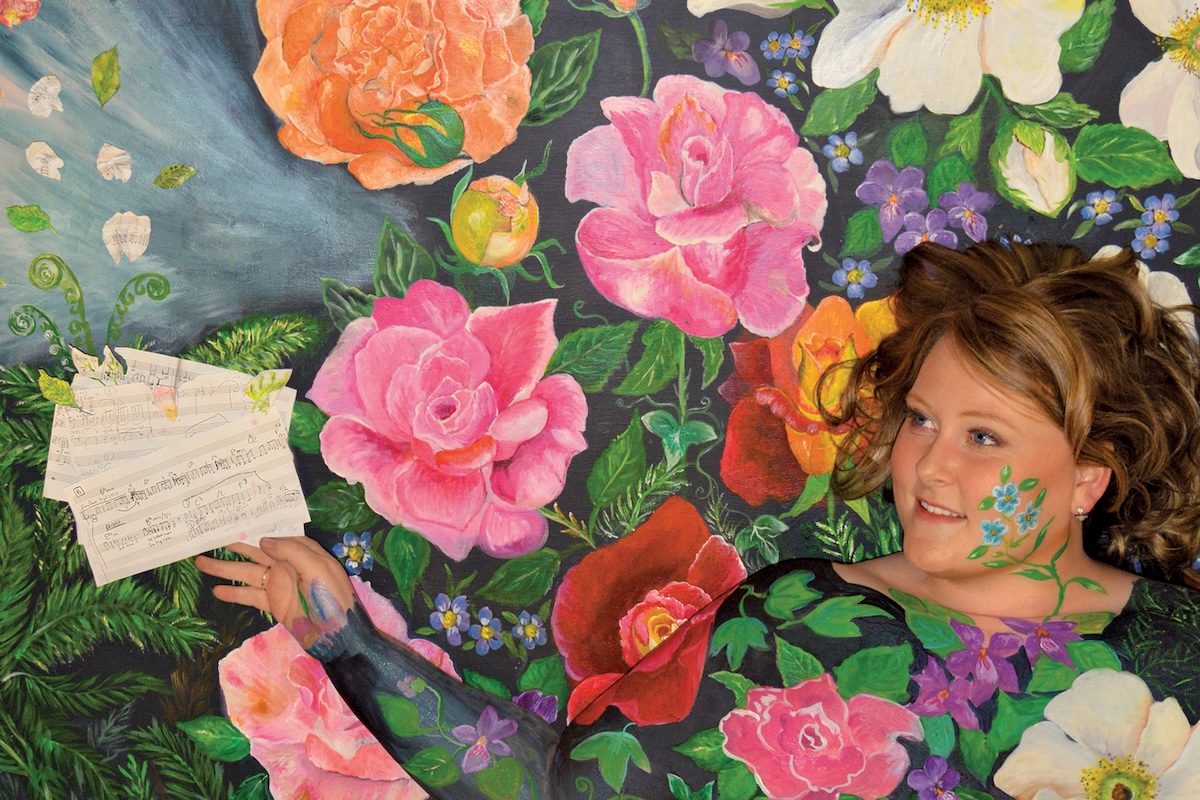
Sally Greenaway. Portrait © Ivor Hind

With that in mind, Greenaway’s new album, Into the Fields, recorded with violist Ed Le Brocq, seems much more than just another music project. It is a document of recovery and resilience.

Violist, author and broadcaster Le Brocq should take much of the credit for getting Greenaway back to the piano, the composers says. Having long admired Greenaway’s Poems, a series of reflective miniatures originally written for cello, he wanted to perform them in recital, arranged for viola and piano for Brisbane’s Hildegard Festival.

Greenaway recalls her hesitation.

“I told Ed, ‘Yes, I’ll play with you, but don’t expect me to be the musician I used to be. I just can’t do music the same way anymore’.”

Le Brocq’s response changed everything.

“He said, ‘I don’t care. I just want to play them with you.’ That completely took the pressure off.”

When they first rehearsed together, Greenaway immediately sensed something unusual.

“We started with Poem One and it just fitted like a glove. He understood the music exactly as I’d imagined it – all its colours, textures and emotional detail.”

That immediate connection with the music mattered a lot. 

“The Poems have been arranged for flute, harp, clarinet, oboe and lots of different instruments, which is a privilege. But sometimes … you feel they’re not fully understood. With Ed, from the very first note, it was, ‘Yes – that’s exactly how it’s meant to go’.”

Ed le Brocq. Photo supplied

Greenaway speaks warmly about Le Brocq’s musicianship, but also about the humanity he brings to performance.

“Ed’s experienced so much life. More than most, really. Somehow he makes everything sound straightforward but deeply detailed at the same time.”

The collaboration soon revealed another unexpected connection: Le Brocq has spent years managing focal dystonia, a neurological condition that disrupts finely controlled muscle movements. He has travelled internationally seeking treatments, experimenting with radically retraining his technique, even relearning aspects of viola playing in reverse to rebuild neural pathways.

“Focal dystonia a brain messaging issue,” Greenaway says. “He understood what it meant to have your relationship with music fundamentally changed.”

Those parallel experiences became the emotional foundation of Into the Fields.

Commissioned by Le Brocq’s wife Charlie, the album’s title work became Greenaway’s first substantial new composition since her illness. Writing it proved painfully slow, she says. “Every bar felt like I’d run 12 marathons.”

When recording sessions began, Greenaway still hadn’t completed some of the music.

“I had to ask Ed to take an hour’s break while I scribbled down a melody. I wrote chord symbols for myself and basically had to invent the ending during the session. We recorded it several times until I finally found one that felt right.”

For Greenaway, the experience reflected the reality of cognitive recovery. “You can’t hurry it,” she says. “With physical disabilities there are often adaptations you can make. With cognitive disability, it just takes as long as it takes.”

She still struggles to consciously read music, she adds, but her hands often come to the rescue. 

“I’ll look at a score and think, ‘I have absolutely no idea what these notes are.’ But once I start playing, something takes over.”

She compares it to improvisation.

“I have to let go of my conscious brain and trust whatever deeper part of me still knows how to make music.”

Sally Greenaway, Ed le Brocq and recording engineer Duncan Lowe. Photo supplied

That instinctive quality permeates Into the Fields. Inspired by changing landscapes and seasonal cycles, the music unfolds patiently, allowing melody and texture to emerge organically rather than driving towards dramatic climaxes.

The recording’s distinctive sonic world also reflects Greenaway’s philosophy. Instead of a conventional concert grand, she chose a felted piano, whose softened tone creates an intimate partnership with the viola.

“Ed’s viola is all warmth – red wine, chestnuts, autumn and winter,” she says. “Why would I put something bright beside it? I wanted the piano to hug the viola.”

The recording team went further still, dismantling parts of the instrument and placing microphones deep inside the piano mechanism.

“We had something like 10 microphones just on the piano. You hear the hammers, the action, all those little mechanical sounds.”

Most piano recordings try to eliminate those sounds; Greenaway wanted listeners to hear them.

“Those creaks and rattles remind you there’s a human being making this music.”

The decision feels especially timely in an era increasingly dominated by artificial intelligence and digitally perfected performances.

“When we started this project, I wasn’t thinking about AI particularly. But as it’s become more prevalent, people have started valuing the human imperfections again. That’s part of what makes something beautiful.”

Fundamentally, Into the Fields is two friends making music together, Greenaway concludes. “We’ve both been through things that changed our relationship with music, and we’ve tried to make something beautiful with all of our flaws.”

Sally Greenaway’s Across the Fields is released on 31 July and available to pre-order now.

Contribute to Limelight and support independent arts journalism.