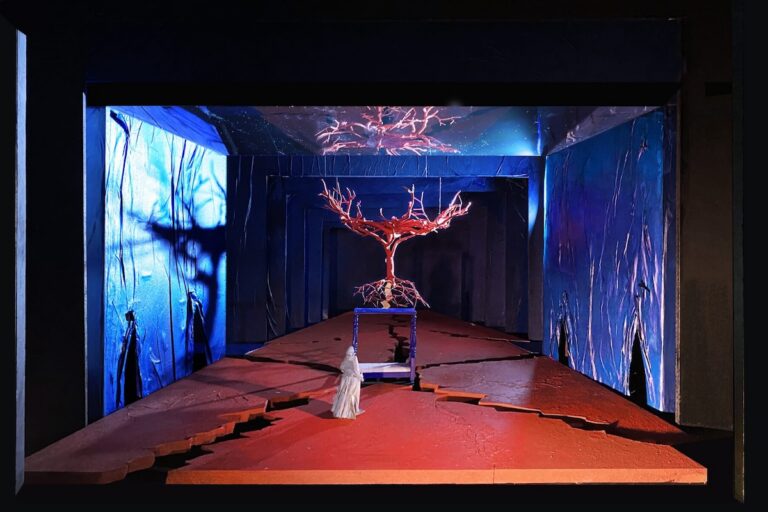
When broadcaster, composer and musician Ed le Brocq wrote his first children’s book, Sonam & the Silence, the story of a young Afghan girl who falls under the spell of music banned by Afghanistan’s ruling Taliban, he felt he was capturing an essence of something precious: the resilience of a musical culture that had survived decades of conflict.

A decade later, the story carries a different kind of weight.

The place that inspired the book, Afghanistan’s National Institute of Music school in Kabul, founded in 2010 by Afghan-Australian ethnomusicologist Dr Ahmad Naser Sarmast, and where le Brocq spent time teaching in 2015, was destroyed in 2021. Irreplaceable instruments were lost, and a generation of young musicians was forced into exile, taking their sounds and traditions with them.
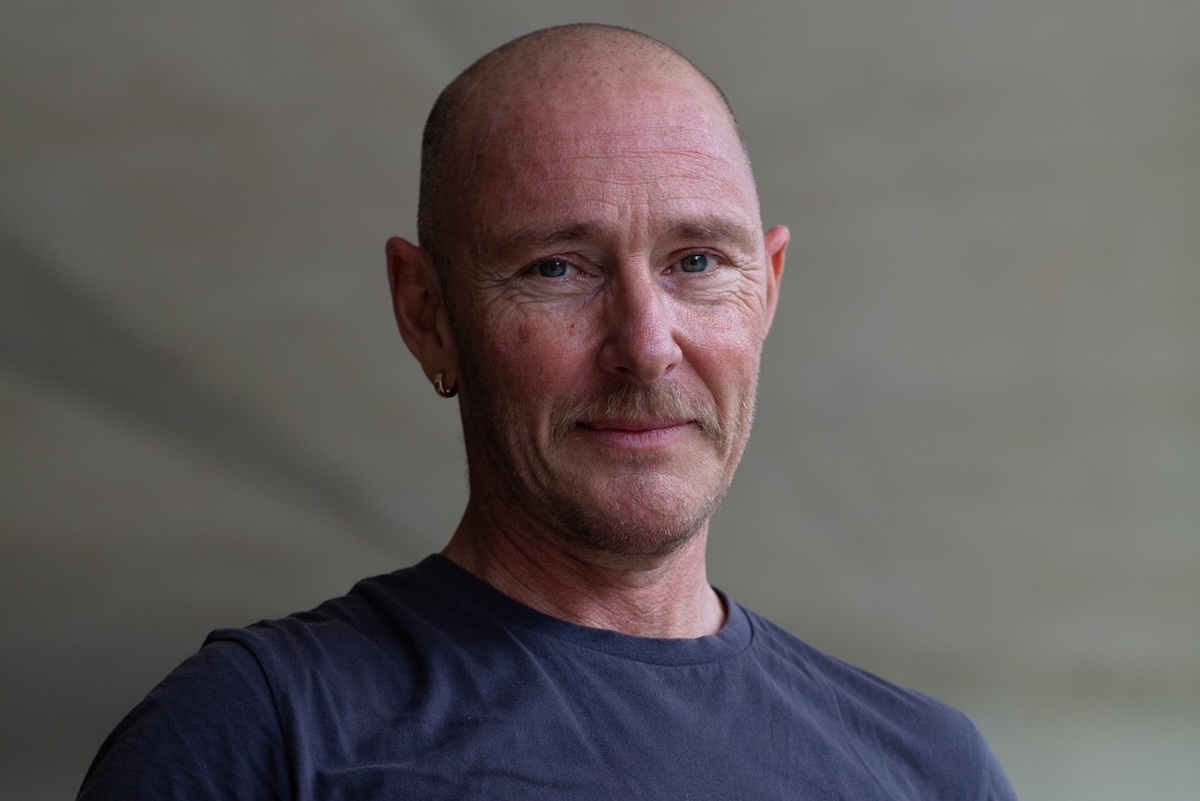
Ed le Brocq. Portrait © Trish Dean

“Right now, just thinking about it … I’m almost ready to cry,” le Brocq says. “It’s the saddest thing; everything that Dr Sarmast and the young musicians worked for was literally burned to the ground.”

“There were instruments hanging from the ceilings, shelves and shelves of traditional instruments and Western instruments,” he recalls. “People from around the world were donating things. All of that has gone … Music itself is not able to live in that country. It’s a tragedy.”

“Afghanistan’s is one of the great music traditions of the world,” he says. “We all lose out when music is silenced.”

Eight years after it was published, Sonam & the Silence has now become the inspiration for a newly commissioned chamber work by Australian composer Anne Cawrse, presented as part of Ensemble Q Australia’s 2026 national touring program. Featuring le Brocq as narrator, the work explores the transformative power of music and the human connections that survive when music itself is threatened.

That idea of preserving and protecting musical memory sits at the heart of the new work, le Brocq explains.

“Western music is notated and while that in itself doesn’t really capture everything about the music – what it should be or could be – you can reconstruct it. But Afghan music, because it’s an oral tradition and because of those incredible subtleties and the improvisation, you have to live it and hear it. You have to be with the musicians.”

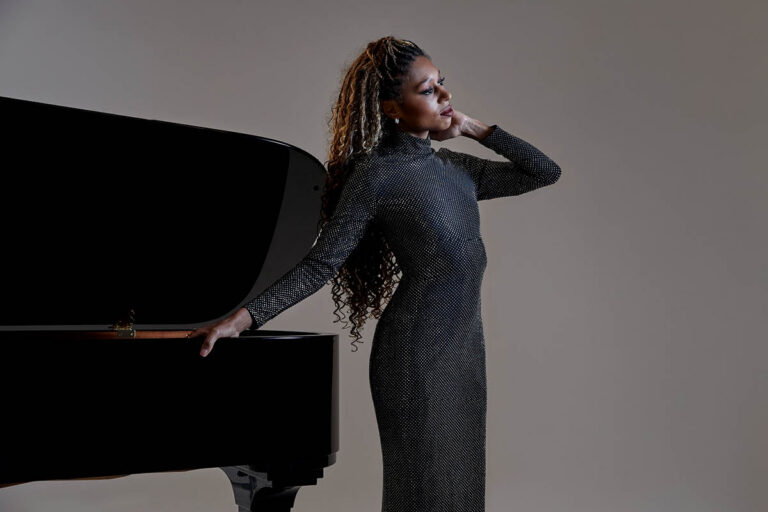
Anne Cawrse. Photo © Andrew Beveridge

It was not for Cawrse to try to recreate sounds of another culture. Instead, she responded to le Brocq’s story through her own musical language to create a work that captures the emotional landscape of the story.

Le Brocq gave her “complete freedom” to interpret the material and says he was struck by the sensitivity of her approach.

“I love that Anne has not gone down the route of trying to make it sound like Afghan traditional music,” he says. “There’s no sense of that at all.”

The first time le Brocq heard the piece was in a recording sent by Cawrse while he was on a long-distance bike ride.

“I’d just finished about 100 kilometres and I was completely exhausted,” he says. “I was lying on my bed in a motel, opened the email and listened to it – and I immediately burst into tears.”

The opening, he says, transported him back to Kabul.

“I was immediately taken into the heart of the place, the extraordinary energy that was there 10 years ago.”

One of the unusual aspects of the composition is the way Cawrse has incorporated le Brocq’s own voice and rhythms into the musical structure, le Brocq explains. Early in the process she asked him to record passages from the story so she could understand his cadence and phrasing.

“There’s a moment in the book when Sonam meets the old man [a musician who teaches the rubab—a traditional Afghan musical instrument made of mulberry wood] for the first time and Anne wanted to hear my cadence and the rhythm, and then she put them with the clarinet. So you have me meeting the old man, and I am literally meeting the old man, because our sounds come together.”

It creates a connection between spoken storytelling and instrumental colour – not simply an accompaniment to words, but a musical conversation.

The role of the clarinet is particularly significant, with clarinettist Paul Dean embodying the older musician within the story.

“Paul is just a bloody genius!” le Brocq laughs. “He hops around that instrument like he’s skipping through a playground. There’s no limit to what he can do on that thing.”

Ensemble Q’s Paul Dean and Ed le Broq. Photo © Trish Dean

The Ensemble Q program places Cawrse’s new work alongside another Australian collaboration: organist and composer Calvin Bowman’s Curly Pyjama Letters, which brings Michael Leunig’s whimsical imagination to life through music and narration.

Together, the two contemporary works sit alongside two cornerstones of the chamber repertoire: Beethoven’s String Trio in C minor, Op. 9 No. 3, and Mozart’s much-loved Clarinet Quintet, again featuring Dean.

While the two new works may appear worlds apart – one reflecting on cultural survival and loss, the other exploring humour, friendship and imagination – le Brocq sees a shared emotional thread.

“The heart of this whole program is a celebration of life,” he says.

With Sonam & the Silence, that celebration comes through music’s ability to endure even in the face of destruction. “And with Calvin Bowman’s piece there’s also this sense of people being true to themselves, and finding friendship through being honest with each other.”

Honesty, le Brocq believes, is the root connection between the two works.

“Honesty, staying true to yourself and in what you believe … that’s what courage is.”


Ensemble Q with Ed le Brocq is presented in the Utzon Room, Sydney Opera House on 22 July, and in the 
Primrose Potter Salon, Melbourne Recital Centre on 24 July.

Contribute to Limelight and support independent arts journalism.