Composer Joe Chindamo already ranks among Australia’s most accomplished musicians, but really, he’s just getting started.
“I only wrote my first orchestral piece 10 years ago, and I’m just loving it,” he tells Limelight. “It feels like every piece is a reinvention, a new lease on life, you know? I’ve never enjoyed music more. I have no fear there, I’m genuinely excited. I want to walk into that fire.”
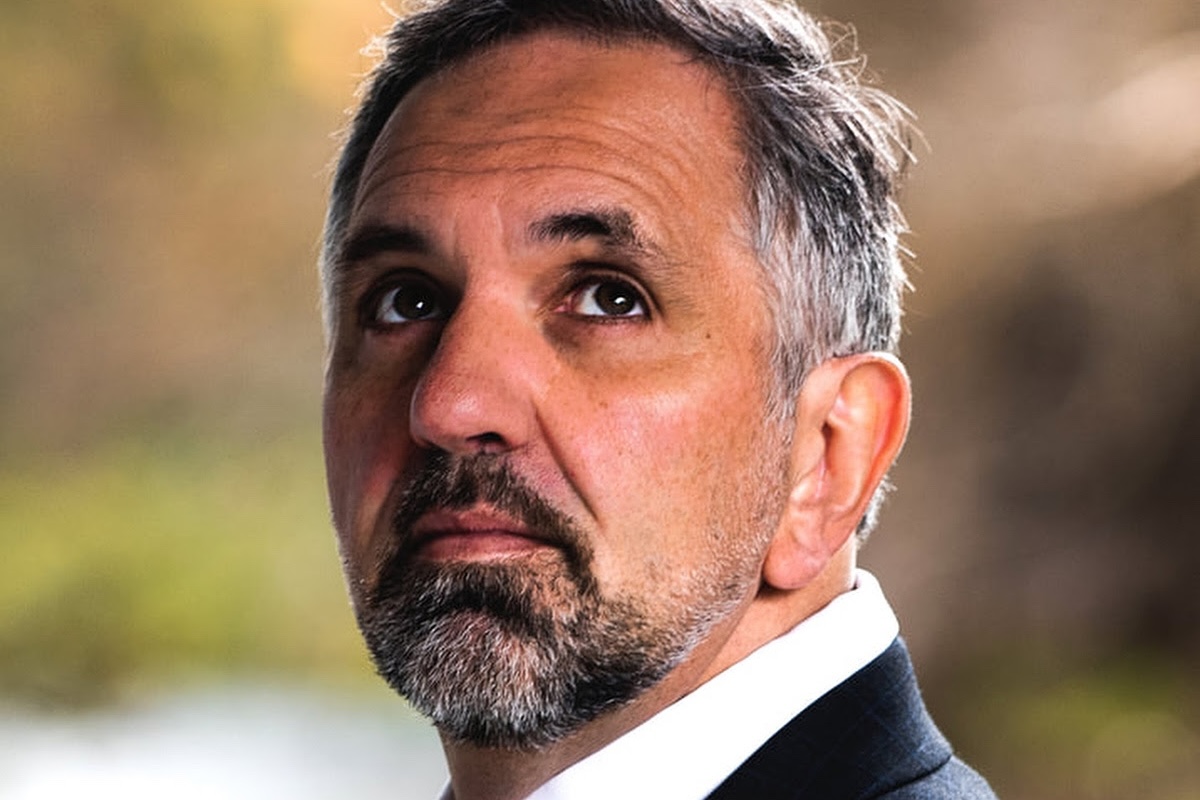
Joe Chindamo. Photo © Olivia Chindamo
He’s had a rich and varied musical career. Chindamo picked up the accordion at age six, and made the move to piano as a teenager, kicking off a prolific and decorated career as a jazz performer, but he’s found his home in classical composition.
The classical sphere isn’t new territority at all: he’s recorded his own versions of Puccini arias, Scarlatti sonatas and Mozart works, and performed his own reworkings of Bach’s Goldberg Variations with violinist Zoë Black on the Carnegie Hall stage, and earned nominations twice for Best Classical Album at the ARIA Awards (Chindamo is wary of the term ‘cross-genre’ – a meeting of comfort zones, he says, rather like “ combining sushi with lasagna; half the plate for this and half the plate for that. It’s not really anything except two things on the one plate.”)
“There’s no stress doing this – besides preparing all of the parts to make sure there are no mistakes. Even though I love performing and it’s been a huge part of my life, there’s something that feels more natural for me here.”
Chindamo’s currently the 2026 Composer-in-Residence with the Melbourne Symphony Orchestra. The March premiere of his requiem Are There Any Questions earned a five-star Limelight review which was named as the highlight of a program that also featured Stravinsky’s Rite of Spring.
Later in the year, he’ll also write flute concerto for Eliza Shephard, inspired by the glamour of 1920s New York and the acerbic wit of Dorothy Parker and Algonquin Round Table.
Another of Chindamo’s upcoming works is a brand new clarinet concerto for the Adelaide Symphony Orchestra and its Principal Clarinettist, Dean Newcomb. Inspired by Newcomb’s own love of drifting, the piece is called Concerto del Motore (as Chindamo gets older, he’s embracing more of his Italian heritage).
With concertos, Chindamo acts as a tailor, building something to fit his performer. He’ll pose the question, “What’s the concerto that you’d like to hear on your instrument, that hasn’t been written yet?” For Concerto Del Motore, it was an especially fruitful approach.
“Talking to Dean was one of the most rewarding experiences I’ve ever had in shaping a piece; it’s really about him. [Drifting’s] not this fun, trivial boyish pastime of a Sunday where all these guys are hooning around. He’s a highly sophisticated person, and it’s a sophisticated sport – he talks about love, he talks about drama, about narrative.”
Performing a concerto and drifting are not so disparate as they may seem. Both require a high level of physical skill; both gather an audience attracted to the thrill of it all, and both showcase a sense of personal artistic expression, explains clarinettist Dean Newcomb.
“Drifting stands out as a rare motorsport where raw driver skill truly matters more than expensive car modifications. I’ve found many moments when I draw on the skills of each passion to stay calm in the heat of the moment. In drifting, I try to breathe and focus on deliberately controlling my muscles. In music, I remind myself that I’m not driving a car sideways at 160km/h towards a wall and that I’m safe on stage.”
He’s not the one hurtling metal and rubber around a racetrack, but as someone who’s done their fair share of high-profile performances, Chindamo has a different view about the safety of a stage.

Dean Newcomb. Photo supplied
“I mean, it’s not dangerous in the grand scheme of things – well, you could have a heart attack if it gets that bad, but you get up and play in front of an orchestra, and it is dangerous. You might not die, not straight away, but it can kill you – or, it can kill your spirit if something doesn’t go well. If you’re not good enough, it certainly means that you don’t get employed again,” he laughs.
“It’s this flirtatious thing that we have with danger and this discomfort that we have with comfort, you know? The piece becomes a study in what attracts humans to this perverse need to put ourselves in harm’s way.”
The first two movements of the work are introspective. Newcomb describes the first as weeding through the questions and confusion around the sport the ‘what’ and ‘why’ of drifting, while the second is a “really beautiful, calm reflection of the contentment you feel when everything is prepared and there is finally some quiet in the noise.”

Dean Newcomb in action. Photo © William Chamberlain
“I did a little gig in a side room at the MCG one night, and I ended up walking out onto the grounds,” explains Chindamo.
“Do you know that feeling, seeing a stadium that holds a hundred thousand people and there’s no one there? The silence is deafening. I started thinking about what it must be like for these guys to turn up to the track in the early morning – cold, a little foggy, and the town’s still asleep. There’s that slight apprehension, thinking “gee, this is exciting, but also it could be my last day on earth if this doesn’t go right,” and it’s romantic, in a poetic sense.”
With carnivalesque energy and blaring horns, Newcomb says final movement captures the “intensity and energy” of the sport on competition day – all of the “adrenaline, noise and frantic movement [which shifts to] calmness, awareness, focus, and satisfaction.”
As a sport, Newcomb says that drifting is more about community than it is competition.
“It’s a sport that encourages driver expression. The camaraderie of driving with your friends and competitors far outweighs the result on the podium.”
Chindamo sees a similarity in his composition. The approval of his peers meant a lot more to him as a performer than a composer,
“The interesting thing is I’m so absorbed in what I’m doing now, I don’t care. I wouldn’t mind if Beethoven comes back, and thinks my music is unworthy,” he says.
“What matters to me now is that I want the people I’m writing for to love what I’ve written for them. I’ve written a few concertos, and I consider it a tremendous honour – most performers will only have one concerto written for them, so it’s a special occasion. That tells me that this is where I should be.”
Joe Chindamo’s Concerto del Motore will be premiered by the Adelaide Symphony Orchestra and Dean Newcomb in its In the Quiet program on 17–18 April, Adelaide Town Hall.

Comments
Log in to start the conversation.