




“RAGE goddess,” begins this adaptation of Robert Fagles’ matchless translation of the epic Iliad. “Sing the rage of Peleus’ son Achilles, murderous, doomed, that cost the Acheans countless losses …”
And though actor David Wenham doesn’t sing in this theatrical adaption of Fagles’ text by Lisa Peterson and Denis O’Hare, everything else most certainly does.
Wenham is The Poet, a timeless bardic figure forever doomed to recount the story of the Greek siege of Troy, the account of which comes down to us attributed to Homer. He would dearly like to stop – this stuff takes a toll – but until the world gets the message, he cannot. And the world, it seems, never has and never will.
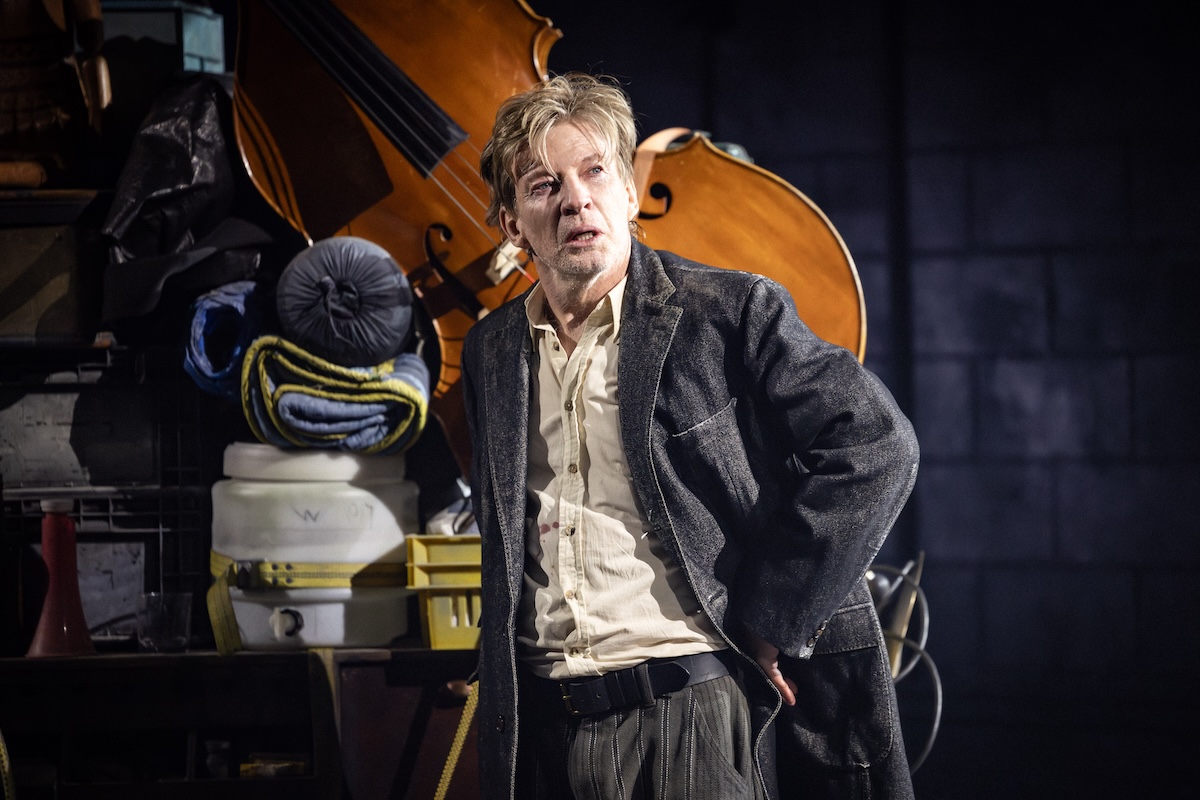
An Iliad: David Wenham as The Poet. Photo © Daniel Boud
Wenham enters the Wharf 1 space (imagined as a dark warehouse-like space by designer Charles Davis) through a roller door. After setting up his own lights, he drags in a wagon piled high with suitcases, boxes and a double bass; everything he needs to tell the story – including double-bassist and singer Helen Svoboda, who will be his stage companion for the next 100 minutes. One assumes this visual echo of that other war weary figure, Brecht’s Mother Courage, is entirely deliberate. It’s certainly apt.
And for the entirety of that 100 minutes, Wenham and Svoboda hold their audience spellbound with a virtuosic display of storytelling that brings an ancient text and the all-but-lost bardic tradition thrillingly into the present.
Fagles’ source text is massively cut (and truncated at the ceasefire following Achilles’ slaying of Hector and his ghastly triumphal display) and delivered in casual, digressive, off-the-cuff fashion. Wenham’s down-to-earth persona brings Homer’s characters – the victors and vanquished and the gods – into a tight human-scaled focus.
“What drove them to fight with such a fury?” The Poet asks. “Oh … the gods, of course …. Um … pride, honour, jealousy … Aphrodite … some game or other, an apple, Helen being more beautiful than somebody – it doesn’t matter. The point is, Helen’s been stolen, and the Greeks have to get her back.”
What possessed the Greeks to stay the course of a nine-year siege? The Poet nails it with a supermarket checkout analogy: “You’ve been there for 20 minutes and the other line is moving faster. Do you switch lines now? No, damn it, I’ve been here for 20 minutes, I’m gonna wait in this line, I don’t care if I wait. And look – I’m not leaving cuz otherwise I’ve wasted my time.”
As the tale unfolds, the Poet muses on other battles, other wars. The boys who sailed to Troy are compared – not unreasonably – to Australian Diggers sailing to Gallipoli. At one point, he unleashes a chronological litany of the history of warfare since Homer’s time, one that touches every century and continent – right up to now.
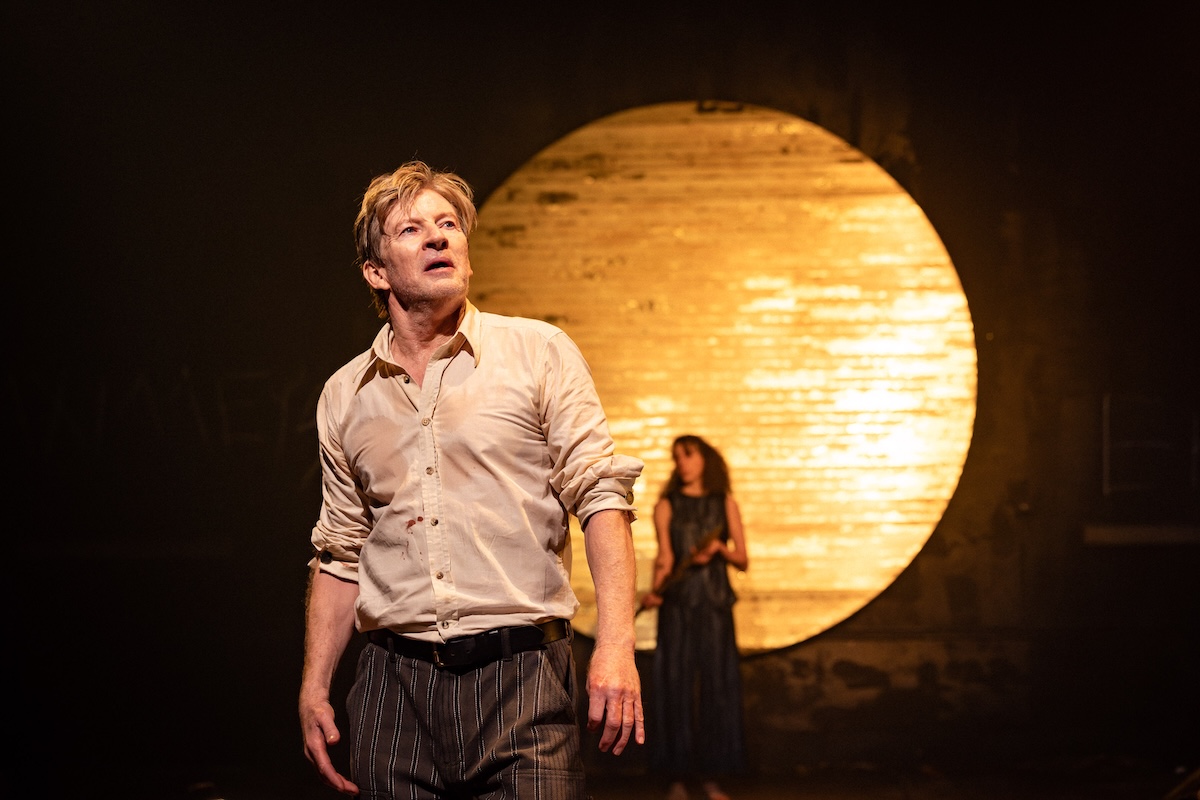
An Iliad: David Wenham as The Poet. Photo © Daniel Boud
Wenham, who hasn’t appeared on a Sydney stage for 27 years, is an entrancing storyteller. His performance is a masterclass in control and dynamic range. He’s as adept in the work’s rhetorical flights as he is in the Poet’s fatalistic asides. Along the way he embodies many characters: the wrathful Achilles; Patroclus, Achilles’ faithful ‘friend’ (the play doesn’t delve far into that relationship but the inference is clear); the doomed Hector, his grieving father and also Helen, who might be quietly revelling in the competition.
Svoboda is a riveting presence. She speaks no lines but her extended-technique bass playing and singing voice are strikingly deployed. She has a face that in profile might have graced some ancient coin.
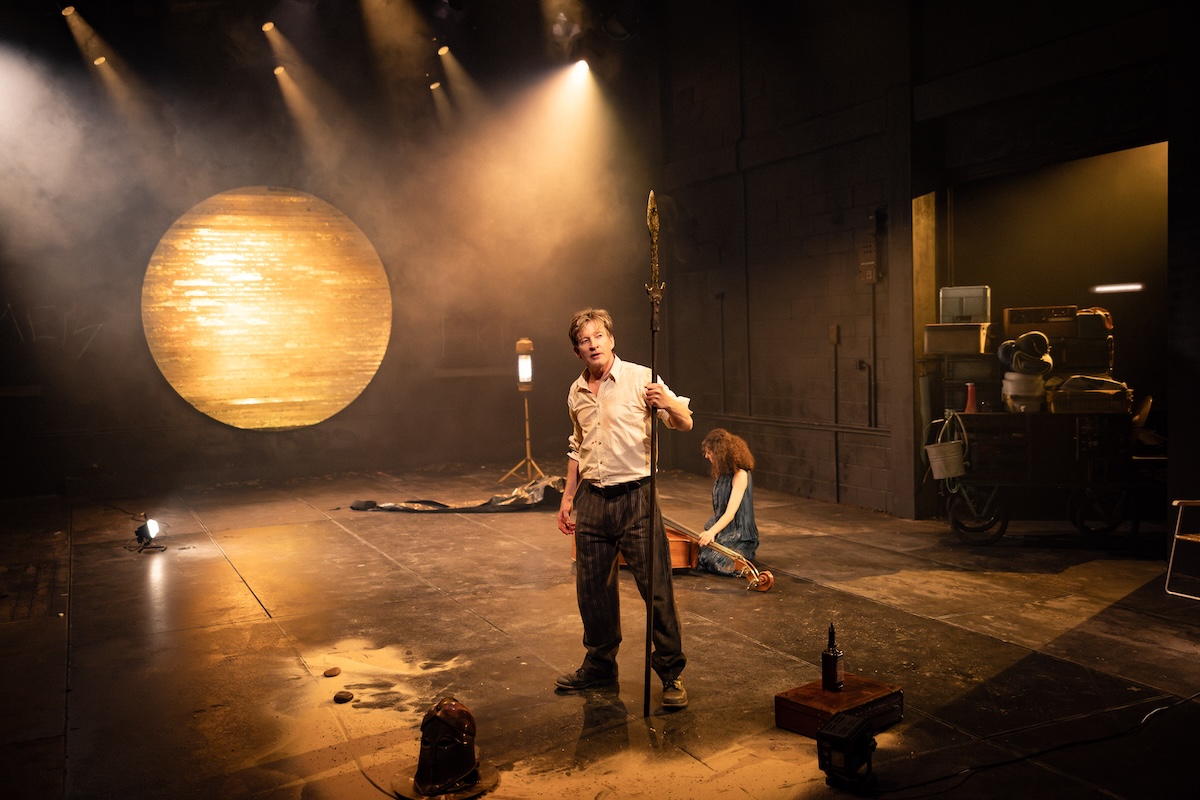
An Iliad: David Wenham and Helen Svoboda. Photo © Daniel Boud
Director Damien Ryan, who brings a couple of decades worth of independent theatre experience to the STC as prime mover of the classics-focused company Sport for Jove, ensures that An Iliad is grounded in a sense of seat-of-the-pants storytelling reality. Troy’s sandy shore is dispensed from a trick suitcase. Props, a puppet and musical instruments are cleverly used. Lighting by Alexander Berlage casts heroically large shadows, creates a rosy-fingered dawn, the sense of dread that comes with preparations for battle.
Profound and stirring, An Iliad is something special. You must not miss it.
Sydney Theatre Company presents An Iliad until 28 June.








Comments
Log in to start the conversation.