




The urgency and concern about the rapid demise of Earth’s oceanic life, and the reverence for Sir David Attenborough, were reflected in a packed audience of young and old. Ocean in Concert showcases his 2025 documentary, with Camerata, Queensland’s Chamber Orchestra performing the score by award-winning composer Steven Price live.
Attenborough is one of the UK’s national treasures, described by Toby Nowlan, Director and Producer, as “one of the greatest storytellers of all time”. In 1985, he was knighted for his services to television, both behind and in front of the camera.
As the Controller of BBC2, he even commissioned Monty Python’s Flying Circus. However, it is his tender narration of natural history documentaries for which he is renowned; narrating Ocean at the age of 99 and three more documentaries in 2026, he himself has become a natural wonder and someone I am proud to have personally met.
With a large Camerata ensemble seated below the large screen and conductor Peter Morris, the Deputy Director and Head of Ensembles at the Queensland Conservatorium, Griffith University, at the helm, the rush of the ocean accompanies Attenborough exclaiming how all life began in the sea and how it is our final frontier in this great age of discovery.
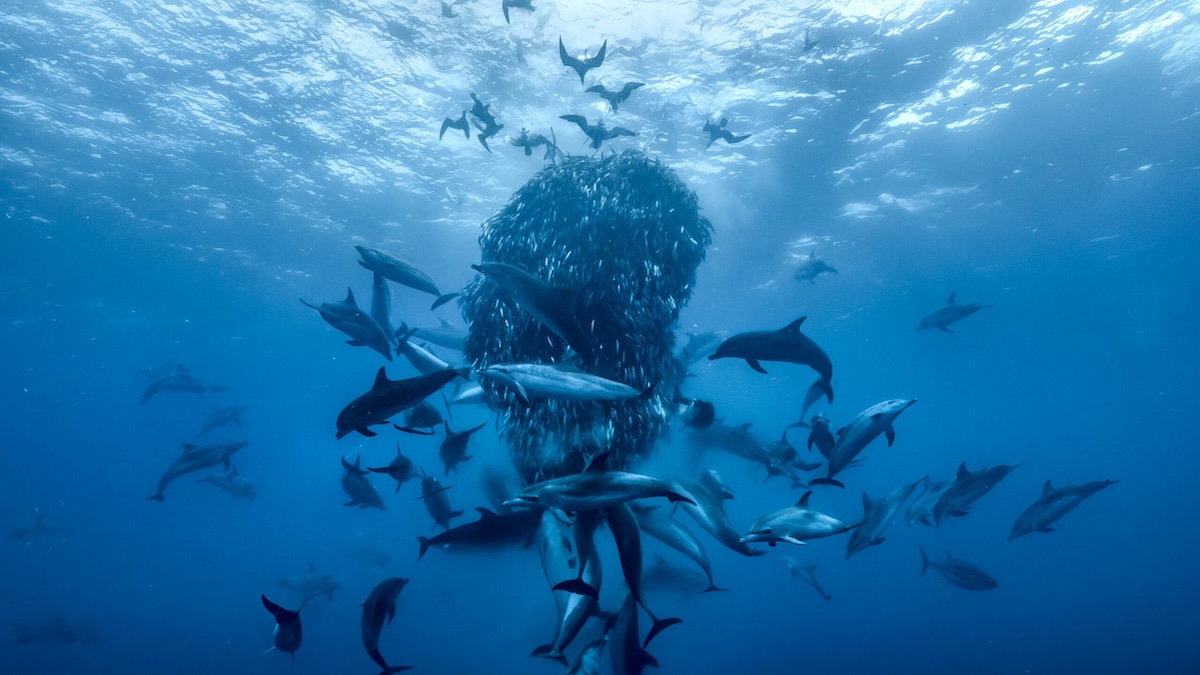
A scene from Oceans. Photo © Silverback Films
It is a classic production, with breathtaking cinematography and soft, familiar narration, co-directed by Keith Scholey and Colin Butfield with Nowlan for Silverback Films. An Emmy Award-winner, Ocean has stimulated the world’s nations to take action to protect our seas and has been instrumental in changes to how we manage and conserve our biggest natural resource.
The live music, however, seemed incidental at times, as Price’s score was typical for a documentary, swelling at the brief moments of optimism and peacefully gliding as an accompaniment to Attenborough’s staccato narration. With your focus on the documentary and the horrors of deep-sea trawling and coral bleaching, it was easy to forget the 40 or so musicians playing underneath the screen.
Fortunately, the six mezzo-soprano and alto vocalists often re-attuned the ear from Attenborough’s silken narration with their angelic oration. The score, although unremarkable, did mimic the mood as incredible underwater photography revealed the devastating consequences of coral bleaching, destructive fishing and pollution.
Timothy Reed’s trumpet rang triumphantly as Attenborough infused some optimism into the worrying trend of our sea’s destruction with news of Hawaii’s enormous ocean sanctuary overflowing with fish and plants, whilst the choristers echoed long, single notes and the harp rolled joyfully.
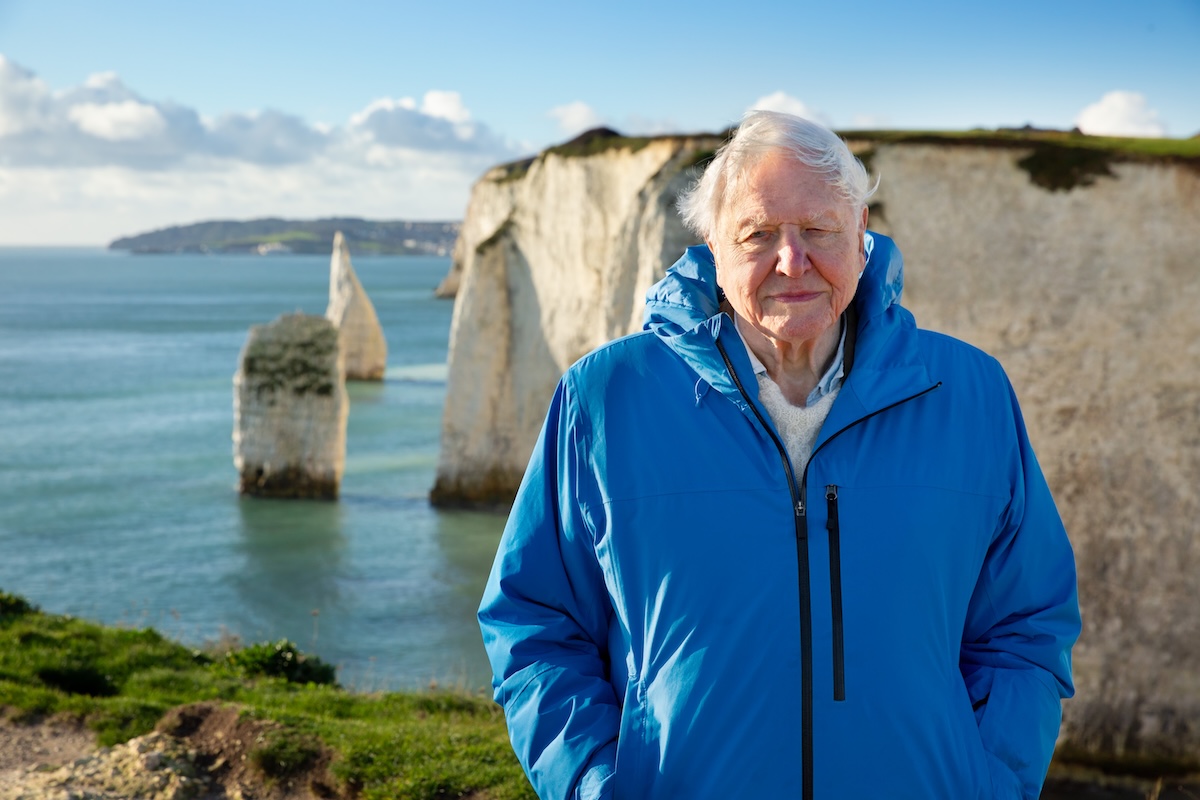
Sir David Attenborough: Oceans. Photo © Silverback Films
The unfortunate use of an electronic synthesiser with rhythmic percussion, played by Michael Manikus, overwhelmed the natural chamber-music sound, turning it into an Enya-styled production. The accompanying ambient noise, with seagulls cawing and ocean tides, often swamped the nuances of the music.
However, the audible solos from Reed’s trumpet and Monika Koerner’s flute were poignantly emotive and flowed tenderly with the narrative.
I’m a purist, but the usual freedom of a chamber orchestra, untethered by a conductor beating a precise beat with a digital counter, lost the magic of a live performance. This works for a live epic film performance but not for a monumental nature documentary.







Comments
Log in to start the conversation.