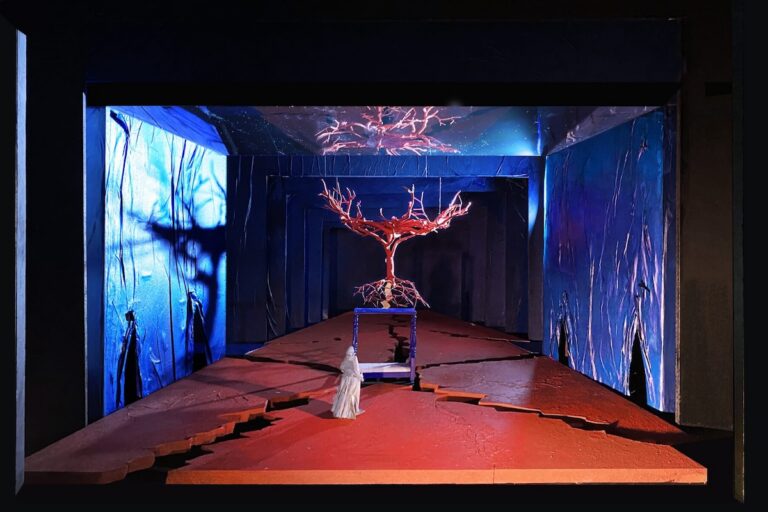
Having inherited the Habsburg, Burgundian and Spanish crowns, Charles V (1500-1558) became of the most powerful and successful rulers in history. As Holy Roman Emperor from 1519 and King of Spain from 1516, he resisted the Ottomans, campaigned from Italy to the New World and fought for Catholic supremacy in Europe against the Protestant Reformation. As afficionados of Verdi’s Don Carlos will remember, he abdicated in 1556, retiring to a monastery and dividing his considerable domains between his brother Ferdinand and his son Philip II.

Legend has it that Charles organised a rehearsal for his own funeral, even lying down in his coffin to ensure verisimilitude. In this fascinating album, Simon-Pierre Bestion and his early music ensemble La Tempête imagine the kind of music that might have been heard around that event, much of it influenced by the musicians who had poured into Spain from Flanders during the period. Following the pattern of the traditional Requiem mass, Bestion calls the resulting spicy melange a “Bomba flamenco”, or Flemish bomb. Purists might clutch their pearls, but this heady brew is realised with enormous emotional elan.
At its heart are snippets of the sacred music known to have been sung for Charles’ immortal soul, including from Pedro de Escobar’s Missa pro defunctis and Cristobal de Morales’ Missa Mille regretz, the latter based on the emperor’s favourite song. Recognising the Arab-Andalusian and Sephardic cultures of the day, he adds a dash or two of the instrumental flavours of North Africa, while deploying the shawms, sackbuts and percussion that might have coloured outdoor processions in the gardens of the Alhambra.
Laying their cards firmly on the table, the musicians open with a Taqsim, an earthshattering prelude with brazen brass, sinuous woodwind and the rattle of African percussion. From here, they pile into a lavish instrumental version of Janequin’s La guerre, a wondrous affair full of sound and fury. The playing is outstanding, and the recording, made in the sumptuous and spacious acoustic of Saint-Esprit, Paris, picks out plenty of details.
A royal funeral is a chance for the powers that be to range widely over time, supplementing new commissions with key works from earlier periods. Among Charles’ contemporaries, we hear Luis de Narvaez’s Mille regres, a beautifully spare account on Renaissance harp. The Morales Kyrie is ethereally done and sliding magically into a slinky Andalusian dance. Gombert’s Musae Jovis receives an open-throated account, as does the Escobar and some of the other vocal works, reflecting the likely singing style of the times.
Diving into the past, there’s music from medieval Paris, almost certainly still in the repertoire in the 16th century, as well as ancient dance music from the Llibre Vermell de Montserrat. Irme kero madre a Yerushalayim, a slow, sensual Sephardic folk song, is strikingly performed by Hélène Richaud; there’s an imaginative arrangement of a Cabézon Magnificat; and Mateo Flecha’s zesty El fuego demonstrates the New World influence with an infectious joie de vivre. The ritual draws to a close with a hushed account of Morales’s Parce mihi, Domine.
While much here may be a flight of Bestion’s fancy, this glorious Catholic-Arab-Jewish-Medieval-Renaissance confection cannot be recommended too highly.
Title: Bomba Flamenca
Works: Music for the Funeral of Charles V
Performer: La Tempête/Simon-Pierre Bestion
Label: Alpha ALPHA1216

Comments
Log in to start the conversation.