


The concert opened in brightly opulent style with the Polonaise and Waltz from Tchaikovsky’s opera Eugene Onegin. The TSO responded well to conductor Aadland’s energetic and liltingly expressive direction.
Following its October 2025 world premiere in Finland by Michael Collins, British composer Sally Beamish’s Concerto for Basset Clarinet, IZAKHI was given its third ever performance by TSO Principal Clarinet Andrew Seymour. The work has four movements – Weaverbird, Cradle, Thirst and Wildfire – and clocks in at around 22 minutes. Inspired by a trip to South Africa, it takes its title IZAKHI from a Zulu word meaning ‘elements’ or ‘building blocks’.
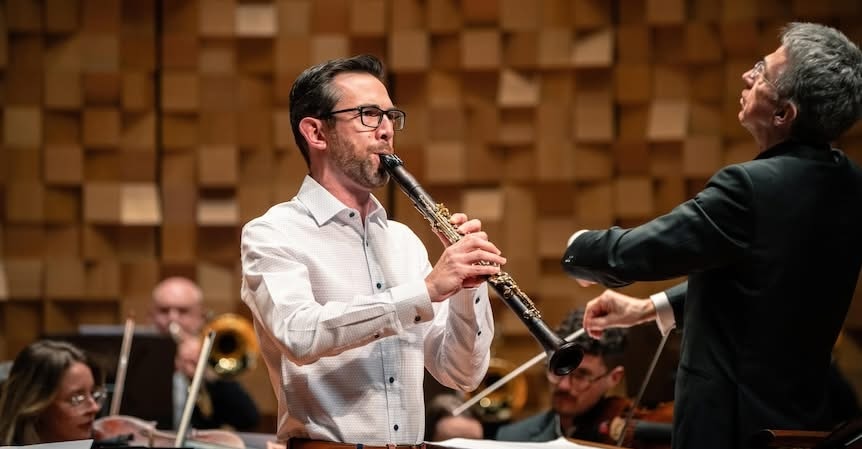
TSO Principal Clarinet Andrew Seymour. Photo supplied
Seymour gave a superbly expressive account that exploited the full range of the instrument. The individual rhythmic profile and vivid idiom of the concerto was highlighted by the wonderfully colourful orchestral textures, especially the exotic and varied array of percussive effects masterfully handled by Principal Percussionist Gary Wain. Their evocative use in depicting the weaverbird building its nest, and the parched quality in Thirst, were especially effective.
Shostakovich’s Symphony No. 10 in E minor, Op. 93 is one of the greatest 20th century symphonies, a work that is truly epic in its dimensions and range of moods. The performance was one of the TSO’s great achievements for 2026. The power, security and underlying strength of the playing of a relatively small orchestra of about 60 musicians was astonishing.
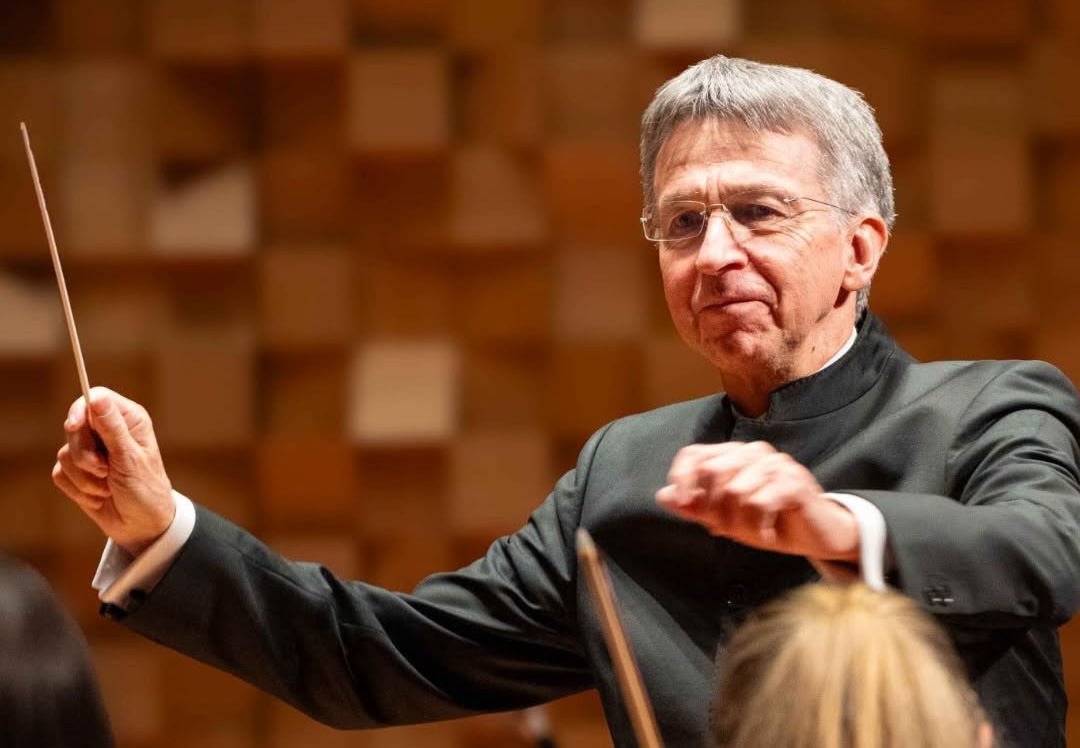
TSO Chief Conductor & Artistic Director Eivind Aadland. Photo supplied
The first movement contains music of bleak isolation; it was shaped with architectural strength, building to climactic moments of shattering intensity, and volume. A slightly measured tempo in the scherzo made it sound more effectively implacable rather than just frenetic. The haunted mood of the third movement waltz was beautifully caught with outstanding playing from Principal Horn Greg Stephens. Solo woodwind work throughout was first rate with brass and percussion also distinguishing themselves.
The final movement began in desolation, transforming into a jokey, mocking motif; the conclusion was exhilarating. All credit must also go to Concertmaster Emma McGrath and the strings of the TSO for the focus and commitment that made them sound like a larger body than their numbers might suggest.
For information on upcoming Tasmanian Symphony Orchestra events, visit tso.com.au






Comments
Log in to start the conversation.