Alexander Glazunov is perhaps the most underrated and underestimated of Russian composers. Having caused a sensation in his youth with an acclaimed First Symphony and a host of other works in the traditional forms, he was unlucky enough to live well into the Revolutionary period, a time with which he was distinctly out of step. Shostakovich writes admiringly of his craft, his critical facilities and his rough-edged kindness, but musical history tends to dismiss him as the drunken conductor who ruined the premiere of Rachmaninov’s Symphony No. 1.
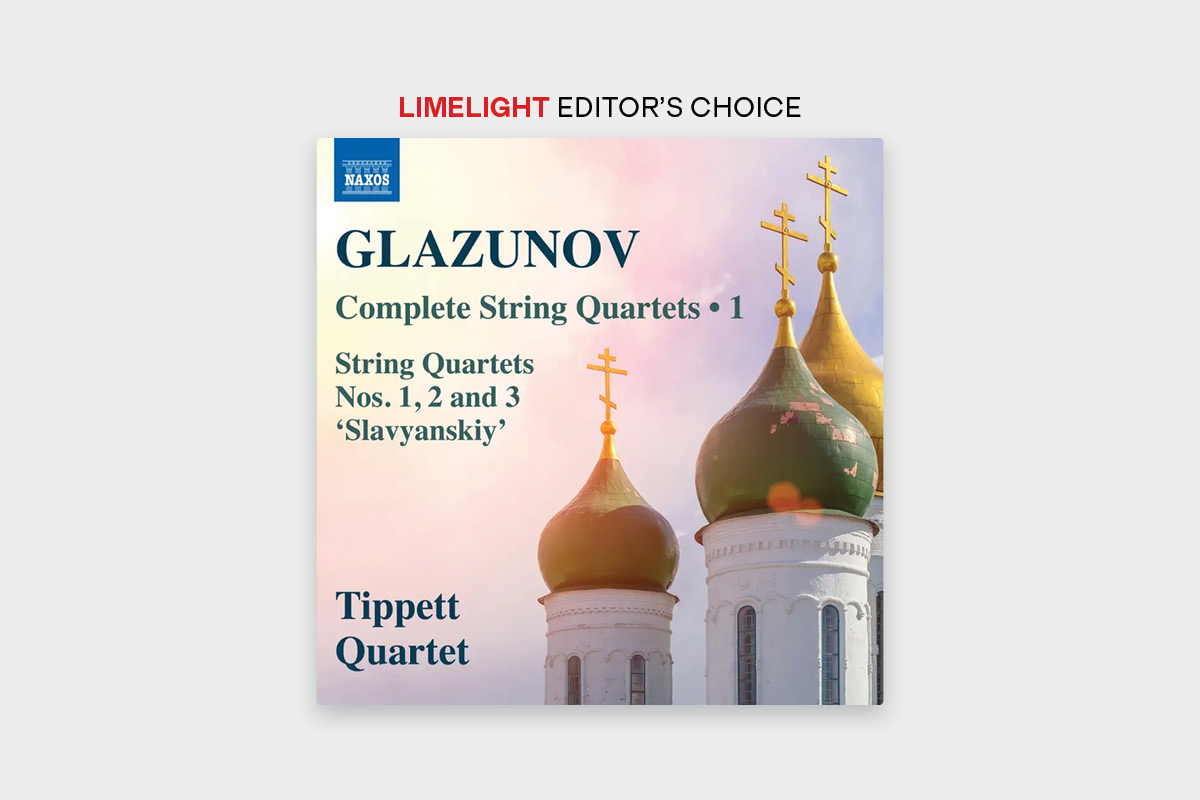
While Glazunov’s symphonies have their admirers, especially the colourful Fifth, his string quartets have been seriously overlooked, making this new survey by the excellent Tippett Quartet welcome indeed. Composed between 1881 and 1930, they are perfect examples of late-Romantic Russian chamber music. Spanning his entire career, their blend of Classical discipline and Slavic lyricism is rooted in verdant harmonies and memorably rhapsodic melodies. This first volume journeys chronologically from the First Quartet, an 1882 student work composed under the mentorship of Rimsky-Korsakov, to the Third Quartet, subtitled “the Slavonic,” produced six years later and the most popular of the seven. 

The First is a truly remarkable feat for a 16-year-old, mentor or no mentor, and a worthy winner of the 1884 Glinka Prize. Its Russian moodiness is brought out clearly here by the Tippett Quartet who play with a refreshing bite that tends to highlight the folkish elements. There’s a fine cycle on MDG with the Utrecht String Quartet, but these performances are generally more characterful, capturing a youthful fire and a certain radical pungency that’s not a million miles away from the chamber music of Bartók and Janáček. The opening movement is taken expansively, revealingly so. The Scherzo is bright and breezy, if just occasionally a touch astringent, the Andante warm and wistful, and the finale a model of contrapuntal charm.

Composed in 1884, the Second String Quartet is a weightier affair. The opening Allegro non troppo is given a thoughtfully flexible reading here, followed by a sinewy take on a dance-like scherzo that has Borodin written all over it. The nearly 10-minute Adagio is the work’s lyrical centrepiece, an atmospheric meditation with melodies that exudes a Chekhovian melancholy. The lively finale, though rooted in folk music, is given plenty of room to breathe here, despite its dance-like high spirits.

Everything about the String Quartet No. 3 screams “masterpiece”, from the pervasive catchy tunefulness to the pensive Interludium that forms its fleeting second movement. The folk elements are to the fore here, especially in the spirited Alla Mazurka with drones and a dose of typically Russian sadness. The Fête Slave finale, with a theme that’s mirrored in Mussorgsky’s Khovanshchina, makes for a toe-tapping finale.

These performances strike me as ideal, combining an emotional spaciousness with a lithe-limbed honesty and a determination to explore to the max these scores’ proximity to folk music despite their clearly being intended for the concert hall. The recording is just a trifle edgy, but that suits the intention here. Recommended to all lovers of chamber music.

Listen on Apple Music

Composer: Glazunov
Works: String Quartets, Volume 1
Performer: Tippett Quartet
Label: Naxos 8574716

Contribute to Limelight and support independent arts journalism.