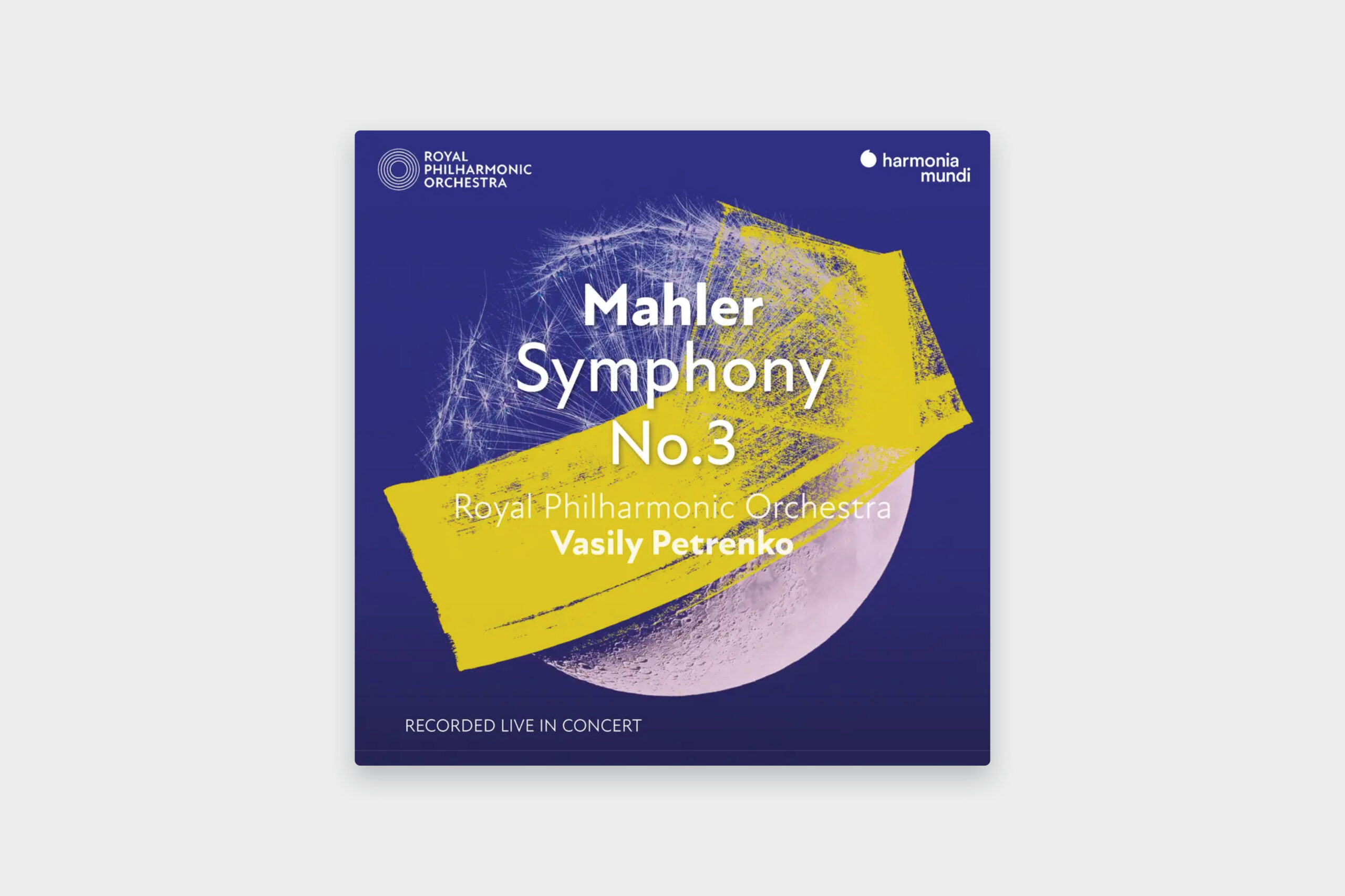
I remember many years ago reading a Gramophone review of the culmination of Hans Schmidt-Isserstedt’s Decca Beethoven cycle, the Choral Symphony, where the closing remark described it as a “ Ninth to live with”. This description crossed my mind reviewing Vasily Petrenko in Mahler’s Third Symphony (although it’s unlikely even the most ardent Mahler afficionado would want to “live” with a work, the longest in the standard repertoire, which lasts around 95 minutes and has been described as the musical equivalent of an anaconda.)
Petrenko gets everything right here, in the  most encompassing of Mahler’s symphonic canon with its trajectory ranging from the pantheistic hierarchy and awakening of life to its divine transcendence. It perfectly illustrates Mahler’s credo that “a symphony must embrace the world”.
In the opening movement, Petrenko has its measure right from the opening fanfare and depictions of inanimate nature without getting bogged down in the primordial murk. The ‘chaos’ sections are well handled although, like just everyone else, they lack the sheer exhilaration of Bernstein (no one ever did chaos like Lennie).  At a few seconds short of 34’ Petrenko is in no particular hurry.
The Tempo di Menuetto radiates poise, charm and occasional insouciance – and Petrenko renders the hairpin bends curvaceously, with exquisite tenderness while avoiding saccharine phrasing. The chamber-like orchestration exudes a confiding intimacy, with outstanding contributions from the woodwinds.


In the Scherzo, Petrenko encourages some awkward “animal” sounds from the orchestra in their portrayal of the forest creatures. The highlight of this movement is surely the extended, but not too dragged out, post horn solos which ennoble it. Petrenko darkens the atmosphere with a searing coda, implying that nature can bare its fangs.
In the fourth movement, mezzo-soprano Hanna Hipp produces a lovely earth-mother sound in the excerpt from Nietzsche’s Midnight Song from Also Sprach Zarathustra, where she sings of life’s travails with hushed intensity. The oboe glissandi here are relatively discreet, unlike in Simon Rattle’s Berlin recording where they sound ugly and grotesque, like a charging elephant.

Barely has the sombreness of the song died away before we hear the brilliant and innocent boys’ chorus in what most be one of music’s great coups de théatre, even by Mahler’s lights, accompanied by woodwinds and then only harps, horns and trumpets. The women’s chorus sing of the delights of heaven, anticipating the finale of the Fourth Symphony, but the soloist sings a counterpoint of uncertainty amid the central sinister eruption.

Not only is this the longest symphony in the mainstream repertoire, it’s also, arguably, the most original. Petrenko paces the final movement ideally at just short of 25’, with dignity, restraint yet also splendour, integrating the various strands into a magnificent seamless whole. He holds onto the final refulgent chord, again unlike Rattle whose casual release sounds as though the Berlin Philharmonic has suddenly run out of steam (as if). 

I have no hesitation in ranking this version among the best. No one will ever surpass Bernstein’s Sony New York version, but this one is in the same pantheon as Abbado, Levine and Bertini. Praise also for the Royal Philharmonic in its 80th year, so often eclipsed by the London Symphony and the Philharmonia. Its founder, Sir Thomas Beecham, I’m sure was looking down, deeply proud of his magnificent creation. The sound is brilliant.

Listen on Apple Music

Composer: Mahler
Work: Symphony No. 3
Performers:  Royal Philharmonic Orchestra, Philharmonia Chorus, Tiffin Choir, Hanna Hipp ms, Vasily Petrenko
Label: Harmonia Mundi HMM90542122

Contribute to Limelight and support independent arts journalism.