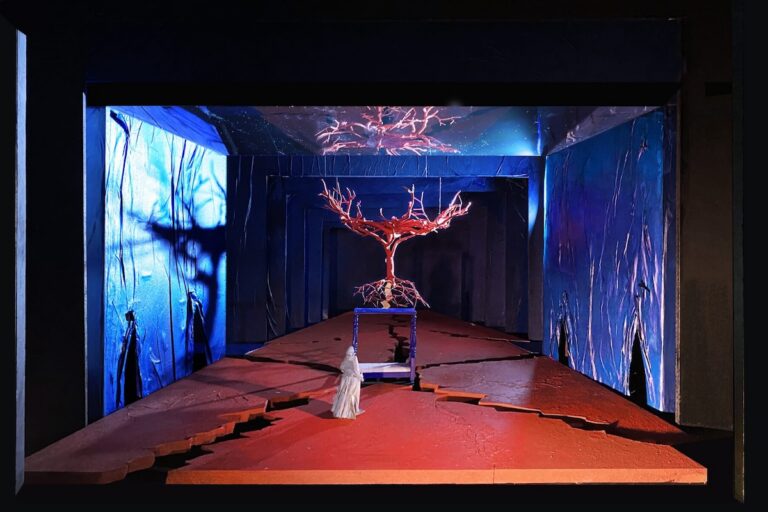


Following the success of their 2025 season, despite disruption and cancellations caused by Tropical Cyclone Alfred, Queensland Theatre Company brings Jane Austen’s classic Regency romance back to the Queensland Performing Arts Centre.
Adapted by Wendy Mocke and Lewis Treston from Austen’s novel, and co-directed by Bridget Boyle and QTC Artistic Director Daniel Evans, this production blends Austen’s 19th-century commentary on love, class and marriage with modern music and movement.
Sometimes referred to as the original romantic comedy, Pride & Prejudice follows the five Bennet sisters, focusing on second-eldest daughter Elizabeth, as they navigate the pressures and presumptions of English society and their mother’s obsession with arranging advantageous marriages for them. Strong-willed and quick-witted, Elizabeth is not impressed by the wealthy, standoffish Fitzwilliam Darcy when they first meet, and Darcy is blunt about her family and prospects. Eventually, they overcome his pride and her prejudice to find love through mutual respect.
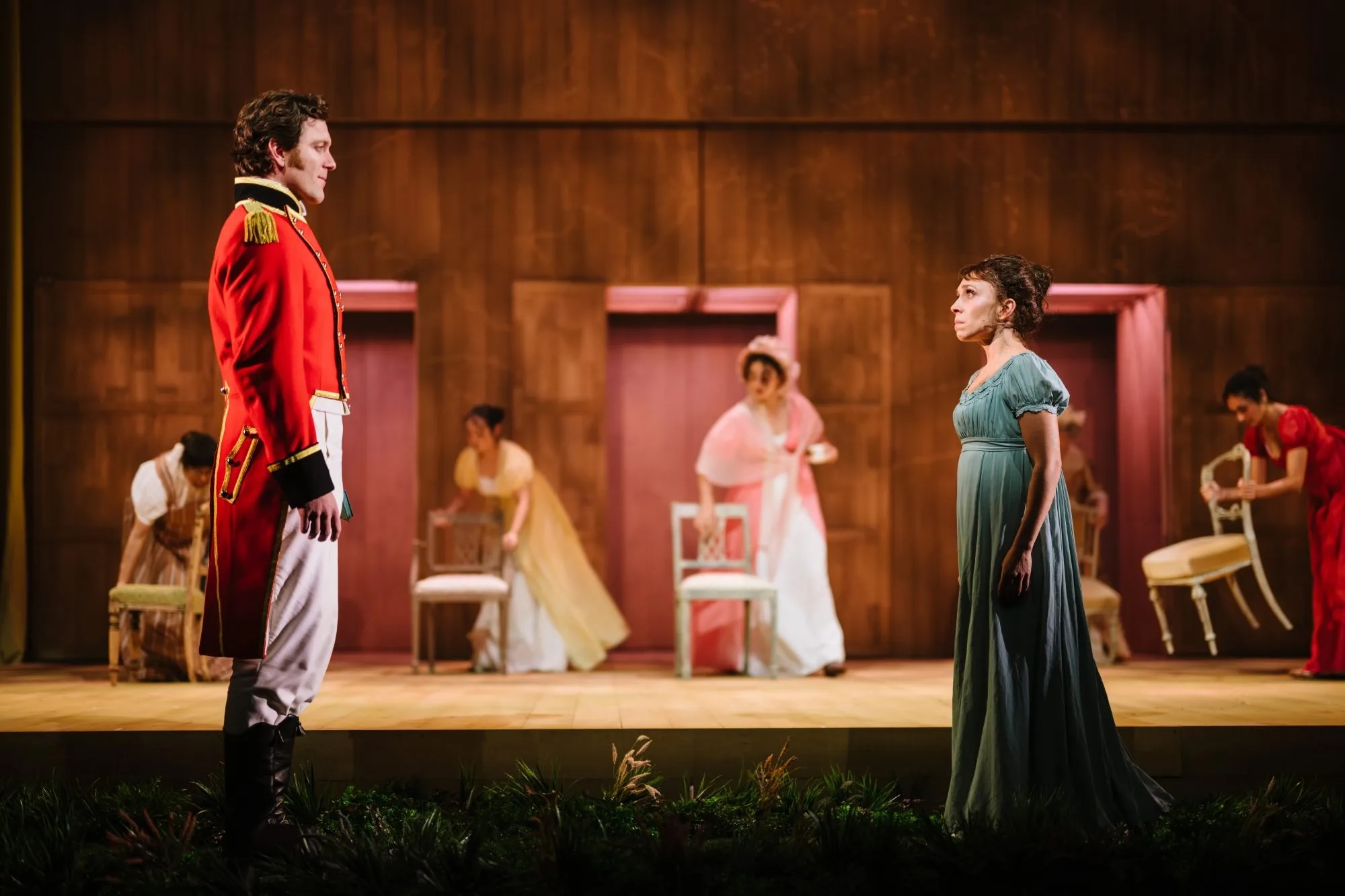
Jeremiah Wray and Maddison Burridge in Pride & Prejudice. Photo © Morgan Roberts
Maddison Burridge is unfaltering as Elizabeth Bennet, bringing magnetic energy to the character’s signature quick wit and fierce family loyalty. The growing romantic tension and chemistry between Burridge and Andrew Hearle’s aloof Mr Darcy is balanced, believable and well paced.
A large ensemble cast tackles a range of English accents, with voice and dialect coaching by Gabrielle Rogers. The women, especially, trade velvet-wrapped barbs and make small talk that feels loaded with meaning and emotion. One particularly memorable scene becomes a tennis match, with all heads in the room swivelling to watch Elizabeth and Caroline exchange pleasantries dripping with disdain. There is also a distinct physical language for each character, and excellent physical comedy throughout.
Gael Ballantyne plays the histrionic Mrs Bennet and the condescending, snobbish Lady Catherine. Bryan Probets brings his full range to the stage, from bookish Mr Bennet, building a tender relationship with Elizabeth through exchanged glances, to the desperate cheeriness of Sir William Lucas, trying to win the favour of Mr Bingley for his daughter.
Cameron Hurry is an unexpected comedic highlight as Mr Collins, his over-enunciation and exaggerated physicality frequently drawing laughter from the audience. Amy Ingram also showcases her considerable comic skill, both in the biting condescension of Caroline Bingley and in her witty observations as Charlotte.
Zoë Schramm is a frivolous, flirtatious Lydia Bennet, while Daphne Chen bounces off her energy as Kitty Bennet. Chen also plays notable ensemble roles, including young Georgiana Darcy and the bored daughter of Lady Catherine, who is almost immobilised by frills.
Chenoa Deemal plays the stone-faced but sharply observant Mary Bennet, as well as the enthusiastic Aunt Gardiner. Jeremiah Wray is a smooth and eventually sinister Mr Wickham, and a cheerful Colonel Fitzwilliam. William Carseldine plays the wide-eyed, lovestruck Mr Bingley, while Perry Mooney is sweet but practical as Jane Bennet, the eldest daughter and focus of Bingley’s affections.
Christina Smith’s design includes plenty of froth and frills in the costumes, which also denote the class and nature of each character. The central stage is surrounded by bright grass and colourful flowers, allowing space for characters to walk, hide or eavesdrop beyond the boundaries of the onstage action. The passing of time and the changing seasons are creatively signposted in the set and costumes, although a banner failed to unfurl in the final moments of opening night and remained unreadable.
Model houses evoke key locations in the play, from the humble Bennet home, Longbourn, to the huge scale and grandeur of Pemberley. These models often add to the onstage atmosphere in other ways, wheeled in on a tea tray or doubling as a piano.
Lighting design by Jason Glenwright uses soft, warm tones for the gardens and parlours, while the dance sequences are filled with bright, pulsing colour.
Composition and sound design by Guy Webster leans on string quartet covers of pop songs by artists such as Lady Gaga, Rihanna and The Pussycat Dolls; predictable for a Regency setting in a post-Bridgerton world, but locally recorded by Brisbane’s Angel Strings quartet. A few microphone issues meant that, at times, only part of a line was delivered at full volume on opening night.
Movement Director, Choreographer and Intimacy Coordinator Nerida Matthaei has created wonderfully fun dance sequences, which are energetically performed by the ensemble and seamlessly blend modern movement with traditional partnered dance steps.
The modern edges of Queensland Theatre Company’s Pride & Prejudice may not appeal to Austen purists, but this exuberant production is cleverly staged and laugh-out-loud funny.
Queensland Theatre Company’s Pride & Prejudice is playing at the QPAC Playhouse Theatre until 26 July.

Comments
Log in to start the conversation.