Showcased in the Rising Stars concert by the Queensland Symphony Orchestra (QSO) were recent graduates of the Queensland Conservatorium Griffith University (QCGU): Rebecca Goobanko (soprano), Jake Lyle (baritone) and Reuben Tsang (pianist).

This recently created QSO series includes intimate orchestral repertoire, highlights local musicians and showcases some of Australia’s potential future musical stars.
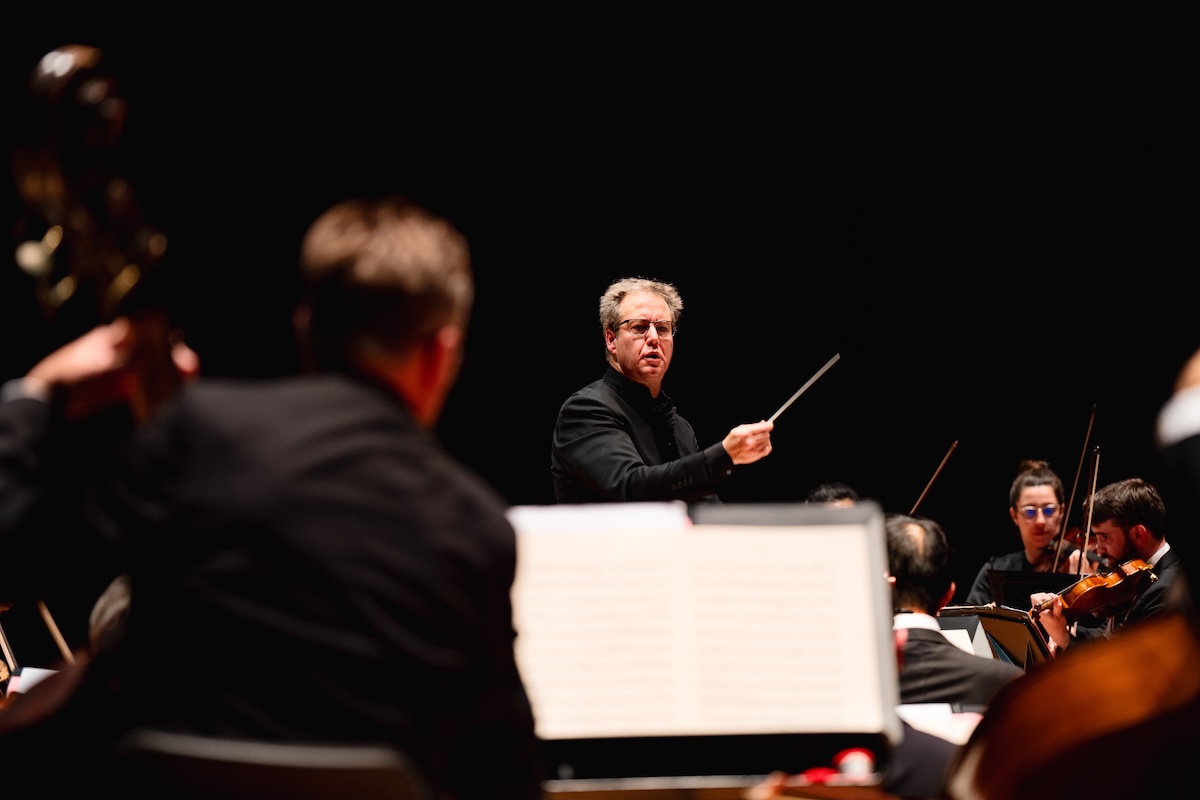
Conductor Luke Dollman and the Queensland Symphony Orchestra. Photo supplied

Under the expert guidance of conductor Luke Dollman, the concert got off to a vibrant start with Colourburst by Alice Chance. Composed during the COVID-19 lockdowns, this exuberant and playful work was joyously performed by the QSO. Commencing with ethereal harps and an insistent, repetitive rhythm on glockenspiels, it was joined by pulsating strings, woodwind and horns. The addition of jazz-inspired brass and percussion brought the whole work to a satisfying conclusion in a huge crescendo.

Dollman’s strong rhythmic beat kept a second contemporary work well on track, bringing out its whimsical humour and fiery energy. Based around the idea of a mosh pit, Holly Harrison’s Fizzin’ Fury employed two musical genres: the heavy metal, punk and prog-rock sonority of ‘Fury’, balanced by the ‘Fizzin’’ of electronic dance music and disco. The orchestra’s ability to combine these dual themes with some exciting deconstructed and synthesised effects was thrilling.

Dvořák’s delightful Scherzo capriccioso offered the orchestra a challenging but immensely enjoyable final piece. With excellent string playing and some beautiful solo work from the winds, horns and brass, this work highlighted the orchestra’s many strengths, offering a rich palette of musical colours alongside a well-crafted melodic sonority.

Reuben Tsang and the Queensland Symphony Orchestra. Photo supplied

Mozart’s Piano Concerto No. 23 showcased pianist Reuben Tsang, who rose to the occasion with a confident, technically assured and exceptionally polished performance. The bright, sprightly Allegro, with its myriad flourishes and arpeggios, was well paced. He played the melancholic Adagio movement sensitively and emotively, while the flute and clarinet offered a delicate accompaniment.

The final Allegro assai reinvigorated the initial theme in a joyful and speedy tempo that swapped back and forth with the orchestra. Tsang could now afford to relax a little and have more fun with this work, engaging his whole body — not just his hands — in his playing.

Rebecca Goobanko and Jake Lyle each offered a Mozart aria from The Marriage of Figaro, plus two duets by Rossini and Lehár, with some mixed results.

Goobanko gave us the Countess’s sad and reflective aria Dove sono, beginning with a heartfelt and emotional recitative. Her light lyric soprano offered some soaring and impressive high notes, but she was less effective in the lower and middle registers, where her narrative was often difficult to discern.

The famous Count’s aria, Hai già vinta la causa, was well paced and delivered by Jake Lyle. With some lovely colours in his rich, warm baritone, the aria’s narrative was well expressed, though there is a need to concentrate on lower-register sonority.

Jake Lyle, Rebecca Goobanko and the Queensland Symphony Orchestra. Photo supplied

Dunque io son from Rossini’s The Barber of Seville is a glorious, sparkling duet trading barbs between Rosina and Figaro. While Goobanko and Lyle gave it their best, this immensely difficult and fast-paced duet, with its numerous trills and flourishes, needed clearer direction and more finesse. Moreover, Goobanko’s soprano was unable to offer the depth of sound or vocal colour required by the mezzo Fach.

The final duet, Love Unspoken, from Lehár’s The Merry Widow, suffered from needing judicious stagecraft and a firm directorial hand. A love song presented with neither singer facing nor touching each other, or dancing during the obligatory waltz, seemed to defeat its purpose.


For more information on Queensland Symphony Orchestra events in 2026, visit qso.com.au

Contribute to Limelight and support independent arts journalism.