This was a concert of Romantic excess, soaring melodies, thunderous climaxes, and tender, breathtaking moments. The links in the program were clear: the 20th century modernist Olivier Messiaen and 19th century all-rounder Camille Saint-Saëns were both French and both renowned organists, while Saint-Saëns (1835–1921) and the German composer Max Bruch (1838–1920) were practically exact contemporaries.

The opening piece, The Forgotten Offerings, was an early work of Messiaen, but already showing his personal characteristics. It takes the form of a chorale, all tonal chords but unanchored by a key, enclosing a sudden central section of punchy rhythms and strong accents. The chorale returns, becoming softer and softer, finally concluding in complete silence. As ever, the audience took this as a cue to cough, clear their throats, and drop their phones on the floor. Other than that, the performance was immaculate in the gradation of dynamics, and the force of the central section. Alexander Soddy, a clear, very physical conductor, was in complete control.
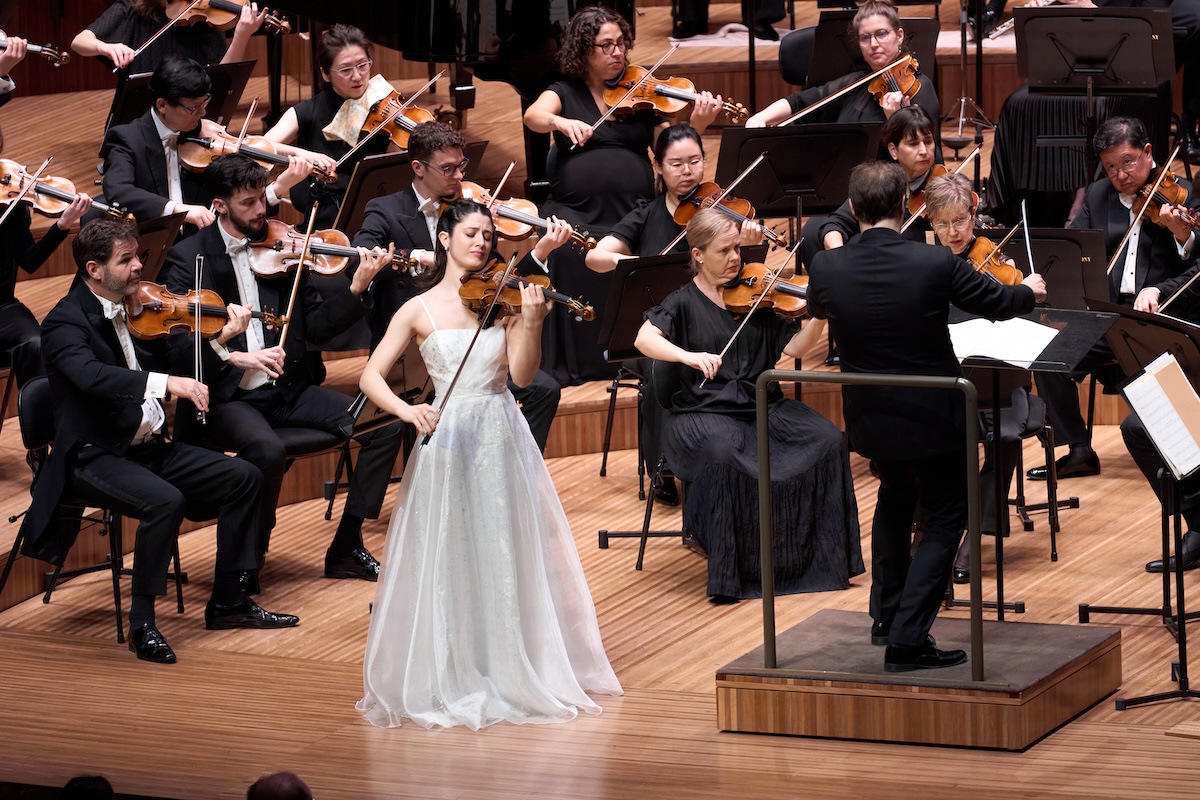
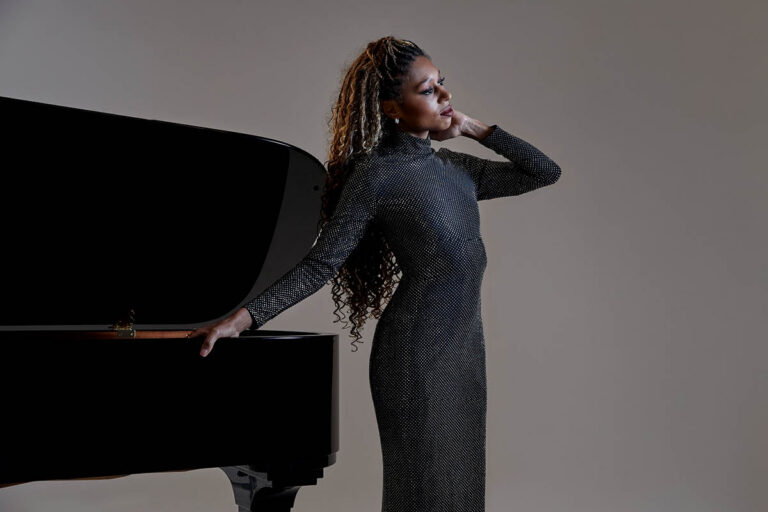
María Dueñas and trhe Sydney Symphony Orchestra. Photo © Jay Patel.

Max Bruch’s Violin Concerto No. 1 in G Minor (1866) is the work that has kept his name before the public. Every violinist of note has played and/or recorded it. Bruch himself played violin, so the solo writing is immensely difficult but idiomatic and unquestionably showy.

The 23-year-old Spanish violinist (and composer) María Dueñas is a phenomenon, already enjoying a major international career and a recording contract with Deutsche Grammophon. Bruch’s concerto held no terrors for her: Dueñas’s technique is even more rock solid than other brilliant young violinists I have heard lately. Her expressive use of dynamics and the flow of her melodic lines show genuine musical maturity.

What I liked most is the way she made music out of very note of the violin part: none of the scales and decorative additions felt like extras, designed simply to dazzle. The double-stopping thirds in the last movement were rich and warm in tone, and dead in tune. I have never cared for this concerto – for one thing, Bruch’s orchestration is bland and workmanlike – but you couldn’t help but respond to Dueñas’s extraordinary artistry.

Anna Lapwood and the Sydney Concert Hall Grand Organ. Photo © Jay Patel

Saint-Saëns wrote five symphonies, two unnumbered, of which No. 3 is the pinnacle of his achievement in that field. It is subtitled the Organ symphony because of the appearance of the pipe organ in the second and fourth movements. Another atypical feature is the addition of a piano, played by two and then four hands: It provides virtuosic scale passages in the scherzo movement, although they made little impression in this concert compared to the time I heard this symphony at the BBC Proms.

The piano there was loud and close, and when the first scale was played a man near me exclaimed, “What the hell’s that?” Not that tonight’s performance was without impact: far from it.

Anna Lapwood, an English organist with a substantial online following, brought beautiful colours to the symphony’s slow movement, and triumphal power to the finale. The slow movement was sublime, thanks to Lapwood’s contribution, Soddy’s pliable shaping of the melodies (reminding us of his credentials in the opera world), and the orchestra’s heartfelt playing.

I thought the rhythmic string figures at the beginning of the first movement’s allegro were a touch messy in ensemble, but I am nitpicking. Other than that very minor matter, the orchestra maintained its current high standard throughout, and gave us an evening of lyrical and stirring music.


Anna Lapwood performs Saint-Saëns’ Organ Symphony in the Sydney Opera House Concert Hall, on 21 March, and Max Richter: A Universe of Sound 25-28 March.

Lapwood also performs in recital in the Sydney Opera House Concert Hall on 22 and 28 March.

Contribute to Limelight and support independent arts journalism.