




Daniel Okrent’s new biography is the latest in a slew of literature about Stephen Sondheim. Since Meryle Secrest’s definitive Stephen Sondheim: A Life in 1998, the composer and lyricist has been examined from every conceivable angle, from his musical process to the psychology underpinning his characters.
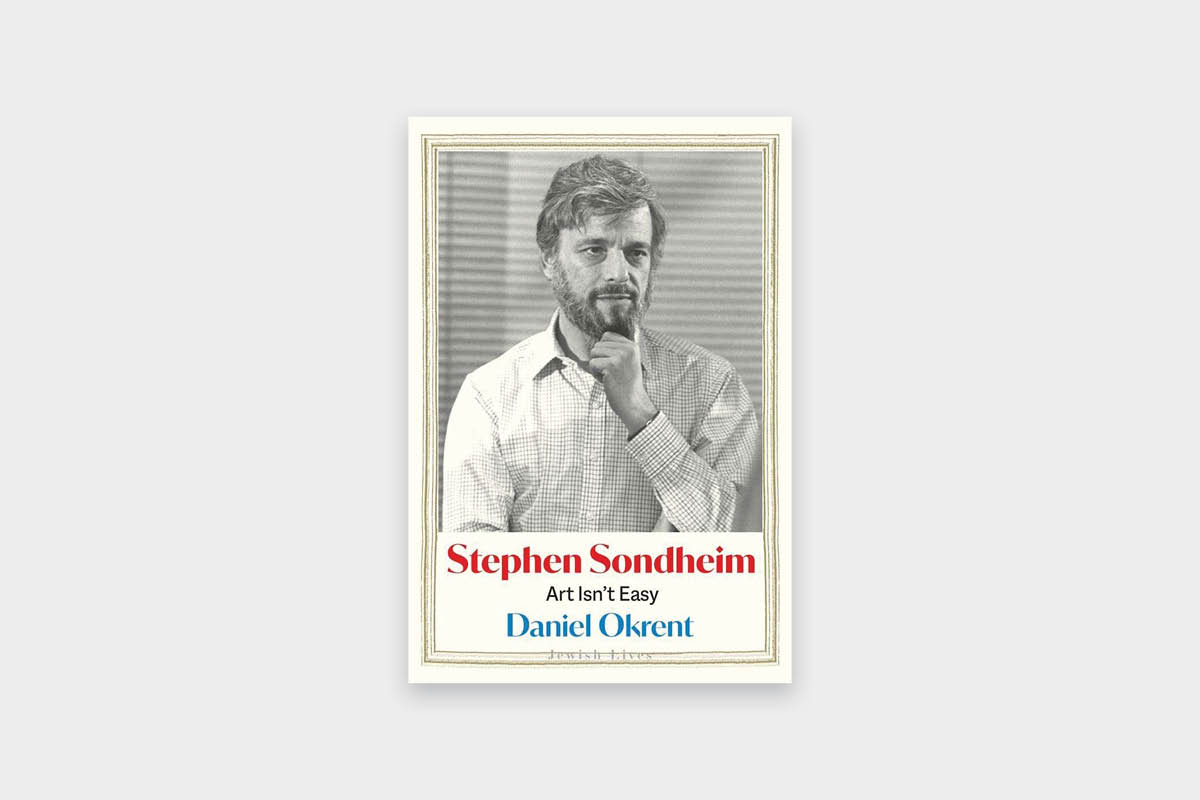
Okrent doesn’t present a radically different Sondheim, but he hones our understanding of the contradictions that defined him: his longing for connection while remaining fiercely guarded; his persistent self-doubt despite his growing influence and body of work; and his resistance to self-referential readings of his musicals despite drawing deeply on personal experience.
Okrent draws on archival material, interviews with collaborators and friends, and Sondheim’s own extensive conversations to construct a portrait that balances admiration with scrutiny. The broad outlines of Sondheim’s life are familiar, including his fraught relationship with his mother, Etta Janet “Foxy” Sondheim and the formative encounter with Oscar Hammerstein II, who became a surrogate father figure. Hammerstein would teach him the importance of dramatic structure, telling him that “a song should be like a play,” while later studies with composer Milton Babbitt focused on musical form.
It is here that Okrent excels, placing Sondheim’s craft in...
Continue reading
Get unlimited digital access from $4 per month
Already a subscriber?
Log in







Comments
Log in to start the conversation.