


Growing up as a second-generation migrant in Australia has always involved a certain degree of masking. You learn to be one person at home, another at school, and find companionship in those rare people who can see and accept both.
Navigating two cultures adds another layer to the usual teenage angst, particularly when all you want is to belong. But for children whose parents fled their homeland, there is an additional inheritance: the lingering consequences of displacement, sacrifice and trauma.
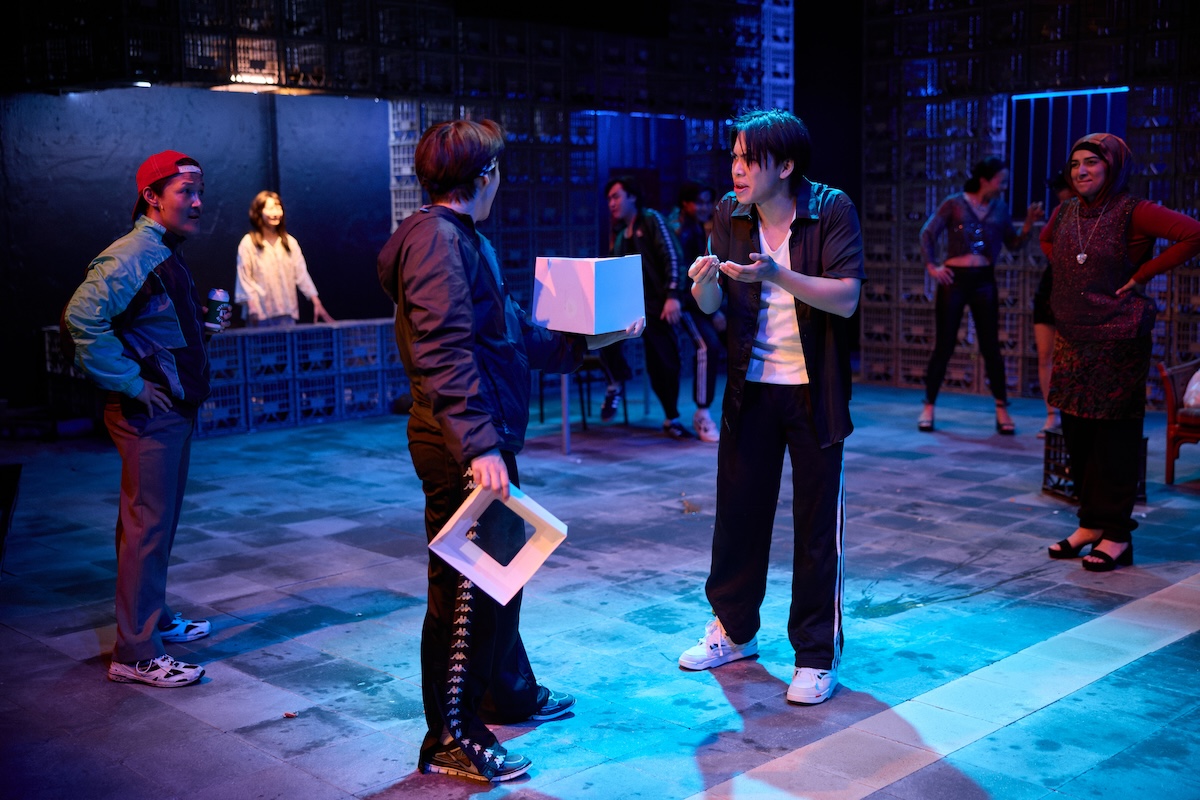
Such is the predicament facing the teenagers at the centre of The Coconut Children, Vivian Pham’s tender and surprisingly funny coming-of-age story, brought vividly to life at Belvoir St Theatre.
The Coconut Children. Photo © Daniel Boud
Set in Cabramatta in 1998, the play follows Sonny Vuong and Vince Tran, two Vietnamese Australian teenagers negotiating first love against the backdrop of gang violence, a heroin epidemic, family expectations and inherited trauma.
Adapted by Pham from her acclaimed novel, the production, co-directed by Hannah Goodwin and Catherine Văn-Davies, takes on the ambitious task of translating the book’s richly textured world to the stage, with a cast of 10 and a running time of almost three hours. While some complexity is inevitably lost, what emerges is an affecting portrait of young love and the complicated business of growing up.
Perhaps the production’s greatest surprise is just how funny it is. For a story carrying so much family baggage, The Coconut Children has a wonderfully irreverent sense of humour, perhaps unsurprising given Pham began writing the novel at 16, an age when everything is either deeply romantic or profoundly ridiculous, sometimes simultaneously.
Gemma Chua-Tran in The Coconut Children. Photo © Daniel Boud
Delivered in English and Vietnamese, with English surtitles, the comedy feels organic to the characters and their community, capturing the awkwardness and absurdity of young love. Language becomes an essential part of the storytelling, revealing the shifting dynamics of communication, belonging and identity across generations.
The production design creates an adept sense of place. Dale Ferguson’s set, complemented by evocative lighting, music and sound, transports audiences into the hustle and bustle of late-1990s Cabramatta. Particularly effective is the overlapping of scenes, allowing Sonny and Vince’s parallel experiences to unfold simultaneously, illuminating the contrasts between their lives while revealing the emotional threads binding them together.
Susan Huang, Van Doan, Kevin Khan and Jonathan Nguyen in The Coconut Children. Photo © Daniel Boud
At its heart, however, The Coconut Children is a love story. Sonny and Vince find in each other a tenderness, comfort and acceptance that their parents, burdened by their own histories, struggle to provide. It is not that their parents love them any less, but that their love is complicated by expectation, survival, sacrifice and an instinct to protect their children from experiences they cannot fully articulate.
This is where the production is most compassionate. The relationship between migrant children and their parents is portrayed with sensitivity, recognising the painful distance between parental intentions and their children’s experiences. Love is abundant but not always easily expressed. Protection becomes control, silence masquerades as strength, and the desire to provide a better life can make it harder to understand the lives their children are actually living.
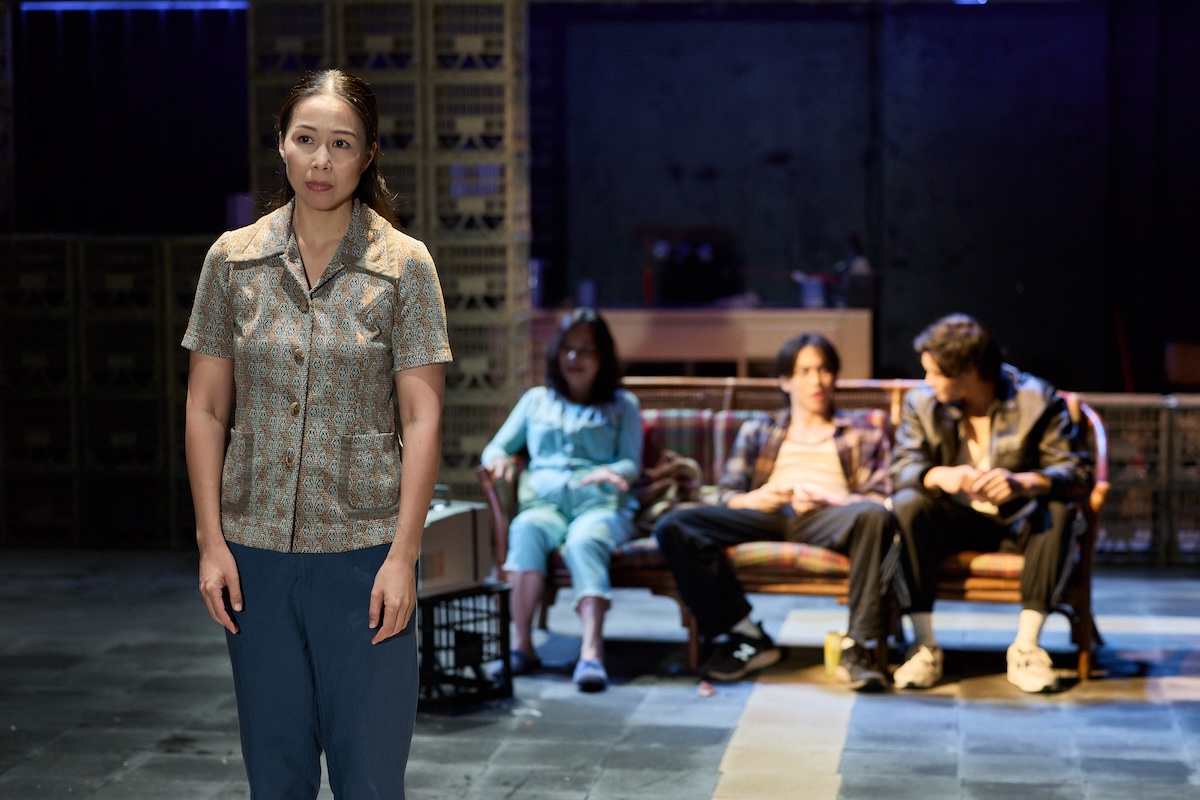
Susan Huang and HaiHa Le bring complexity to the maternal figures, portraying flawed but fiercely devoted women whose convictions about what is best for their children threaten to drive them apart. Van Doan offers a delightful counterpoint, bringing warmth and jovial acceptance to someone who has weathered life’s traumas and decided that enjoying what’s left is a far better use of her time.
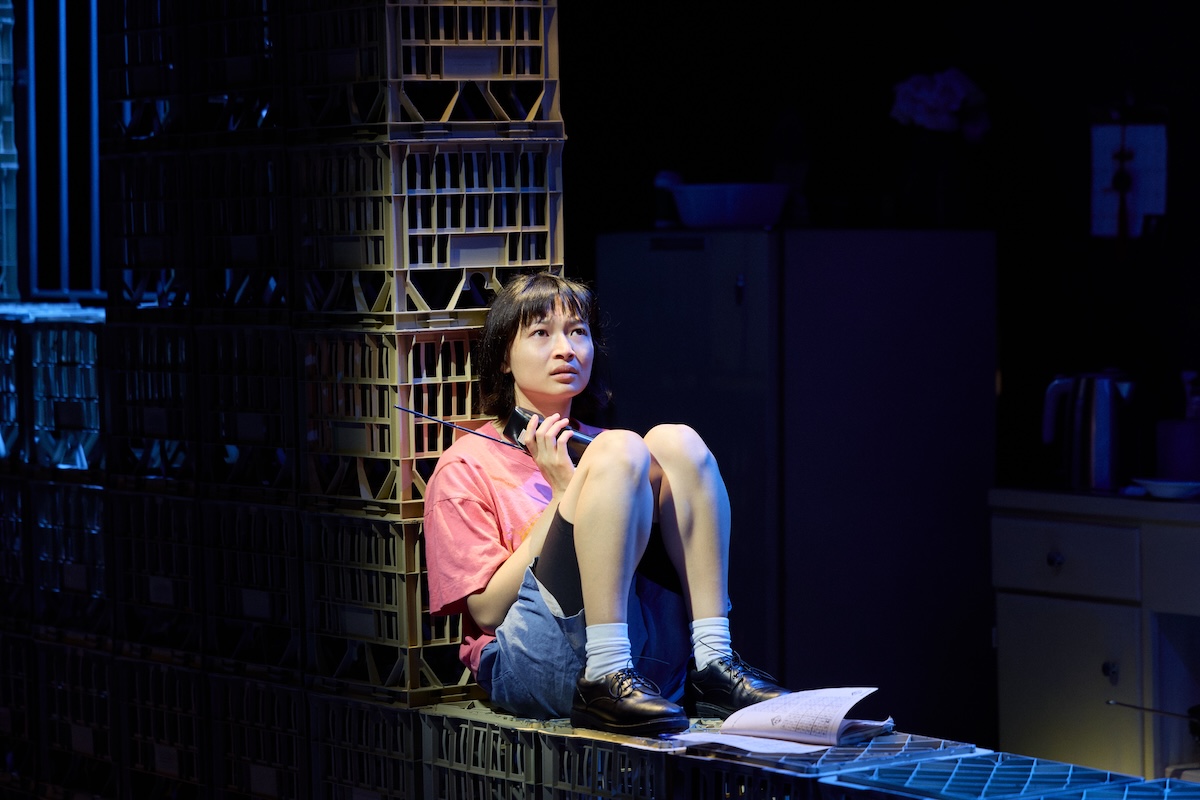
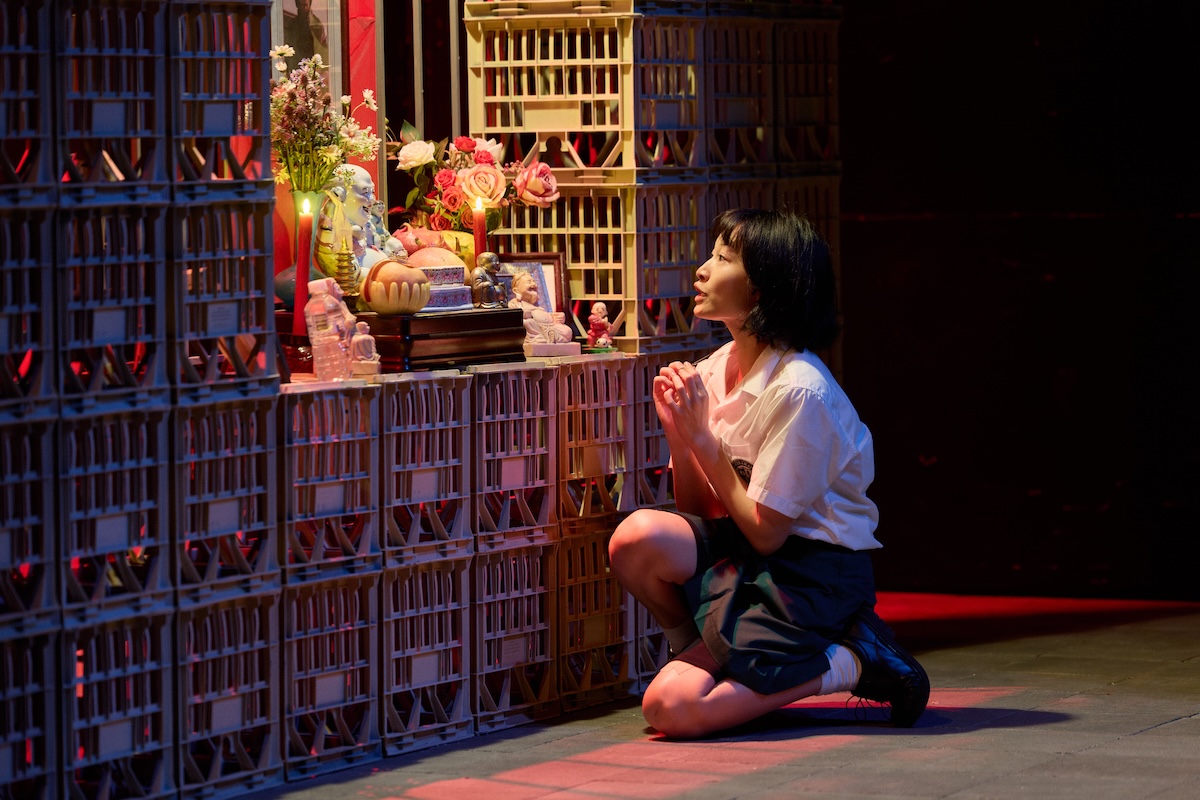
Gemma Chua-Tran is compelling as Sonny, capturing the vulnerability and spirited imagination of a teenager finding her place in the world. Christy Tran is another standout, moving convincingly between multiple characters, including Sonny’s brother Oscar, with impressive versatility.
Yet adapting a novel as layered as The Coconut Children is no small undertaking. Pham’s writing retains its visceral quality, but the book’s intricate exploration of intergenerational trauma is more subtly rendered. The focus on Sonny and Vince’s relationship comes at the expense of darker complexities, particularly the Vietnam War, abuse, domestic violence and the consequences of truths concealed within families.
Gemma Chua-Tran in The Coconut Children. Photo © Daniel Boud
The script also occasionally retreats into reflective narration, falling into the trap of telling rather than showing, when the rest of the production proves so adept at doing precisely the opposite. These moments interrupt the dramatic momentum and leave one wondering whether this sprawling story might have found a more natural home on the small screen, perhaps with a Netflix Boy Meets World treatment.
Still, these shortcomings do little to diminish the production’s emotional impact. The Coconut Children is funny, moving and beautifully realised, even if it cannot quite capture the novel’s full depth and flavour.
What remains is a generous and compassionate portrait of a community, a generation and, above all, two young people discovering that sometimes the most radical thing you can offer another person is the freedom to be themselves.
The Coconut Children plays at Belvoir St Theatre, Surry Hills, Sydney until 20 December.







Comments
Log in to start the conversation.