




We all love a good Faustian pact legend, whether it’s Goethe’s original or bluesman Robert Johnson’s deal with a guitar-playing Devil at a crossroads in Georgia.
But Russian violinist Ilya Gringolts doesn’t need any satanic assistance to make his gut-stringed Guarneri del Gesù whizz and sing, as he showed when he directed the Australian Chamber Orchestra in a program built around Giuseppe Tartini’s formidable Devil’s Trill Sonata in G minor.
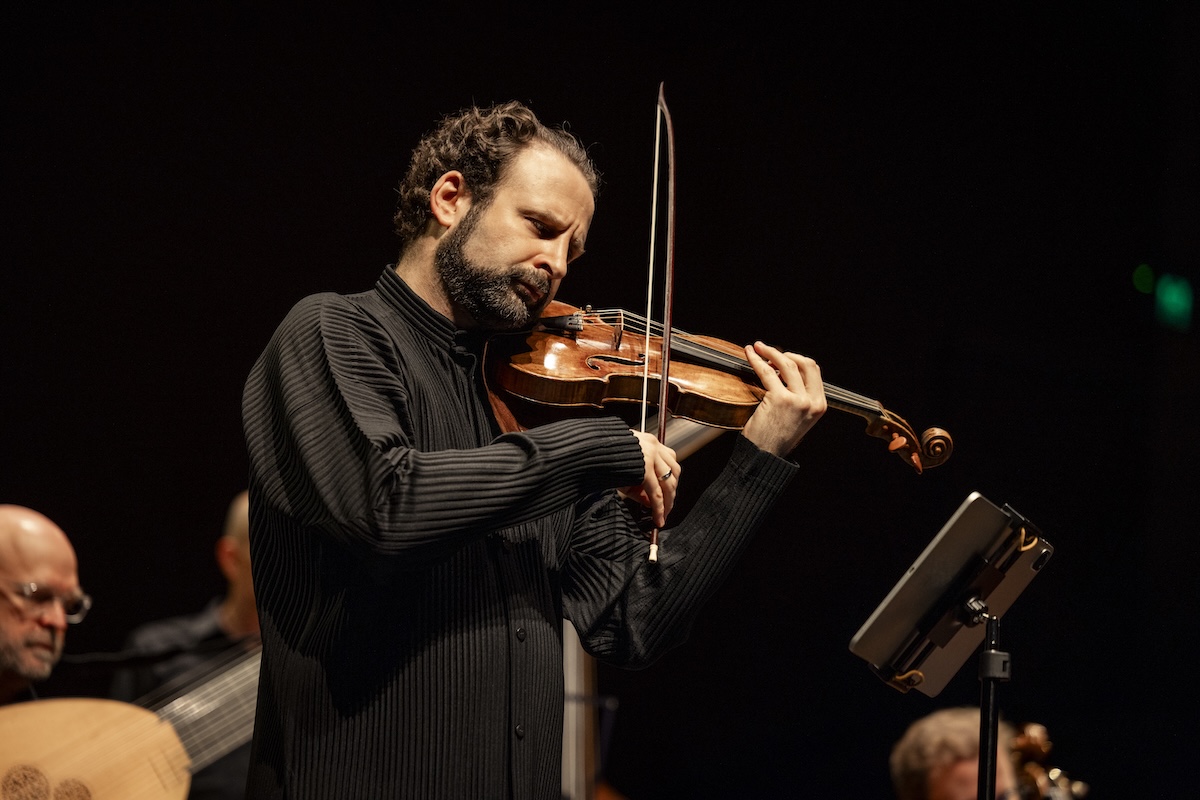
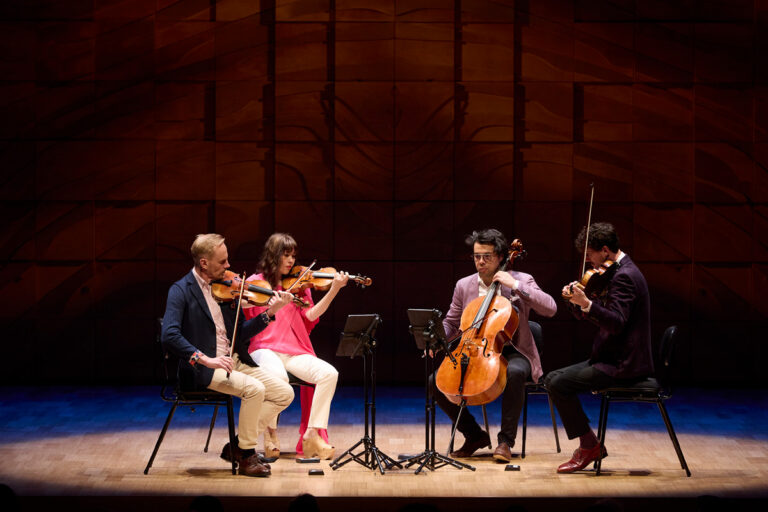
Ilya Gringolts and the Australian Chamber Orchestra: The Devil’s Violin. Photo © Charlie Kinross
ACO Artistic Director Richard Tognetti had to pull over to the side of the road when he first heard Gringolts playing Paganini on his car radio. That was 11 years ago and, after two sensational ACO tours in the interim, he is back for a third. The impact of his playing has in no way lessened.
Born in Leningrad 43 years ago, when it still bore that name, and trained by Itzhak Perlman at Juilliard, the Swiss-based virtuoso has built a reputation for being “a violinist’s violinist”.
He is equally at home with the Baroque, Romantic and contemporary repertoires, as his extensive discography shows.
“To be honest, I stopped making a distinction between old and new music for myself a long time ago,” he says. “It’s just music – music that I choose to play. I mean, all the old music was once new.”
The current tour reflects this, pitting Soviet-era composers Sofia Gubaidulina and Mieczysław Weinberg against Vivaldi and Geminiani, with a new commission by Australian composer Paul Stanhope thrown in.
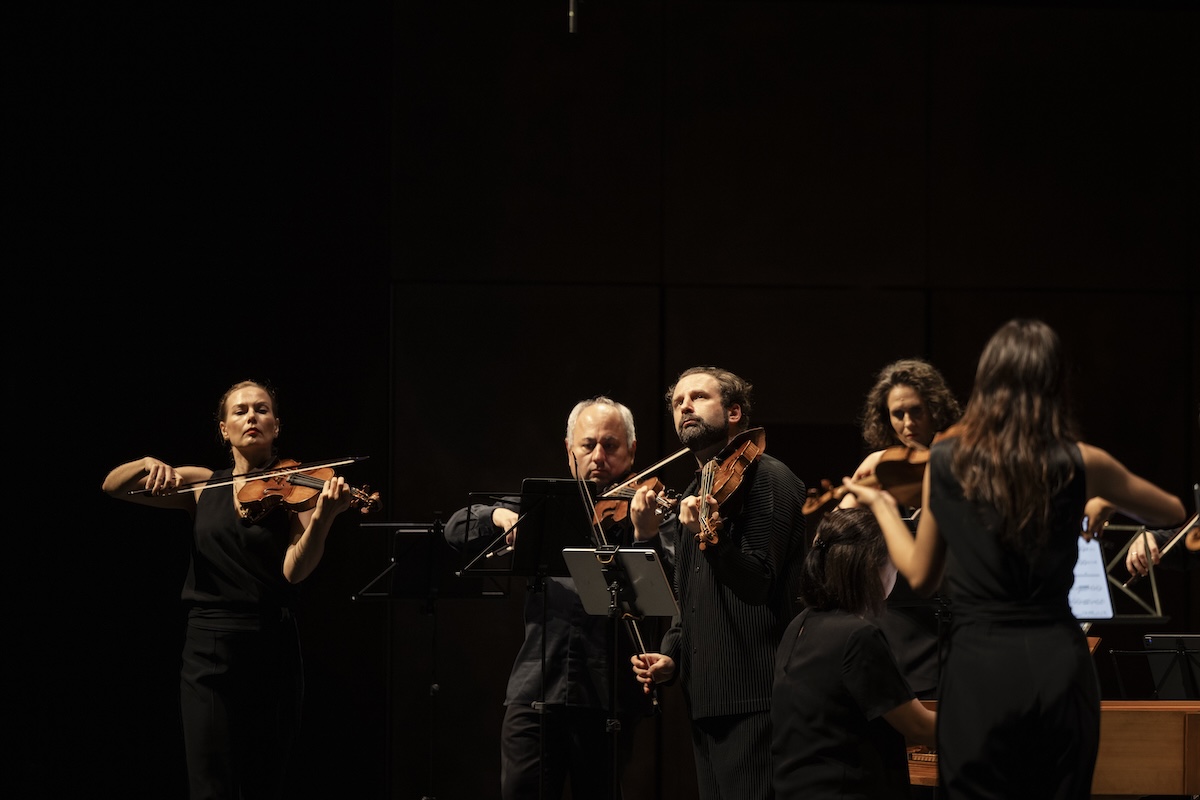
Ilya Gringolts and the Australian Chamber Orchestra: The Devil’s Violin. Photo © Charlie Kinross
Gringolts examined the German (Dresden) and Italian schools in his survey, starting with a movement from Johann Paul von Westhoff’s Sonata No. 3, in which non-stop arpeggios imitate the sound of pealing church bells.
His right arm got a vigorous string-crossing workout, and his faultless bowing technique was put to the test throughout the evening. There was little relief in the next work on the program, Antonio Vivaldi’s D minor Concerto, RV 237, with its breakneck opening Allegro, gently lyrical middle movement featuring some fine theorbo from Simon Martyn-Ellis, and a restless finale with its fair share of double stopping, challenging runs and explosive ritornellos from the 12-strong orchestra.
The almost unbearable tension in some of the passages in Gubaidulina’s 1987 quartet — imagine a rope being stretched tighter and tighter to breaking point before the final release — made an interesting contrast to the elegance, excitement and blinding virtuosity of Tartini’s notorious sonata.
The enterprising composer promoted the myth that he dreamt the Devil had played him a wonderful sonata, but what Tartini was able to write down was only a pale imitation.
Gringolts and the ACO’s attack in the dazzling final movement was indeed devilish, but the loudest cheer of the night came in the second half, when Satu Vänskä’s 1728/29 Stradivarius and Gringolts’ Guarneri fought it out at ten paces in Vivaldi’s Concerto for Two Violins in C major, RV 507.
It made for a fascinating contrast in playing styles as well as in the sounds of two centuries-old instruments from different makers: the Guarneri organic and characterful, especially in the bass register; the Strad sweet, smooth and refined.
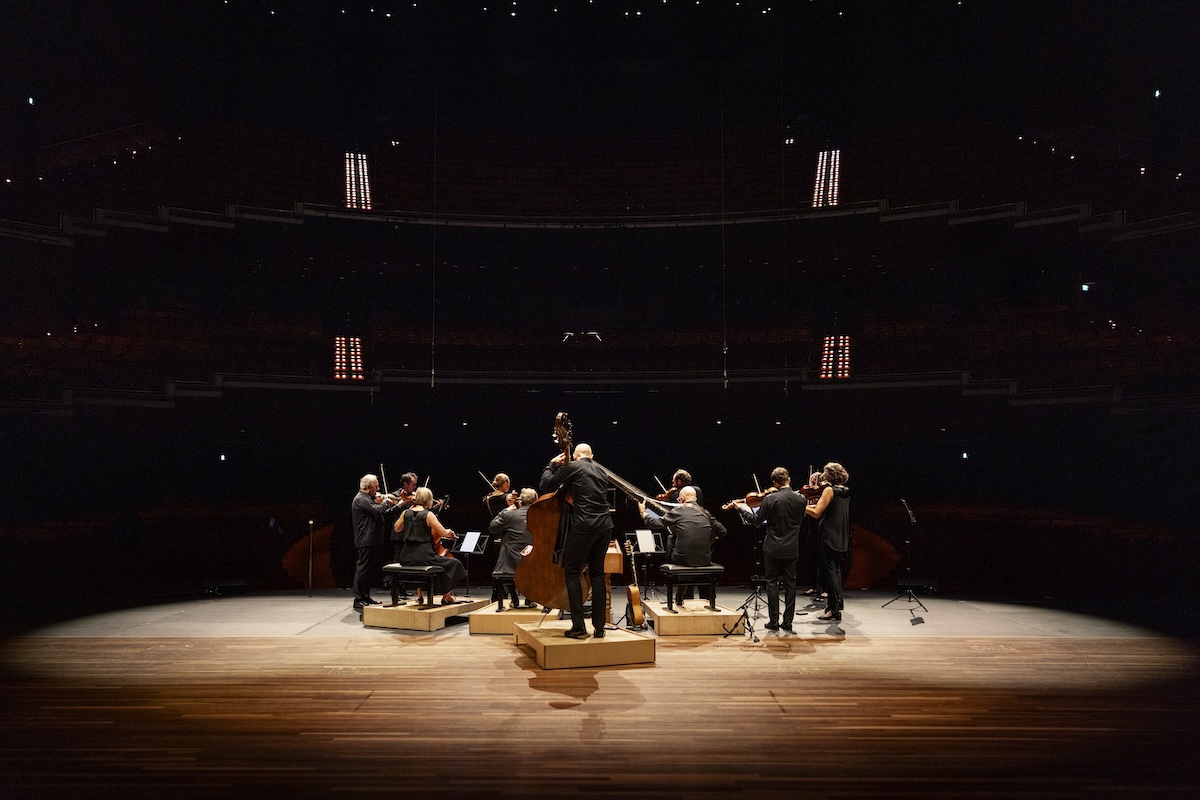
Ilya Gringolts and the Australian Chamber Orchestra: The Devil’s Violin. Photo © Charlie Kinross
Weinberg’s lovely Aria, Op. 9, gave listeners their first chance to hear Stefanie Farrands’ newly acquired 1610 Maggini viola before Stanhope’s new work Giving Ground, a modern take on Francesco Geminiani’s Follia concerto grosso, made way for the Baroque blockbuster.
Gringolts returns to the stage — this time at ACO On the Pier — for a not-to-be-missed concert with Tognetti on 27 March.
The Australian Chamber Orchestra presents The Devil’s Violin at Llewellyn Hall, Canberra on 28 March.







Comments
Log in to start the conversation.