In Water Song, Sunny Kim’s Ensemble Ochaye offers audiences a rare and captivating experience which blends sonic traditions, languages, and timbres and provides a glimpse into the many ways that water can sing.

Delicate rain sounds play during pre-performance and there is an opportunity to survey the array of instruments assembled including an intriguing kettle nested near the front of the stage. This is a theatrical performance.

Cellist Zoë Barry commences with delicate and meditative looped drones which set up a ceremonial air. Kim and the ensemble arrive as water bearers and bathe their hands before providing more layers to the soundscape with overlapping multi-lingual verses combined with Aviva Endean’s longing clarinet refrains.
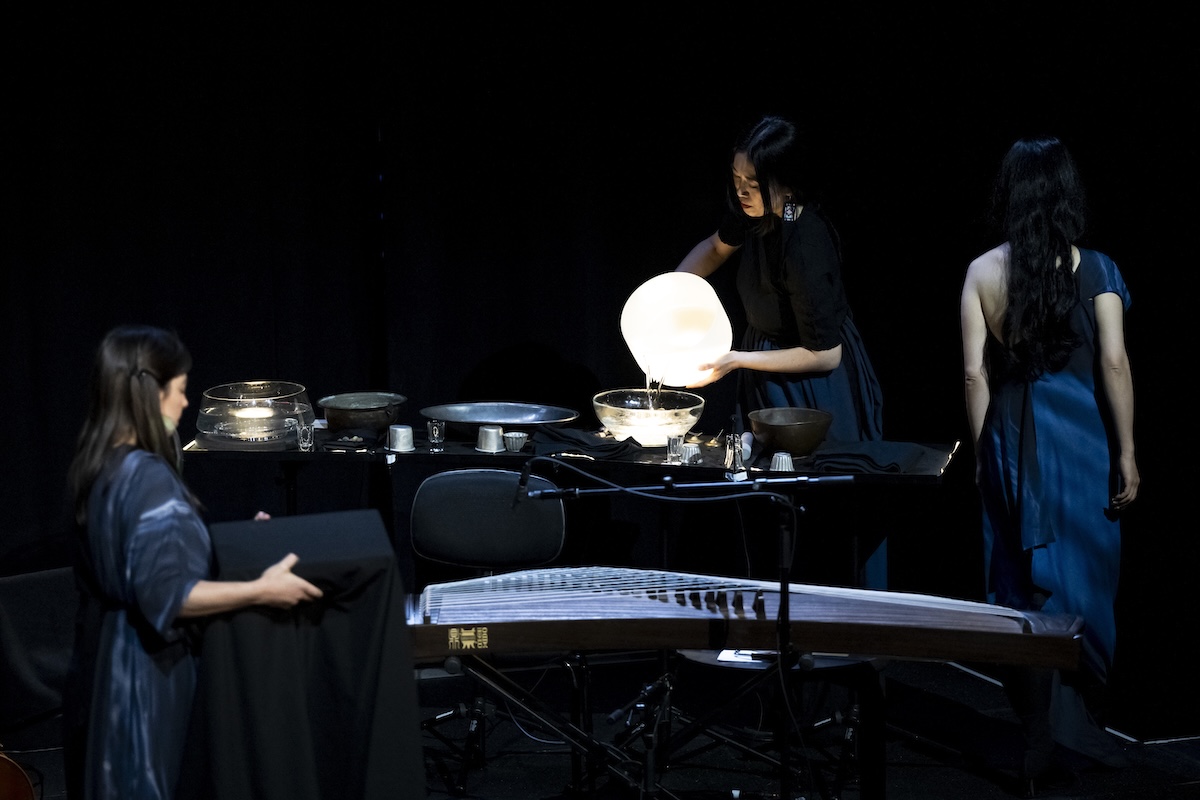
Sunny Kim’s Ensemble Ochaye: Water Song. Photo © Cassandra Hannagan

The concert program is structured around shifting waters and each piece is presented as we witness water moving between vessels around the stage. Bubbles, splashes, ripples, and droplets all feature as integral to the compositions performed and Ensemble Ochaye embrace a reverence for water. This could tip over into indulgence but there are more than enough moments of levity throughout. A playful and mischievous splash between performers springs the ensemble into a bright and toe-tapping drinking song.

Later, four of the players retire to Chekhov’s kettle, which is now ready to be boiled to make tea highlighting the domestic and quotidian character of water in our lives. During this relaxed episode, Mindy Meng Wang’s guzheng solo ripples and flows with virtuosity and flair.

Perhaps the most delightful and moving moments occur when the quintet are subtly shifting across instruments and vocals simultaneously. Cello, guzheng, and kamancheh are bowed in unison. It becomes impossible to determine each sound source within their rich layering – a sonic emulsification as five liquids become one.

For this reason, it is hard to single out individual highlights. The ensemble is incredibly unified throughout the performance and the repertoire flows from one item to the next making discrete pieces less distinguishable. A thrilling climax though is Kim and Gelareh Pour’s final vocal duet. They seem to sing across continents to one another before finding a profound harmony and resonance within each other’s vocal stylings.

Sunny Kim’s Ensemble Ochaye: Water Song. Photo © Cassandra Hannagan

What is also clear throughout is a sensitivity to tableau. Once assembled, the ensemble’s gestures and movements form striking shapes around different instruments and stations. Rarely do we hear or see the exact same line up. Some of the moments are even too brief and I was keen to spend longer letting certain sounds wash over me.

Water Song also offers audiences a rare type of musical texture – heterophony. This type of voice relationship is not common in European classical and contemporary styles which are often divided into main melodies with accompaniment or more polyphonic independent voices. Heterophony encompasses many voices sharing and imitating melodies alongside one another. They are not fully enmeshed but not able to be separated either. This performance is a celebration of difference and unity.

Water Song makes an impressive contribution to the Utzon Music 2026 series. Emerging from the Opera House it is impossible not to reflect on the Quay and the surrounding immensity of water which weaves around Gadigal Country. And this carries home where suddenly making a cup of tea feels like a special daily musical ritual.


For more information on the Utzon Music at Sydney Opera House, series, visit this link.

Writer Paul Smith is Associate Professor in Music at the University of New England.

Contribute to Limelight and support independent arts journalism.