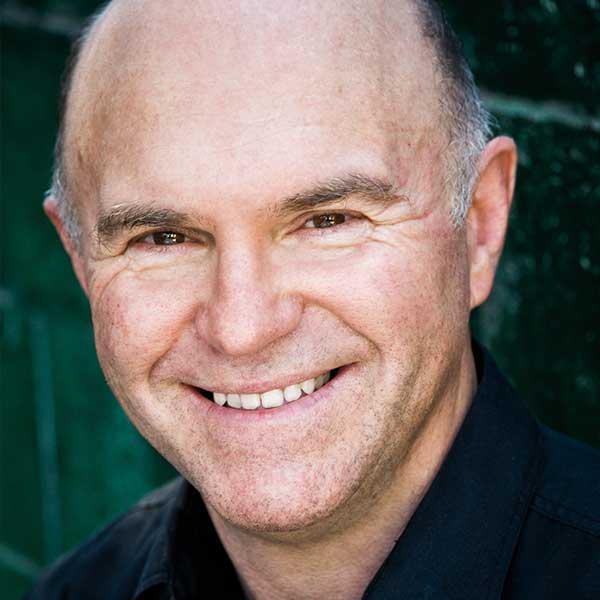
Benjamin Northey is expressive and authoritative in superb performances of works by the Finnish master.
January 12, 2017
Jayson Gillham is a 30-year-old pianist, originally from Queensland, who is now based in London. He has won several prizes, and his career is progressing nicely as he performs solo recitals, concertos and works with various chamber groups including the Jerusalem Quartet. He won the 2014 Montreal International Music Competition with a performance of Beethoven’s Piano Concerto No 4, a work he recently played in Sydney as part of a national tour. Two previous solo discs are available on his website. At the 2016 Perth International Festival, a reviewer remarked on Gillham’s “bell-like tone and… sense of expressive lyricism”. The former is certainly in evidence in this recital from ABC Classics. It informs the final Allegro movement of Schubert’s A Major Sonata, D664, giving the music a fresh and unbridled pastoral feeling. Gillham captures the improvisatory style of Bach’s Toccata, BWV911, and once the work is fully underway his playing has real sinew and finely controlled momentum. Young pianists today (unless they are geniuses like Trifonov) fall into one of two broad approaches: either they attack music in a deconstructive way to make it sound newly minted, or they see themselves as part of a long concertising… Continue reading Get…
January 11, 2017
If you want to hear a dazzling young female pianist with a promising career ahead of her, try this. Such creatures are common today, but this set is special. It collects unreleased recordings Argerich made in 1960 and 1967 for North and West German Radio. At the time of the earliest of these, she was studying with Friedrich Gulda, who famously said he had nothing to teach her as “she could already do everything”. Argerich’s recognisable characteristics are here: lightning reflexes; pithy attack; astounding nuance at high speed. She has since abandoned the solo repertoire, so it is fascinating to hear her in Mozart (Sonata No 18, K576) and Beethoven (the Sonata in D, Op. 10 No 3). The latter particularly benefits from her vitality and velocity; it is a shame she never recorded more Beethoven sonatas. The second disc contains works she rerecorded shortly afterward for DG: Prokofiev’s Toccata, Ravel’s Sonatine and Gaspard de la Nuit. In Ravel’s Ondine she is arguably too volatile – tranquillity is not in her armoury – but Scarbo is a knockout. So is her 1967 performance of Prokofiev’s Sonata No 7: the sharpness of her rhythmic response takes your breath away. Throughout her…
November 10, 2016
It took Franz Liszt 26 years to produce the final version of his Twelve Studies in Increasing Degree of Difficulty. The earliest version dates from 1826, but the pianist-phenomenon decided that these pieces were not difficult enough. Other pianists could still manage to play them! The most challenging version of the expanded and elaborated studies appeared in 1837, but the final version of 1852 – dedicated to Czerny – brought a reduction in technical obstacles. Stretches of over a tenth were eliminated, for example. While these 12 Etudes and the others in this recital were designed to showcase Liszt’s superhuman technique, Liszt the poet is still in evidence. Additional to the pyrotechnics lie delicate textures, presaging those of Debussy in terms of color if not harmony. These textures require all the subtlety of nuance that the later composer would demand. Recordings have tended to lean towards one or other extreme. Generally, young pianists use the Etudes to show off their pianistic skill: the young Bolet, Cziffra and Ovchinnikov come to mind. Older pianists stress the poetry and musicality, like Arrau and late Bolet, both in their 70s when they recorded these works. Arrau’s Transcendental Etudes have been… Continue reading Get…
November 2, 2016
This double-CD set is a collection of favourite encores, comprised of well-loved piano pieces that are recorded infrequently today, and hardly ever performed all together. The programme includes two of Scarlatti’s most popular sonatas, K380 in E Major and K159 in C Major, La Cacchia, five Bach Preludes (including the popular No 1 of “the 48” in C Major), Mozart’s Rondo alla Turca, Beethoven’s Für Elise, Schubert’s Moment Musicale No 3 in F Minor, several Chopin Etudes and two Preludes (including No 15, the Raindrop), and music by Liszt, Brahms, Grieg, Scriabin, Rachmaninov and Prokofiev, finishing with Gershwin’s own arrangement of I Got Rhythm. The performances? They are impressive in their precision and polish. The clarity and evenness of James Brawn’s playing is a major asset in the early works – such as the Bach D Major Prelude with its moto perpetuo semiquavers – and a piece like Chopin’s Black Keys Etude holds no terrors for him. His approach is less suited to the C Sharp Minor Prelude of Rachmaninov, where a minimum of Romantic ebb and flow makes it either refreshingly straightforward or lacking in personality, depending on your point of view. Similarly, Brawn goes for clarity… Continue reading Get…
October 13, 2016
The recently appointed Music Director of the Boston Symphony Orchestra, Andris Nelsons, continues his series of the ‘war symphonies’ of Shostakovich in this double-disc set. The Tenth appeared a year ago to great acclaim, and the Sixth and Seventh are slated for future release. This series of symphonies is the pinnacle of Shostakovich’s achievement in the form, reputedly mapping the composer’s anxiety, anger and subversion during the fraught years of war and Stalin’s rule. Valery Gergiev recorded much the same selection with the Kirov (Mariinsky) Orchestra in the early 2000s for Philips (leaving out the post-war Tenth, arguably the best, and adding the experimental pre-war Fourth). That set makes for an interesting comparison. The Boston Symphony is known for its polish, and it is an aural pleasure to revisit their beautifully upholstered, well recorded sound. Nelsons has galvanised these musicians.Dramatic moments like the descending brass motifs in the Eighth’s third movement absolutely tell. Quirky, pointed phrasing from the clarinet brings Shostakovich the clown to life in the central movement of the Ninth, and the Fifth’s first movement climax carries plenty of weight. The passage that follows, with flute and horn mingling in gentle counterpoint, is as… Continue reading Get unlimited…
September 29, 2016
Yehudi Menuhin (1916-1999) was the most widely known violinist of the 20th century. A child prodigy, he recorded the Elgar Concerto at the age of 16 with Elgar conducting. His recording career spanned seven decades. The earliest discs were made for American Columbia in 1928, but from 1929 until 1998 he recorded for EMI. It is from his EMI catalogue that these 80 CDs are drawn (they are available separately, or in one box with a set of DVDs). Amazingly, these are not Menuhin’s complete recordings: his late conducting work and some duplications (such as Lalo’s Symphonie Espagnol) are missing. The landmark recordings are here: the 1932 Elgar; the complete Beethoven Sonatas with the distinguished pianist Louis Kentner; Beethoven, Brahms, Mendelssohn and Bartók concertos under Furtwängler, and earlier sessions with his mentor, the Romanian composer Georges Enescu. The young Yehudi’s sheer panache and extraordinary musical instincts are a revelation: hear him delighting in his skill in the Virtuoso collection, in pieces by Sarasate and Fritz Kreisler recorded in the late ‘30s. In mid-career, Menuhin’s technique faltered; problems with his bowing arm plagued him from then on. You can hear it in his live performance of the Britten… Continue reading Get…
September 9, 2016
Reuben Blundell is an Australian-born conductor, whose mother played French horn in the Melbourne Symphony Orchestra. As a violinist, Blundell gained a place in the New World Symphony in Florida (under Tilson Thomas). He is now Music Director of several ensembles in New York and Philadelphia. One of these is the Gowns Arts Ensemble, a string orchestra, comprising ten musicians on this recording. The programme consists of a dozen short pieces for strings by American or American-based composers of the late 19th and early 20th centuries. This was a time when Americans wrote in the European style, even if indigenous themes were used, as in the Omaha Indian Love Song and Chippewa Lullaby from Four North American Legends by Carl Busch (1914). It is interesting to hear music by Horatio Parker, who was the composition teacher of Charles Ives – arguably the first true American original – as well as Roger Sessions and Quincy Porter. Parker’s Scherzo for Strings is a brisk minor-key waltz, reminiscent of the work of one of his own teachers, Dvorˇák. Other composers include Arthur Foote (Air and Gavotte), Frederick Converse (Serenade), and Paul Miersch, a German cellist who played in both the… Continue reading Get…
September 9, 2016
Elizabeth Joy Roe is an emerging artist snapped up by Decca. She has recorded the Britten and Barber Piano Concertos, but the repertoire on this, her second solo album, is even rarer. The Irish composer John Field (1782-1837) studied with Clementi, later traversing Europe as a concert pianist. Contemporary accounts mention Field’s lyrical, singing tone and poetic style. He is credited with inventing the nocturne: a short study expressing Romantic notions of the night. Impressed by Field’s Nocturnes, Chopin composed his own iconic set. Field’s Nocturnes fall into the pattern of a lyrical, thematic line, usually supported by flowing arpeggios or repeated patterns in the left hand. His early pieces recall Mozart’s slow movements (No 1 in E Flat), but later ones contain dramatic contrasts (No 10, Nocturne Pastorale). The thematic line is often treated to pianistic decoration, as in No 6, Cradle Song – possibly the precursor to Chopin’s Berceuse – and Liszt in his ‘consolation’ mood is anticipated in No 5 in B Flat. Field’s Nocturnes are not restricted to a particular time signature: most are in 3/4, but only one (No 8 in E Flat) sounds like a true waltz. No 16 in… Continue reading Get unlimited…
August 26, 2016
Franz Schubert’s late piano music has a deceptive simplicity about it: a surface naivety masking emotional depths. The surface purity and the Romantic soul need to be kept in balance; with Schubert it is always a question of less is more. That is why the most thoughtful and self-effacing of the great pianists – Alfred Brendel, for example – make such fine Schubertians. Geoffrey Saba, an Australian-born pianist resident in London, is one of this breed. He maintains the necessary equilibrium with skill and understanding. In the second Impromptu of D935, for instance, he transitions deftly between rippling semiquavers and the stately, somewhat melancholy chorale that closes the piece. In the following Impromptu, a theme and variations, he employs subtle rubato: enough to create a feeling of spontaneity that underlines the work’s title. Schubert could have called these four pieces a sonata, but he did not. The first of the Klavierstücke belongs to the same troubled world as Winterreise, and contains the seeds of desperation beneath a restless surface. Both works include passages of major-key frenzy that collapse into the minor. Saba judges such moments unerringly. I find the piano sound on this disc a trifle hollow. It lacks the warmth of… Continue reading…
August 12, 2016
★★★★☆ Robertson and co. give Stravinsky’s subtle and delicate score an appropriate treatment. Continue reading Get unlimited digital access from $4 per month Subscribe Already a subscriber? Log in
August 11, 2016
David Matthews (b. 1943) and his composer brother Colin were protégés of Benjamin Britten. The string quartet medium is clearly one that appeals to David; he has written 12 so far. Although this is the third volume in the series, it actually contains the earliest: Quartets Nos 1-3 (composed between 1969 and 1978), plus a short Mirror Canon (1963) and a string quartet transcription of Scriabin’s Piano Prelude, Op. 74 No 4. TUnderstandably, the First shows some influence of Britten’s own quartet writing: there are passages containing wisps of thematic material hovering over sustained chords, often in high harmonics, and occasional musings from solo instruments. Along with that, however, are strong rhythmic passages and thick textures. Matthews’ primary influences of Tippett, Berg and, most notably, Beethoven were present from the start. The First, in five movements played without breaks, is densely packed with contrapuntal incident. The Second, more classically styled, was written while Matthews was in Australia staying with Peter Sculthorpe. The piece culminates in a moving elegy (am I wrong to hear Sculthorpe’s fingerprints in the syncopated ostinati of the second movement?). By comparison, the Third seems a more public statement. All three major works and… Continue reading Get…
August 5, 2016