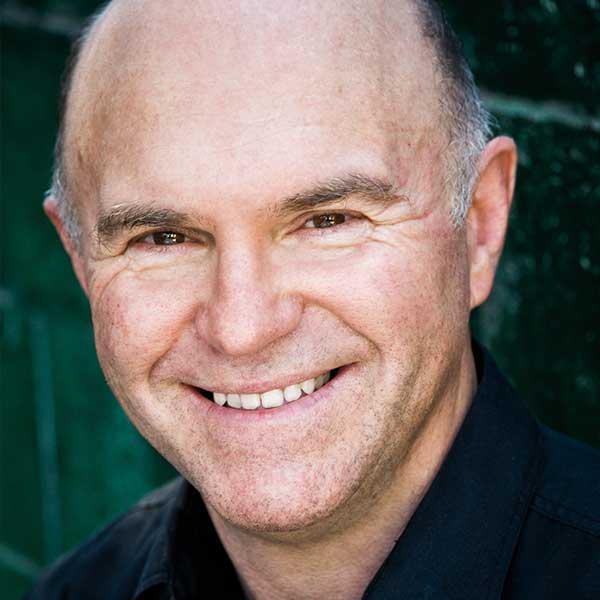
Sokolov is a cult favourite, not only because his conception of any music he plays is unflinchingly personal but also because of his tremendous concentration. Every note is coloured and weighted; each phrase meticulously judged. He refuses to record in the studio, but Deutsche Grammophon has secured a contract to release his live concert performances. This is the second release, taken from recitals in Warsaw and Salzburg in 2013; the previous disc won Limelight’s 2015 Recording of the Year. Sokolov’s typically uncompromising programme includes Beethoven’s Sonata No 29, Op. 106, the Hammerklavier. I was surprised how delicately he plays the first two movements: his dry, detached staccatos are lightly etched, as if to remind us that we are still in the Classical period. The Adagio sostenuto is one of the great inward meditations of late Beethoven, and here it feels as if time had stopped. Sokolov ruminates for 21’28”. By comparison, Paul Lewis plays it in 18’31”, and Gulda in 15’44”. This communing over every single note requires deep concentration from the listener as well as the performer – easier in a concert hall than at home. While Sokolov’s single-mindedness never falters, his is not your… Continue reading Get unlimited…
April 15, 2016
Once, recordings of Ravel’s output for solo piano were rare. Now many young pianists have joined the fray.
April 1, 2016
Yuja Wang’s ability to colour her playing at speed is like nothing we’ve heard since Martha Argerich
February 18, 2016
It has been clear for some time that Lang Lang has grown into a sensitive, thoughtful musician.
February 9, 2016
It may surprise you to learn that there were three editions of Tchaikovsky’s First Piano Concerto: the first from 1875, the second a revision of 1879, and the third a posthumous version published in 1894. It is the latter that has been performed ever since, though it differs in many ways from the earlier versions. Gerstein gives us the premiere recording of the 1879 version. Differences are notable, beginning with the opening, where the piano chords are arpeggiated rather than played as blocks. With the piano a kind of uber-harp, it brings the music closer to the world of Tchaikovsky’s ballet scores. This edition is a prettier work, with fewer opportunities for barnstorming. Cuts in the third movement have been opened up. Gerstein’s performance is lighter in texture than most; he and Gaffigan made this deliberate choice. At times I miss the passion and momentum of the young John Ogdon, but on its own terms this performance has integrity. Prokofiev’s Second Concerto is similarly detailed and fluent, but occasionally cautious. The running scales of the scherzo could be more devil-may-care. In the first and third movements Gerstein’s humming… Continue reading Get unlimited digital access from $4 per month Subscribe Already…
January 24, 2016
Lincoln Center’s 2015 production of Rodgers and Hammerstein’s 1951 musical The King and I was well reviewed. Ben Brantley in the New York Times called it “a colonialist-minded musical that… should probably embarrass us in the age of political correctness.” His contention was that it did not. I’m less certain. On disc the Overture reminds you immediately that this is Rodgers’ show. His ability to craft a memorably turned melody with unexpected harmonic underpinnings is superb. I Have Dreamed and Hello Young Lovers are masterpieces. Yet, as the songs progress, you can’t help feeling that Hammerstein’s work remains stubbornly of its time. Kelli O’Hara sings Anna perfectly, although her English vowels are too studied. Ken Watanabe was strong as The King onstage, but makes little impression vocally. Ashley Park’s Tuptim has all the notes, but it’s a squally voice with a fast, wide vibrato; by contrast, Conrad Ricamora as her lover Lun Tha sounds very 21st-century Broadway. Ruthie Ann Mills performs Lady Thiang’s song Something Wonderful beautifully, and it’s good to hear Robert Russell Bennett’s original orchestrations. The Small House of Uncle Thomas is included, which is long… Continue reading Get unlimited digital access from $4 per month Subscribe Already…
January 13, 2016
Decca and Erato revisit the works and early recordings of the recently departed French nonagenarian. Continue reading Get unlimited digital access from $4 per month Subscribe Already a subscriber? Log in
January 7, 2016
Antony Gray’s set of the complete piano music of Francis Poulenc is, to paraphrase Orwell, more complete than others. Besides the many pieces written expressly for solo piano it contains Poulenc’s music accompanying the story of Barbar the Elephant (sans narration) and several transcriptions of other works including the Sonata for Two Clarinets, the Sonata for Horn, Trumpet and Trombone, and the ballet Les Animeaux Modèles. The latter was arranged by the composer, so it is more than a mere piano reduction for rehearsal purposes. There is also an arrangement of Mozart’s Musical Joke. Hence, five CDs as opposed to Pascal Rogé’s three. Gray has previously given us welcome surveys of piano music by Eugene Goossens and Malcolm Williamson, but here he enters a highly competitive field. Beginning with the composer himself (who recorded the Mouvements Perpétuels, the Two Novelettes and a selection of Nocturnes and Improvisations in the 1920s and 30s), many extensive selections of Poulenc’s piano music have appeared. Among French pianists are the composer’s friend and duo-piano partner Jacques Février, Gabriel Tacchino, Rogé, and more recently Éric Le Sage. Poulenc’s light touch is compelling;… Continue reading Get unlimited digital access from $4 per month Subscribe Already a…
December 22, 2015
Media recluse he may be, but Sokolov in Salzburg is a definite must-have for all piano aficionados. Continue reading Get unlimited digital access from $4 per month Subscribe Already a subscriber? Log in
December 10, 2015
Hans Gál (1890-1987) was one of those composers of Jewish heritage who fled Nazi Germany. While many headed to the USA, Gál went to England, where he was interred as an enemy alien and imprisoned alongside actual Nazis. His sister perished during The Holocaust and later he lost his 18-year-old son to suicide. After the war, Gál taught at Edinburgh University and was instrumental in setting up the Edinburgh Festival. He continued to compose, though like other refugee composers he did so in a vacuum. He regarded himself as a craftsman: when forced to spend time in hospital in his 80s, he committed himself to writing a fugue every day. Gál enjoyed a burgeoning reputation before life’s vicissitudes intervened. His four symphonies span his entire creative career: the First was written in 1927 and the Fourth in 1974. Nevertheless, his style and language remained consistent. The turmoil of the times is not reflected in his music. Evidently he turned to composition for escape and solace. His symphonic music is redolent of the English pastoral school – even the First, written before he came to England. That work is probably closest to modernism, with its cheeky Scherzo and buoyant, extrovert finale,……
November 11, 2015
Music lovers over 50 will recall the Ace of Clubs label: a series of reissues of mono recordings from the 1950s. They sold in Australia for $2.95, enticingly cheaper than full price stereo LPs at $5.95. The latest in a series of Decca Sound boxes, delving into the old Decca catalogue, brings back many of those recordings, encased in reproductions of the original sleeves and with bonus tracks to take each CD beyond 70 minutes. Decca’s Full Frequency Range sound quality was always a feature and is enhanced in the digital remastering, although violin sections are occasionally toppy. For instance, you have to listen through the harsh string sound of Elgar’s Introduction and Allegro to appreciate the bracing vitality of Anthony Collins’s performance. His Falstaff has no such caveat: it sounds great and is enthralling from beginning to end. Sadly there is too much here to cover in a short review. Conductors include stalwarts like Ansermet, Argenta, Boult, Martinon, Fistoulari, Erich Kleiber (beautifully unaffected in Beethoven’s Pastoral Symphony), Van Beinum, and the earliest discs by Solti: a riveting Bartók Music for Strings, Percussion and Celesta and a lively Haydn Symphony No 100. Unique and celebrated recordings abound: Britten’s Diversions with…
November 11, 2015
A beautifully produced tribute celebrates the great violinist’s 70th birthday.
November 6, 2015