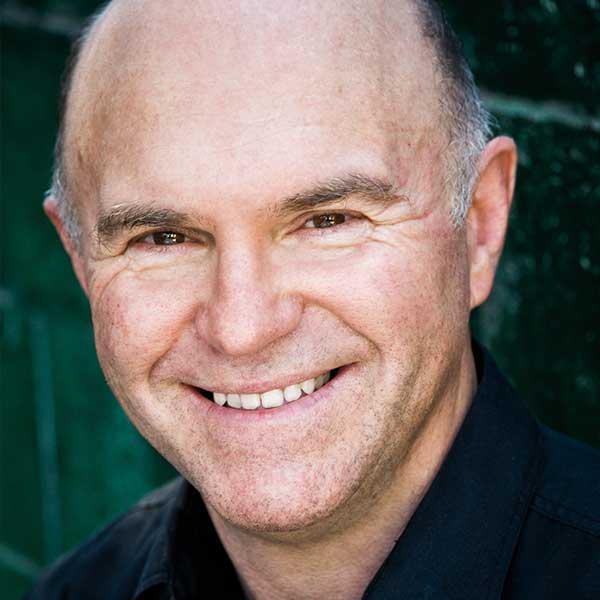
Yan Pascal Tortelier’s charming pairing of Mozart and Franck. Continue reading Get unlimited digital access from $4 per month Subscribe Already a subscriber? Log in
April 12, 2015
As we leave CDs behind and move into downloads – where music will no longer be a collectors item but just another dreary list on your computer screen – somebody at Universal Classics at least has a sense of history. It is five decades since Herbert von Karajan’s 1963 set of the Beethoven symphonies with the Berlin Philharmonic was released. It was not the first recording of these works by the one orchestra and conductor – Karajan himself had recorded them in the 1950s with the Philharmonia – but it was the first to be released and marketed as a set. DG executives were worried the gamble would fail and they wouldn’t break even, but within ten years a million copies had been sold. I once stayed with two lumberjacks in Banff, Canada: these were only classical records they owned. It was everybody’s introduction to Beethoven. The orchestra made these recordings after five years with Karajan in charge. During that time he had hired young players and retired older ones. He also had begun to insist on the ‘long line’ of lyrical impulse, but not yet the moulding of orchestral balance to prioritise beauty of sound over energy and attack….
March 23, 2015
Buy this album on iTunes: Sculthorpe: The Complete String Quartets with Didjeridu – Del Sol String Quartet & Stephen Kent The string quartet was central to Peter Sculthorpe’s output. His last, No 18, had its premiere on his 81st birthday. He undoubtedly liked string instruments because of their ability to sustain long-held notes. Drones play a pivotal part, not only in imitation of indigenous music, but as an aural equivalent to the Australian outback. Strings are also adept at imitating birdcalls, as the third movement of Quartet No 14 shows. Sculthorpe’s quartet writing with its drones and repetitive ostinati contain all of this, and through subtle harmonic and rhythmic juxtapositions he suggests the life with which this landscapes teems. Neither the terrain nor his musical depiction of it is remotely passive. In 2001 Sculthorpe was introduced to a young Aboriginal didjeridu player, William Barton, who asked Sculthorpe to write for him. The composer responded by adding a didjeridu part to some of his orchestral works, notably Earth Cry and Kakadu. He also added the instrument to his existing String Quartets Nos 12, 14 and 16 – the ones with the most significant Aboriginal themes. Later works… Continue reading Get unlimited digital…
March 17, 2015
The Decca Phase 4 label began as part of London Records, Decca’s American branch, to specialise in sonic spectaculars. The opposite of Mercury, which employed two microphones, the Phase 4 engineers multi-miked orchestras and highlighted instruments and sections at the mixing desk. From 1964 to 1978 they recorded classical music, often hiring famous but neglected conductors. This anthology gives a wide cross section, from Robert Merrill singing American patriotic songs with soupy arrangements, to Paco Peña’s flamenco guitar, to Orff’s Carmina Burana. Much is no longer popular, nor does it have the ‘cool’ factor to warrant a revival. Stokowski conducts Berlioz, Russian music and Vivaldi’s Four Seasons at the end of his career, but is far better served by his 1950s EMI recordings. (His best Phase 4 disc, coupling Ives and Messiaen, is absent!) Stokowski’s Beethoven 9, along with Leinsdorf’s Mahler 1 and Doráti’s New World Symphony are comparatively successful, while Stanley Black is a good conductor of light music. The most interesting recordings are of Herrmann and Rósza conducting their film scores, but these are more extensively covered in Eloquence editions. Decca’s English executives pooh-poohed the Phase 4 sonics, and they were right. The sound is dry, unnaturally close,…
March 15, 2015
A stimulating and challenging program showed the orchestra on top form.
February 18, 2015
This is the third in the Beethoven sonata series, played by English-born, sometime Australian resident, James Brawn. I enjoyed a recent recital (which included a thoughtful Pictures at an Exhibition). Brawn shows every sign of thinking beyond the mere technical aspects of these works. In the early (1797) Sonata Op. 2 No 2, he keeps the music in proportion – this was still the Classical era – but also understands that the young Beethoven had a rough edge (bracingly evident in Brawn’s accented bass notes) and a sharp sense of humour. The latter imbues the scherzo with a quicksilver, throwaway quality. Brawn rightly brings more romantic ardour to the sturm und drang of the middle-period sonatas. His urgency in the tempestuous allegro of No 17 does not undermine the necessary Classical poise, while contrasting moments of calm are presented with sensitivity and clarity. Beethoven had a reputation as an improviser at the piano, and there is a real sense of this in Brawn’s playing. Sonata No 26, Les Adieux, can sometimes elude even the greatest Beethoven pianists. Its course is highly varied, both musically and dramatically. Brawn shapes every fleeting change of emphasis in the first movement, and even more…
November 21, 2014
Chandos’s second collection of Beethoven Sonatas from Bavouzet contains the two Op. 27 Sonatas (the second of which is the Moonlight), the three Op. 31 Sonatas (the second of which is the Tempest), Sonatas Op. 28 (Pastoral), Op. 53 (Waldstein), and the unnamed Sonatas Op. 22, 26 and 49. Written between 1795 and 1805, they represent the composer’s middle period. The earlier works retain a classical elegance, but this disappears in the Op. 31 set. By the time of the Waldstein (and its rejected slow movement, recycled separately as the Andante Favori), the composer has decided to use the piano sonata as a platform for making some big statements. Unlike some pianists, Bavouzet recognises that a different approach, even a different touch, is required from one work to the next. The accents in Op. 22 for example are sharp and briskly classical, whereas the accents in the finale of the Moonlight Sonata and the first movement of the Tempest are fuller, more in keeping with sturm und drang. His pedaling in the first movement of the Moonlight (the trickiest aspect of that music) is perfectly judged, and he finds a tender quality in a slower than usual rendition of the Allegretto. Overall,…
November 13, 2014
Lately Stephen Hough has become more interested in compiling themed programs from various sources than producing single-composer discs. Fortunately his standing as a musician allows him to do so, and the results are always illuminating and satisfying. This new recital of nocturnally inclined works proves no exception. While French pieces are left out altogether (such as perhaps Ravel’s Gaspard de la Nuit or Fauré’s Nocturnes), what is here is well chosen. Schumann provides the major part of the program, which opens with In der Nacht from his Fantasiestücke Op. 12. This turbulent nightscape is perfectly rendered. As ever, Hough’s technical assurance allows him to focus on conveying the meaning of the music, both in its pictorial aspect (a stormy night wind over the ocean) and concomitant emotional state. Both go hand in hand so closely in Schumann. Balancing this piece is the suite Carnaval, where Schumann presents a series of character studies as though seen at a masked ball (which would take place at night, of course). The 21 fleeting studies cover a variety of moods, but the overall impression is one of unbridled passion. Markings such as Vivo, Passionato, Anime and Presto abound. The challenges are many: specific character has…
October 19, 2014
Henri Dutilleux (1916-2013) had a long and productive life but worked in a slow, meticulous manner, which explains why this almost complete edition of his music only runs to six CDs. Missing is an immature ballet score Le Loup (The Wolf). Georges Prêtre recorded excerpts from it in the 1960s for EMI but evidently Universal was unable to license them, even though this set contains recordings from several diverse sources. The bulk of Dutilleux’s oeuvre is represented here – from his early Symphony No 1 and Piano Sonata of 1947/48 to his final orchestral work The Shadows of Time and Le Temps l’Horloge, an orchestral song cycle completed in 2009 and dedicated to soprano Renée Fleming (who sings it here). Because of Dutilleux’s magnificent sonic imagination and perfectionist attitude, every piece in this set is significant. The major large-scale works are his two symphonies – the Second (Le double), is more of a concerto grosso – and his concertos for violin and cello. The First Symphony (1951) emerges from the world of Roussel and Honegger, yet the composer’s fastidiousness is evident in the carefully balanced textures and succinct musical argument. (These traits would become even more pronounced.) Martinon conducts the…
September 25, 2014
The Swedish conductor Herbert Blomstedt came to San Francisco in 1985, following a decade with the Dresden Staatskapelle. Although Blomstedt lacked a marketable outgoing personality, he was in the right place at the right time. A contract was signed with Decca, and here are many of the memorable results, recorded between 1988 and 1995. Blomstedt brought the central European repertoire back to the orchestra, and the set includes Beethoven, Bruckner, Mahler and Brahms. These discs reveal a clear, lithe orchestral sound. SFS was light on its feet compared to its rival in Chicago, and in many ways better suited to recording. Blomstedt’s performances are not eccentric, but neither are they dull. Lively versions of Mendelssohn’s Scotch and Italian symphonies are here, and a terrific selection of Hindemith. He excelled in Scandinavian repertoire, so we have the complete Peer Gynt, Symphonies 2 and 3 from his excellent Nielsen set, and two delightful symphonies by the under-appreciated Berwald. From his Sibelius survey we get the First and Seventh Symphonies, plus Tapiola. (Many of these well-filled discs last over 80 minutes.) Rarities include works by Brahms for choir and orchestra, coupled with the Alto Rhapsody meltingly sung by Jard van Nes. Sound quality…
September 15, 2014
The youthful conductor István Kertész had worked mainly in provincial Hungary when he made his first recording for Decca in 1961, but his reputation was rising rapidly. Everyone responded to the freshness of his music making. His musical memory was acute: he was reputed to learn scores for the first time on the plane on his way to rehearsal. He was booked to do Elgar’s First Symphony for his recording debut with the London Symphony Orchestra, but on the strength of his success in a concert with Dvorák’s Eighth, the plans changed. Eventually he recorded all of Dvorák’s symphonies, and much else, with the LSO. Kertész would have cemented his international standing but for the intervention of fate: he drowned in the Mediterranean while on holiday in 1973, at the age of 43. The recordings with the London Symphony form the bulk of his legacy, and many of the best are included here. Dvorák is represented by the Seventh and Eighth Symphonies, some tone poems and the Requiem. A great recording of Bartók’s dark and gloomy opera Bluebeard’s Castle with Christa Ludwig and Walter Berry is also here (sung in Hungarian). One of his most exciting early recordings was of…
August 20, 2014
It is not often I take any notice of reviews on Amazon, but the three I found of this new release were not full of praise. They accuse Nézet-Séguin’s Schumann of being “shallow”, too fast, and devoid of the “expression” that these listeners were used to from Bernstein’s late recordings or (for less extreme examples) Kubelik and Sawallisch. In other words, Nézet-Séguin discarded the interpretive signposts that this music has picked up over 150 years of performance practice. Personally, I never learned to love Schumann’s symphonies until I heard the recordings by Neville Marriner (with the Stuttgart Radio Orchestra) – a conductor who knows something about clarification of texture. Later, original instrument readings from Gardiner and the Orchestre Révolutionnaire et Romantique proved a further revelation. It seems to me unfair that Schumann should be expected to provide depth and sorrowful resonance in every note – his symphonies were written mostly when the composer was in a bracingly good mood. This set is played on modern instruments by the Chamber Orchestra of Europe, renowned for their ensemble and bright clarity. They are conducted by the young Canadian (chief conductor of the Philadelphia Orchestra since 2010), who is very well aware of…
July 21, 2014