
Review: Lohengrin (Melbourne Opera)
Wagner’s swan makes a splash in Melbourne.
August 9, 2017




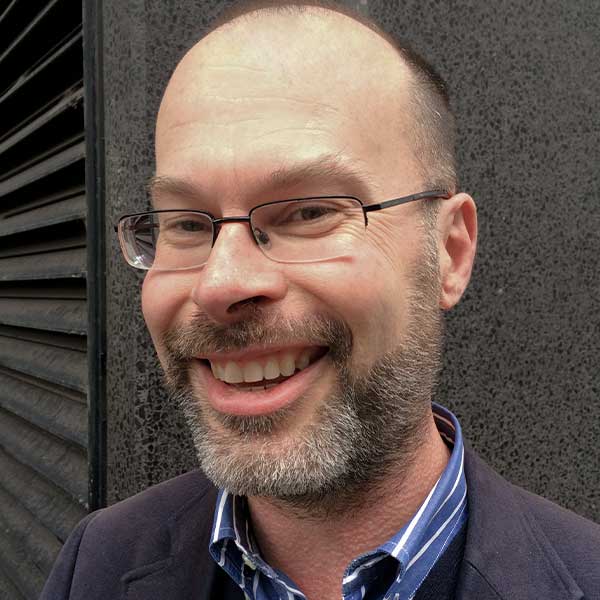
Tony Way is a director of music at Melbourne’s historic St Francis’ Church. Holding a masters degree in music, he is an organist and choir director as well as a published composer. He has been reviewing classical music for over two decades.
Wagner’s swan makes a splash in Melbourne.
Great respect has characterised Marc Minkowski’s decision to allow some 30 years of his career to pass before recording the St John. In choosing to use only eight singers he is at pains to create an intimate but intense reading of this most powerful work. This performance is based on the original 1724 version, but appends two arias from the revisions Bach made a year later, as well as employing later additions to the original orchestration (contrabassoon and theorbo) and a harpsichord in the continuo. Minkowski is intent on bringing out the radical musical drama that must have shocked, or at least perplexed, the good burghers of Leipzig that Good Friday afternoon in 1724. Eschewing the textural contrast between soloists and chorus, Minkowski differentiates between the various musical elements by adopting brisk tempos for choruses and deftly connecting them to recitatives, creating an almost frenetic telling of the story, in which Evangelist Lothar Odinius plays an impressive role. The arias offer varied meditations on the action. Australian countertenor David Hansen delivers an impassioned account of the aria Von der Stricken. Fellow alto, Delphine Galou, sings the more famous Es ist vollbracht with great empathy. No one performance will ever have…
Move over John Cage and Henry Cowell. Chance music, it seems, existed long before last century. How surprising and intriguing to discover that the roll of the dice may well have determined the compositional method of a Mass that could have been written by the great polyphonist, Josquin des Prés. (Josquin was employed by the Sforza family, some of the biggest gamblers in 15th-century Milan.) Movements of the Missa Di Dadi (Dice Mass) are preceded by images of dice showing different numbers. These indicated to the tenors the proportional length of the base melody (a chanson by Robert Morton) to the other parts. As Peter Phillips points out in his engaging notes, these indications are a bit haphazard and fortunately the publisher (presumably not a gambler) wrote out the actual tenor part to avoid confusion. While all of this is quite amusing – and despite not knowing for certain the Mass is by Josquin – the music is certainly worthy of attention. The customary precision and blend of The Tallis Scholars is in evidence throughout, but the final Agnus Dei is particularly moving. Missa Une mousse de Biscaye also lacks firm evidence of authorship by Josquin. Based on a secular…
In his day, Giaches de Wert (1535-96) was the foremost composer of madrigals, most notably serving in the musically progressive Gonzaga court at Mantua and influencing the young Monteverdi. He had a considerable 12 books of madrigals to his name. What is less well known is that he also produced three books of motets which also display his madrigalian prowess. Many of the texts he set were not standard liturgical texts, but rather biblical stories that lent themselves to more programmatic treatment. Wert’s music was not the only colourful aspect of his life. Early on he married Lucrezia Gonzaga and produced at least six children. His appointment to Mantua was full of intrigue: several moves were made to discredit him, but he stuck to his work, despite being labelled a cuckold. (His wife had been having an affair with the composer who was passed over for Wert’s job.) Lucrezia came to a sticky end some years later when she was involved in a murderous plot to seize a noble title. Wert eventually had an affair of his own, with the widowed noblewoman and poet, Tarquinia Molza. Such was Wert’s musical worth that when this scandal was… Continue reading Get unlimited…
Be seduced by Monteverdi’s tale of lust and power in Lyric Opera’s colourful production.
Hot on the heels of Iestyn Davies’ distinguished recording of Bach alto cantatas comes another disc containing two of the same from another British countertenor. Tim Mead, a former choral scholar of King’s College, Cambridge has forged a busy and successful career on the operatic and concert stage. He displays admirable agility in the final aria of Widerstehe doch der Sünde (BWV54). While Davies may have the edge in bringing the words to life, there is certainly much to enjoy in Mead’s account; not only his mellifluous tone but the fine playing of La Nuova Musica, which this year celebrates the tenth anniversary of its founding by artistic director, David Bates. Vergnügte Ruh! Beliebte Seelenlust! (BWV170) also demonstrates Mead’s affinity with Bach’s musical idiom through his unforced vocal technique. His more outwardly expressive approach provides a thoughtful and nuanced contrast to Davies. By way of contrast the Bach cantatas are paired with Pergolesi’s ever-popular Stabat Mater. Mead is joined by soprano, Lucy Crowe who visited Australia in 2012 to be soprano soloist in the ACO’s performances of Beethoven’s Ninth. Although the voices are in the main well matched, there are occasions in this performance where I feel… Continue reading Get…
A thoroughly modern countertenor, Davies is at home in all sorts of venues, recording studios and theatres.
Much to enjoy, but some missed programming opportunities.
A cunning and colourful response to Janáček’s extraordinary score.
A welcoming evening of friendly music making in an ornate setting.
Given the considerable skill of the abbey choir, it is a pity that Bax’s greatest choral achievement, Mater Ora Filium wasn’t included.
The choice of programme is also generous and first-rate.
Masaaki Suzuki has done a great deal for the cause of Bach over many years, but his way with Mozart is no less persuasive. Not only does he imbue the “great” but unfinished C Minor Mass with equal measures of grandeur, exuberance and other-worldliness, but he is one of those rare conductors (Boulez was another) who can impart to the listener great textural clarity plus an unclouded sense of the musical architecture. From the opening, rather old-fashioned Kyrie, Suzuki carefully paces the unfolding drama, allowing each part to play its role. The opening chorus of the Gloria (with its none-too-subtle references to Handel’s greatest hit) is joyfully dispatched, as are the succeeding solo opportunities. Sopranos Carolyn Sampson and Olivia Vermuelen are well matched in the Domine Deus; both having an excellent sense of phrasing. Sampson negotiates the justly famous Et Incarantus Est of the Credo with grace and ease. Suzuki’s careful attention to detail ensures beautifully shaped singing and playing throughout and a clear sense of how each part contributes to the whole. This is particularly true of the majestic brass in the Sanctus and the vocal intricacies at the end of the Gloria. To finish on a… Continue reading…