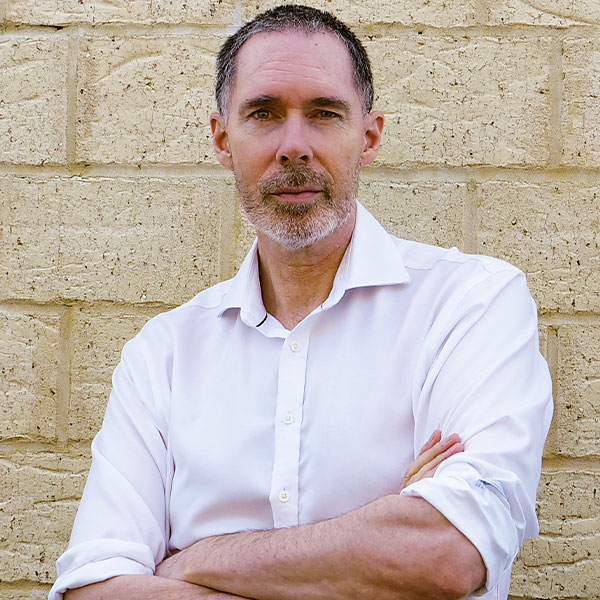
Will Yeoman

Will Yeoman

Will Yeoman is a former senior arts writer and current travel journalist for The West Australian newspaper. A regular contributor to Limelight and Gramophone, he is also Artistic Director of the York Festival and a keen classical guitarist.


Articles by Will Yeoman

CD and Other Review

Review: Beneath the Northern Star (The Orlando Consort)

Subtitled The Rise of English Polyphony 1270-1430, this latest recording from The Orlando Consort weaves a rich, stylistically diverse musical tapestry across nearly two centuries of early English polyphony. Originally formed in 1988 to explore repertoire from the period 1050-1550, the UK-based a cappella ensemble – currently comprising countertenor Matthew Venner, tenors Mark Dobell and Angus Smith and baritone Donald Greig – have occasionally branched out into contemporary music. Beneath the Northern Star finds them on home ground, featuring music by some of the leading lights of medieval English music such as Leonel Power and John Dunstaple, as well as lesser-known composers like Johannes Alanus, Thomas Damett, Robert Chirbury and the most prolific of all, Anonymous. All these motets and movements from mass settings are for three voices; the exception is the four-voice Credo from the Old Hall Manuscript which brings the recording to a close. The stylistic diversity is apparent in the variety of musical techniques, not just from composer to composer but from within different periods of a single composer’s career. Many of these devices are easy to hear once you know what you’re listening for. The second track, the anonymous Stella maris nuncuparis uses the rondellus technique,…

July 7, 2017
features

Georg Philipp Telemann 250 years on

On the 250th anniversary of the death of one of the Baroque period’s most prolific composers, we ask if more can be more. Continue reading Get unlimited digital access from $4 per month Subscribe Already a subscriber? Log in

June 24, 2017
CD and Other Review

Review: The Romantics (Australian Brandenburg Orchestra/Sato)

In some ways, this recording is quite a departure for the Australian Brandenburg Orchestra. In other ways, it isn’t. Who else but an ensemble specialising in historically-informed performances on period instruments could bring such innate understanding to the Baroque underpinnings of Grieg’s From Holberg’s Time – Suite in the Olden Style and Mendelssohn’s early String Symphony No 3 in E Minor? As for the ABO’s other novel offering – Paganini’s fiendishly difficult Violin Concerto No 4 – there’s a real lightness, crispness and suppleness required here that makes a HIP technique perfectly suited to Paganini’s OTT showmanship. This is especially the case with the ABO’s guest director and soloist, Netherlands-based violinist Shunske Sato. Concertmaster of both Concerto Köln and the Netherlands Bach Society, Sato is equally at home on modern and historical instruments. He is also clearly equally at home in repertoire as diverse as the three aforementioned works, here recorded live last year by Classic FM at Sydney’s City Recital Hall. The Grieg is given a delightful freshness, a newly-minted quality, by contrasting a generous use of portamenti with a parsimonious application of vibrato throughout. This lends a luminous clarity both to the lyrical movements such… Continue reading Get…

June 16, 2017
CD and Other Review

Review: Grétry: L’Amant Jaloux (Pinchgut Opera)

Without André Grétry (1741-1813) there wouldn’t be opera as we know it. The first French composer to successfully marry French and Italian styles in the Classical period, Grétry’s melodic and dramatic gifts coupled with a strong desire to push opera to its limits ensured his lasting fame. First performed at Versailles in 1778 before Louis XVI and Marie Antoinette, L’Amant Jaloux, ou Les Fausses Apparences (The Jealous Lover, or False Appearances) was an immediate success. The setting is Cadiz, Spain. The rich Don Lopez (baritone David Greco) forbids his widowed daughter Léonore (soprano Celeste Lazarenko) to marry again. But she is in love with the eponymous jealous lover, Don Alonze (tenor Ed Lyon), who has a sister Isabelle (soprano Alexandra Oomens), who is Léonore’s friend and the beloved of French officer Florival (tenor Andrew Goodwin). Without giving too much away, much mayhem ensues before the happy ending. Erin Helyard directs cast and orchestra – both of which are uniformly excellent – from the keyboard with great attention to detail yet with a sure grasp of forward momentum. We also get snippets of English dialogue which must have made live performances from which this recording was made an… Continue reading Get…

June 9, 2017
CD and Other Review

Review: Bach & Tárrega et al: Two Portraits of One Subject (Paul Ballam-Cross)

I’ve been listening to a lot of Schumann lately, so it was with some pleasure I discovered that young Australian guitarist/composer Paul Ballam-Cross also finds Schumann “deeply inspiring” as he admits in the note on his self-titled debut recital. Ballam-Cross’s Two Portraits of One Subject is dedicated to Schumann. But those same qualities of melancholy, intimacy and nostalgia permeate the entire programme, which comprises works by Schumann (of course), Bach (a favourite of Schumann’s), Tárrega (who adored Schumann’s music), Chopin (born the same year as, and championed by, Schumann) and Sor (whose three studies evoke a kind of Schumannesque saudade). Tárrega’s preludes owe a debt to Chopin, and it is with Tárrega’s transcription of Chopin’s Mazurka No 4 that Ballam-Cross prefaces his sensitively rendered performances of those nine miniature masterpieces. He opens his recital, however, with Bach’s oft-performed-on-guitar Suite No 1 in G. He makes of it a spacious, searching prelude to the rest of the programme, which then moves through Sor to Ballam-Cross’s own lyrical, musical commentaries on Schumann’s work and personality, Chopin and Tárrega, before coming to rest, appropriately, on the latter’s transcription of Schumann’s Bunte Blätter No 1. This is a beautiful and thoughtful debut, which as…

May 19, 2017
CD and Other Review

Review: For Seasons (Daniel Hope, Zurich Chamber Orchestra)

Any good new recording of The Four Seasons should always be welcomed. This one by Daniel Hope and the Zurich Chamber Orchestra is more than good: it’s outstanding. Listening to these dramatic, historically-informed performances, one is immediately struck by how Vivaldi’s prefatory sonnets and musical sound-painting can become not mere evocations of natural phenomena but starting points for deliberate, and far more exciting, abstractions which find their loci in pure emotion. Especially to be welcomed is Hope’s fluent, abundant decoration of the melodic line, particularly in the slower movements, which is echoed by the marvellously imaginative continuo section’s own elaborations. Offering a bracing new take on a classic is one thing; providing a new context for it is something else. And that something else may well be what ultimately attracts you. There have been myriad responses from various composers to Vivaldi’s original, such as Kalman Cseki’s Alpha, Apocalypse and Armageddon and Oliver Davis’ settings of Vivaldi’s sonnets, Anno and Anno Epilogue. Here we have something different: a pre-existing or newly-composed work assigned to each month of the year, with accompanying artwork – paintings or drawings – that is beautifully reproduced in the recording’s booklet along with… Continue reading Get unlimited…

May 12, 2017
CD and Other Review

Review: New Era (Andreas Ottensamer)

Berlin Philharmonic principal clarinettist Andreas Ottensamer co-founded the Bürgenstock Festival, which takes place near Lucerne, in 2011, and his Berlin Phil colleagues Emmanuel Pahud and Albrecht Meyer are regular guests. This recording is the third released by Ottensamer and friends as part of the Bürgenstock Festival Edition. As Ottensamer writes in his booklet notes, “The spirit of the Mannheim School, being all about finding new ways of making music and trying to unify all aspects of musicianship, lives on in the mindset of our festival.” Thus New Era pays homage to, via orchestral music featuring solo clarinet, a selection of composers associated with or inspired by the extraordinary music coming out of the Mannheim court of the Elector of Pfalzbayern in the 18th century – music that indeed heralded a new era. Johann Stamitz (1717–1757) was one of the chief instigators of the spirit of relentless musical experimentation and innovation that prevailed at court during this time. His Concerto for Clarinet and Orchestra in B Flat opens, with Ottensamer performing on a modern clarinet, as he does in the following work, Franz Danzi’s Concertino for Clarinet, Bassoon and Orchestra in B Flat, where he is joined by Meyer playing… Continue…

April 14, 2017
CD and Other Review

Review: Don Giovanni (Music Aeterna/Currentzis)

Artistic director of Russia’s Perm State Opera, Greek-born conductor Teodor Currentzis and his relentlessly drilled HIP orchestra Musica Aeterna have been attracting encomia and outrage in equal measure for their thrilling, uncompromising and often eccentric accounts of works by composers from Purcell to Stravinsky and Shostakovich. This recording of Mozart’s Don Giovanni – apparently released a year later than planned because Currentzis was unhappy and insisted on doing it all over again – completes the firebrand’s survey of the composer’s three operas to libretti by Lorenzo Da Ponte. Like his Nozze di Figaro and Così Fan Tutte, Currentzis’ take on the Don grips you from the terrifying overture and sweeps you along to the terrible denouement. Again, the precision of the orchestral playing, often at breakneck speed, defies belief. Currentzis sees Don Giovanni as inhabiting a very specific soundworld combining “the coldness of the Salzburg church music tradition” with “a Mediterranean Baroque sound.” Thus Don Giovanni (Dimitris Tiliakos) strikes one as more pitiable than ever; Leporello (Vito Priante) despite his servitude, more admirable, while Karina Gauvin’s Donna Elvira is the very embodiment of a woman scorned. Mika Kares (Il Commendatore), Myrtò Papatanasiu (Donna Anna), Kenneth Tarver (Don Ottavio),… Continue reading…

March 31, 2017
CD and Other Review

Review: Bach: Christmas Oratorio (Dunedin Consort/John Butt)

It seems beyond John Butt’s Dunedin Consort to issue a recording that is less than perfect, and this ravishing account of Bach’s Christmas Oratorio is no exception. Not only does the clarity and beauty of the singing and instrumental playing blow anything else out of the water; Butt’s approach to realising Bach’s intentions under very specific performing conditions is committed yet flexible and open-minded.   For example, he uses two SATB choirs comprising just one voice per part – the maximum number Bach may have had at his disposal at any one time. Of the six cantatas comprising the oratorio, I, III and VI are sung by one choir, II, IV and V by the other. For those cantatas with trumpet parts (I, III and VI) he uses the “redundant” choir as “ripienists” to reinforce the part in the choruses and chorales – in reality, Bach would have used “apprentice” singers here. As Butt writes in his excellent booklet note, “The aim then is to try and present the range of choral scoring that Bach seems to have used, from doubled vocal lines through to single lines for parts… Continue reading Get unlimited digital access from $4 per month Subscribe…

March 22, 2017
CD and Other Review

Review: Mozart: Zaide (Classical Opera/Ian Page)

Mozart started work on his incomplete opera Zaide in 1779 at the age of 23, finishing just 15 numbers before setting it aside to write Idomeneo. Its two acts – there would have been three – are however filled with some wonderful music including two melodramas and the most famous number, Zaïde’s Ruhe sanft. Act One finds Gomatz (Allan Clayton) among the slaves of Sultan Soliman (Stuart Jackson). He sleeps to forget his plight and, as he does, Soliman’s favourite odalisque Zaide (Sophie Bevan), sings Rest gently by his side. Soon enough, Gomatz, Zaide and sympathetic guard Allazim (Jacques Imbrailo) plan their escape. Act Two sees the hapless lovers recaptured and condemned to die. This is yet another superlative addition to Ian Page’s period ensemble Classical Opera’s critically acclaimed complete cycle of Mozart operas. The brilliance of the orchestral playing is established from the beginning with a highly dramatic reading of an overture lifted from Mozart’s incidental music to Thamos, König in Ägypten. Those following British soprano Sophie Bevan’s stellar career will find nothing to disappoint, while arias such as Gomatz’s Rase, Schicksal, wüte immer (Fury, destiny, keep on raging) allow Clayton to demonstrate his own mastery of… Continue reading…

February 23, 2017