




When young music student Ronan Apcar lifted the lid on a dusty archive box at the National Library of Australia in 2019, he could not have anticipated what he would find: an unknown handwritten Concertino by Australian composer Dulcie Holland, written in 1983.
Nor could he have imagined where the discovery would lead – to a sell-out concert at ACO On The Pier and, ultimately, a recording for ABC Classic.
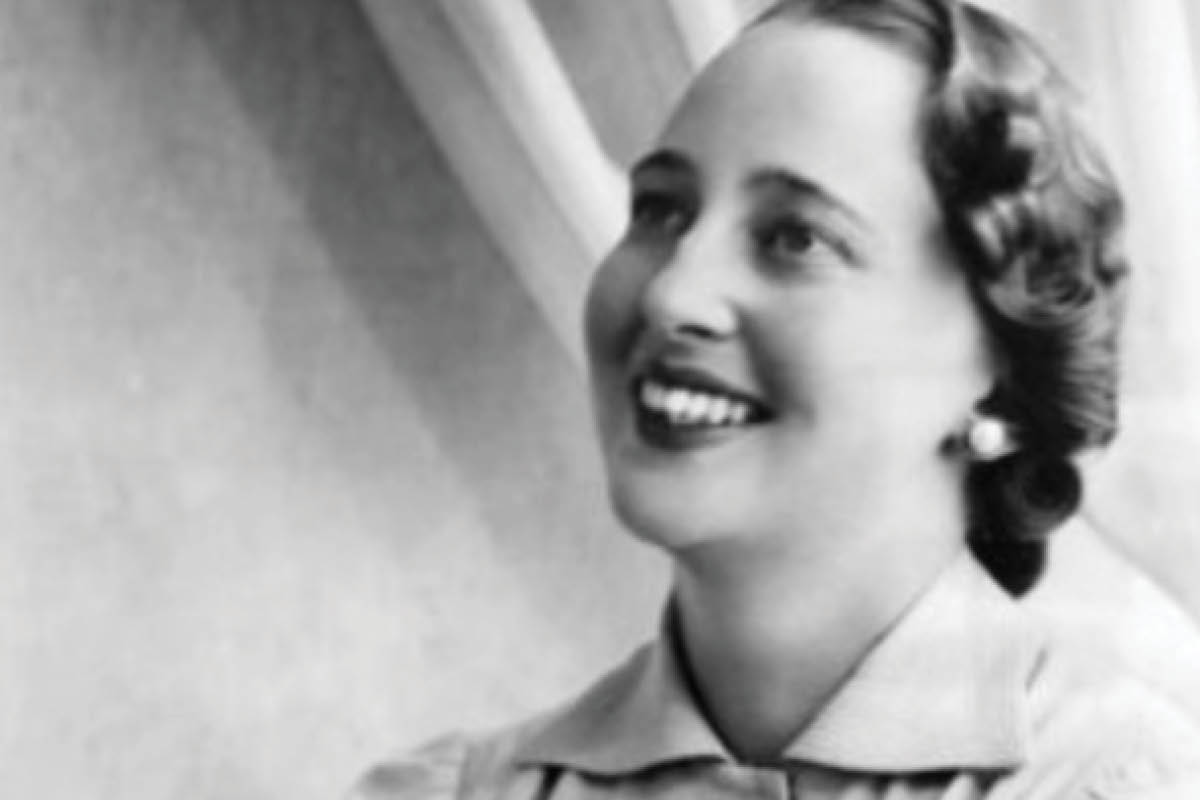
Dulcie Holland
Apcar was at the library searching for an out-of-print piano sonata for a study project when he came across the Concertino. Digging deeper, he found an American concert program from 1991 showing that the work had been performed by one of Holland’s friends. Beyond that, however, the piece had all but disappeared.
Apcar was struck by what he heard in the manuscript.
“There are really exciting and crunchy harmonies, spritzy rhythms, lots of beautiful modal melodies, and a clear sense of drama and narrative throughout,” he says.
He felt it was a travesty that a work he now considers one of Holland’s finest should be sitting unheard in an archive. So he set about bringing it back to life – first navigating the complicated process of securing the rights, then preparing a playable score from Holland’s manuscript.
Working with conductor Leonard Weiss, Apcar painstakingly typeset every note into a computer, checking and rechecking the score against the original manuscript.
But a piece of music is not truly recovered until it is heard.
Apcar first performed the Concertino with Canberra Sinfonia in 2022. Encouraged by the response, he decided to give it a larger platform, setting himself the formidable task of finding funding, a venue and an orchestra.
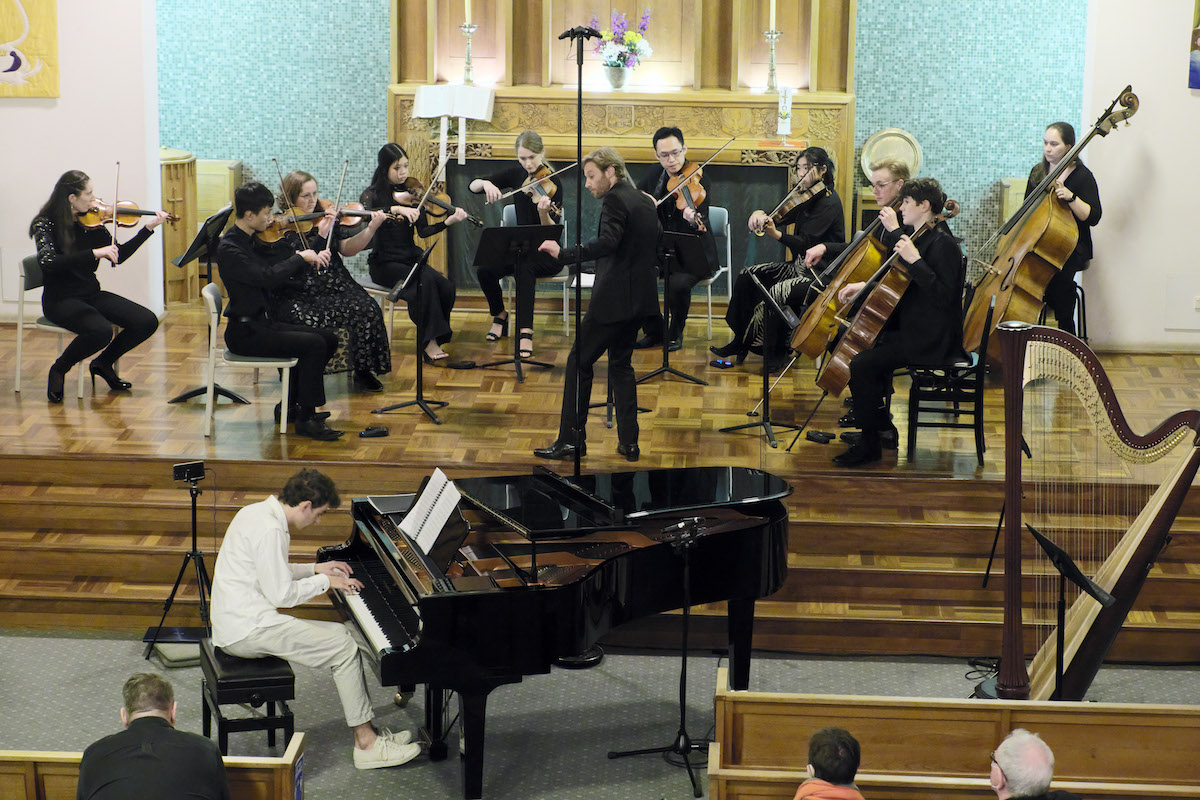
Canberra Sinfonia with Ronan Apcar on piano, 2022. Photo © Peter Hislop.
Sydney-based Ensemble Apex proved the ideal partner: established enough to have a profile, but young and open to new ideas, with Sam Weller conducting. The resulting concert, held in August 2025, placed Holland’s Concertino alongside other piano works by the composer, as well as music by Nigel Westlake and a new work by Dan Rojas. ABC Classic recorded the performance for an album due for release this month (October 2026).
At just 26, Apcar has already developed a reputation for making things happen. Ensemble Apex has dubbed him “unstoppable”, and his campaign to revive Holland’s Concertino is evidence of that determination.
A freelance performer, composer and arranger whose interests range from classical music to jazz and the avant-garde, Apcar is a pianist with Ensemble Offspring and has performed with Ensemble Apex at festivals and venues around Australia.
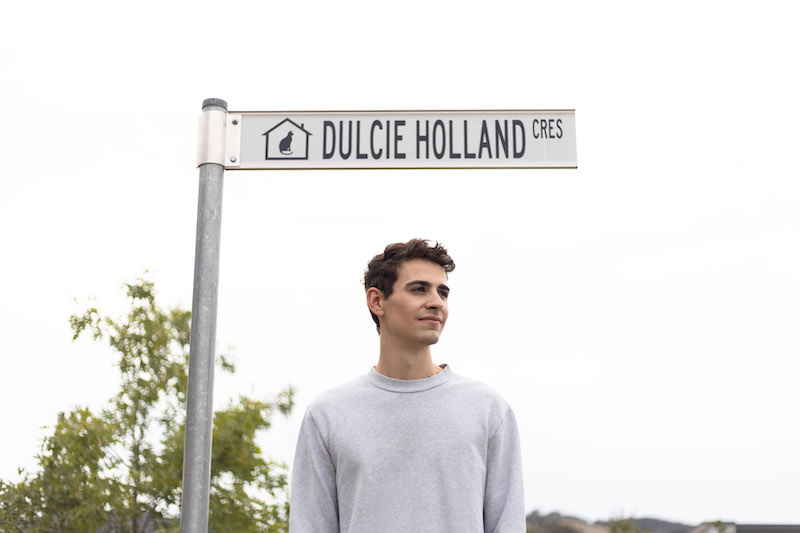
Ronan Apcar. Photo © Rowan Davie
His own beginnings in music were unconventional. At eight, he discovered a piano game on his Nintendo DS and became fascinated by the instrument. He taught himself to play before eventually attending the Sydney Conservatorium of Music High School and later the ANU School of Music in Canberra, where his exposure to contemporary music opened up new possibilities.
It was also at ANU that he began to discover Dulcie Holland not simply as the author of the theory books he had encountered as a student, but as a composer with a distinctive musical voice. Drawn to her “sophisticated craftsmanship and truly unique voice”, he began exploring her works for various study projects. In 2021, he released Dulcie Holland Crescent, a digital album devoted to some of her lesser-known music.
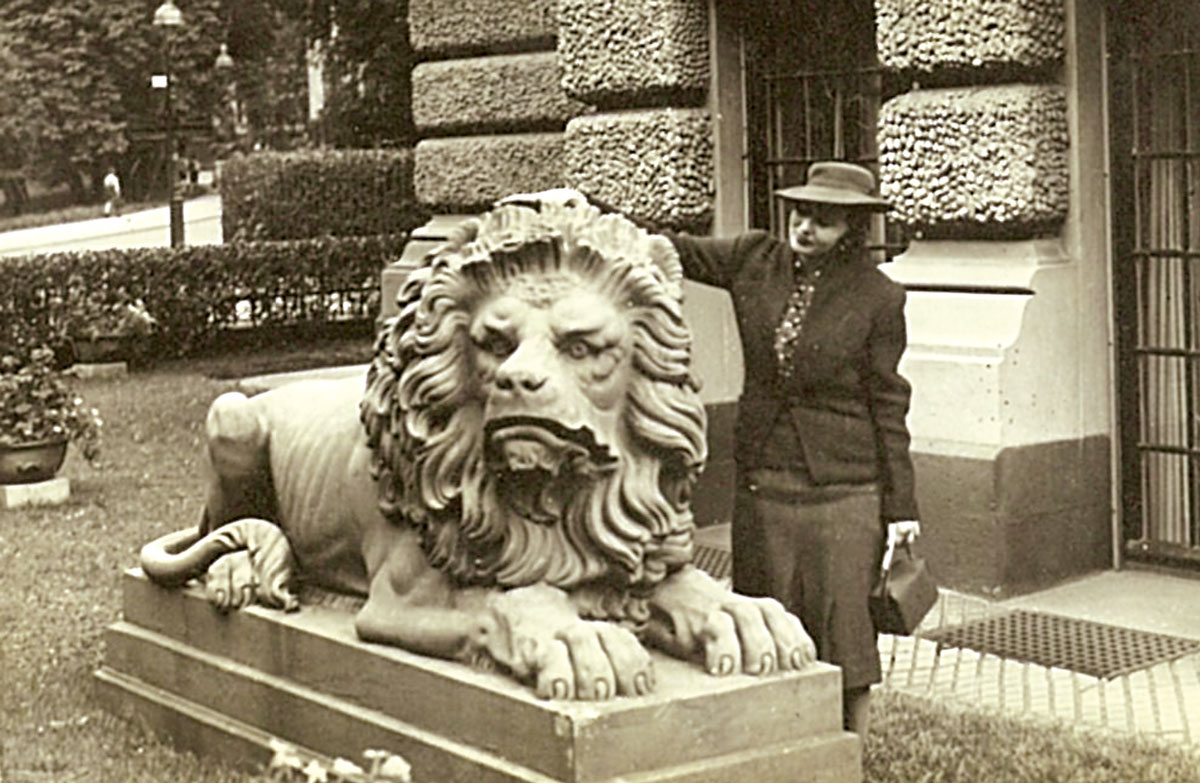
Dulcie Holland in Europe in 1939. Photo courtesy of Julie Ihle
Holland was my grandmother. Her home was filled with scores, and she was always humming a tune. Music was her life’s work, but in post-war Australia it was difficult for women composers to receive recognition.
In recent years, there has been renewed interest in composers like Holland whose music was overlooked or underperformed. She is best known for Master Your Theory and Musicianship, books that shaped generations of Australian music students, but she was also one of the country’s most prolific composers. Over a career spanning 70 years, she wrote more than 300 works.
Many were written for educational purposes, however, and that contributed to her being regarded primarily as an educator rather than a serious composer. She composed for the North Sydney Symphony Orchestra and wrote music for government documentaries, while many of her works remained unpublished during her lifetime. Some were never performed.
As a working mother – unusual enough in her era – she had little time to devote to large-scale composition. As she told broadcaster Margaret Throsby, “You get little snippets of time. So that means shorter pieces. You need great slabs of time to do a symphony.”
Yet she never stopped composing, working on music almost every day. “I’ve always loved the mere fact of writing notes on a stave. It’s exciting,” she told Throsby.
I remember her continuing to attend concerts well into her later years. She was an enthusiastic supporter of Australian music and believed that Australia, as a young nation, had a vitality to contribute to the wider musical world.
She thought of herself as a composer first and an educator second, although in later years she described herself as a “musical missionary”.
In some ways, Apcar has become a musical missionary for her lost compositions.
Typically modest, Holland would probably have been astonished to see young musicians taking up her long-forgotten works. But perhaps she would also have recognised something essential in what Apcar is doing: giving music the chance to become what it was always intended to be.
I’ll leave the last word to Holland herself: “Music has to be played. I never feel that music comes to life on paper, on a page, until it becomes actual sound in the air.”
Ronan Apcar plays Dulcie Holland will be released by ABC Classic on 23 October.







Comments
Log in to start the conversation.