




The Limelight Recording of the Month for October is a fresh interpretation of Schwanengesang by baritone David Greco and Erin Helyard on fortepiano.
Rooted in the latest academic research into 19th-century performance practice (or HIP, for short), Schubert’s final collection of songs come up fresh as proverbial daisies.
Clive Paget talks to Greco about the ways his approach to Schubert has changed over the years and what listeners can expect – alongside a world-class vocal performance, that is.
What were your first experiences of Schubert song?
My first recollection of Schubert was my very first public experience of singing in front of a large audience of more than, say, 200 or 300 people. My singing teacher gave me a song from Winterreise – probably a little bit too early – to present at, I think it was the year 12 graduation. I must have been in year 10 at the time, and so I came out and sang this Schubert Lied.
Schubert is kind of formative to vocal development, so it features on teachers’ radar. This is partly a problem since art song has been slightly relegated to the corridors of conservatoires. People are often afraid to program it because it doesn’t have the appeal it did with the Schwarzkopfs and the Fischer-Dieskaus in the ’50s, ’60s and ’70s. Art song flourishes when you’re an undergraduate and postgraduate student, but as soon as you leave the conservatorium, it’s tricky.
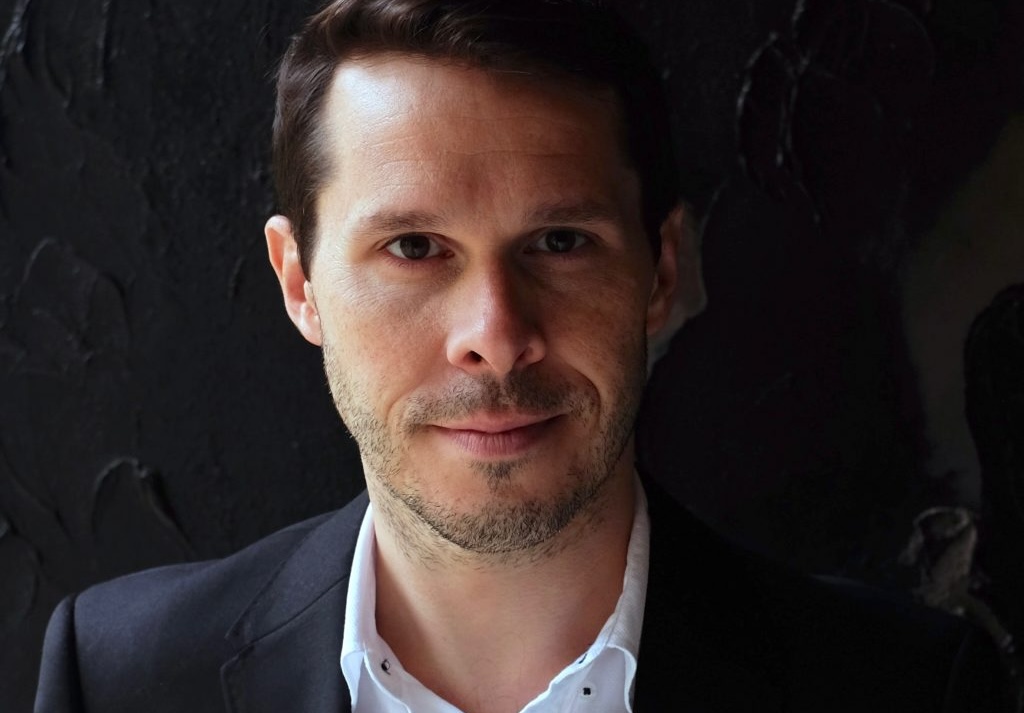
David Greco. Portrait supplied
Have you sung the Schubert cycles in the standard, non-HIP way professionally?
Yeah, as an undergraduate at the Sydney Conservatorium. I started to experiment with HIP Romantic music when I was studying for my Masters of Early Music at the Hague Conservatorium in Holland. It was the first time I was exposed to early keyboardists who weren’t just harpsichordists and it wasn’t just Baroque music. It’s logical now to think of Mendelssohn, Haydn, Mozart, and Beethoven on period piano but the idea of taking it past 1800, that’s a relatively new development in performance.
Where did the idea of doing a HIP Schubert cycle come from?
It came from the head of ABC Classic, Toby Chad. They didn’t have a Winterreise in their catalogue, so it was kind of logistical in a way. I think he admired our artistry and thought, “Here are two dudes that aren’t too bad at what they do, let’s make it a historical thing. Let’s use an early keyboard.”
It coincided with my PhD at Melbourne University, which was in 19th-century vocal performance practice, working out from the gramophone how they sang and applying it retrospectively back to the early 19th century. So, I was able to combine that research with the journey, which ended up being all three of the Schubert song cycles. I don’t think they had it in mind that we would record all three when we started but I delicately hinted it might be a good marketing ploy [laughs]. And thank God they went with it!
For those who don’t know what historically-informed practice is, what are the main differences they’ll hear?
First of all, the keyboard is, not archaic, because that’s a pejorative, but a slighter ancestor of the modern piano. While it’s lighter in touch, it’s able to be more expressive because it can do more; it’s got more sensitivity. At the same time, it’s more vulnerable, more temperamental. It’s subject to the temperature and the atmosphere around it. They’ll also hear the kind of early keyboard techniques that Erin uses that I think were in his PhD as well.
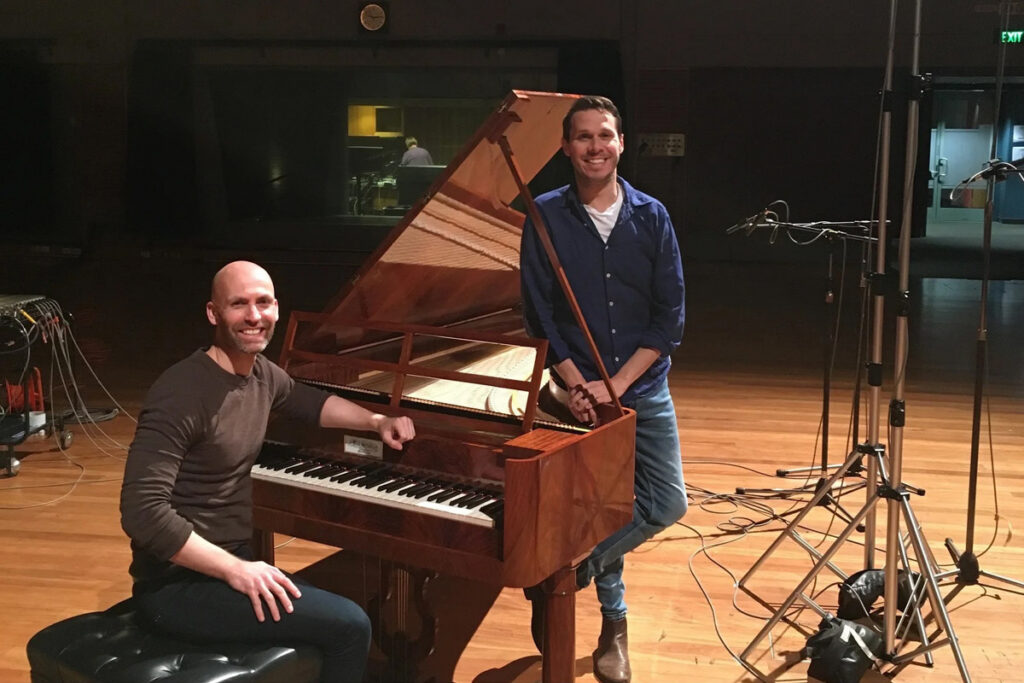
Erin Helyard (left) and David Greco. Photo courtesy of David Greco
With the voice, they will hear me using expressive vocal practices that, for want of a better word, have become extinct. We’ve identified them on early gramophone records before 1930. You’ll hear a higher amount of portamento, expressive sliding we call it, which to some ears sounds a bit sloppy, but is actually a really expressive and highly virtuosic device. They’ll hear a kind of dislocation between the piano and the voice. So, for example, things won’t always meet up on the bar line. What it’s governed by is the text. When the words are foremost, they can dictate whether you’re a bit early or a bit late. And if you are a little bit early or a little bit late, i.e. kind of asynchronistic, it will mean the text sticks out for a particular reason. Of course, you don’t want to abuse this because if everything is special, then nothing is special.
For you as a singer, what are the challenges and risks of doing that?
That people might think it’s sloppy and unthinking [laughs]. Actually, it’s three things: that people might think it’s sloppy; that they might think it’s indulgent; and that they might think it’s unthinking when it’s the antithesis of all of that.
What about vocal ornamentation?
That’s a relatively new addition. I was in Europe recently at the Schubertiade in Austria, and in three recitals I went to the baritone and tenors were all heavily ornamenting the recapitulation sections of strophic songs. You wouldn’t have heard that 10 years ago. I can’t say I’m responsible for that, but I think the trend is there.
The first time I heard you would have been the Die schöne Müllerin recording. Have you changed your vocal production as the cycles have progressed?
It’s a question I’ve had to answer a couple of times. I’ve changed my answer because I think at the beginning I was like, “No, no, I sing the same; technique is technique. I know how I wanna sing these songs, so I sing them regardless.” I don’t think that’s entirely true now. The three recordings span nearly a decade. We were different musicians at the beginning as we are at the end.
Physically, I was a younger man. I was 35 when I recorded Winterreise, and I’m 45 now. So, I think, technically I sing in a different way. Maybe not necessarily a better way, but maybe I’ve honed my craft to sing in a way that resonates more with my ethics and with my expressive desires.
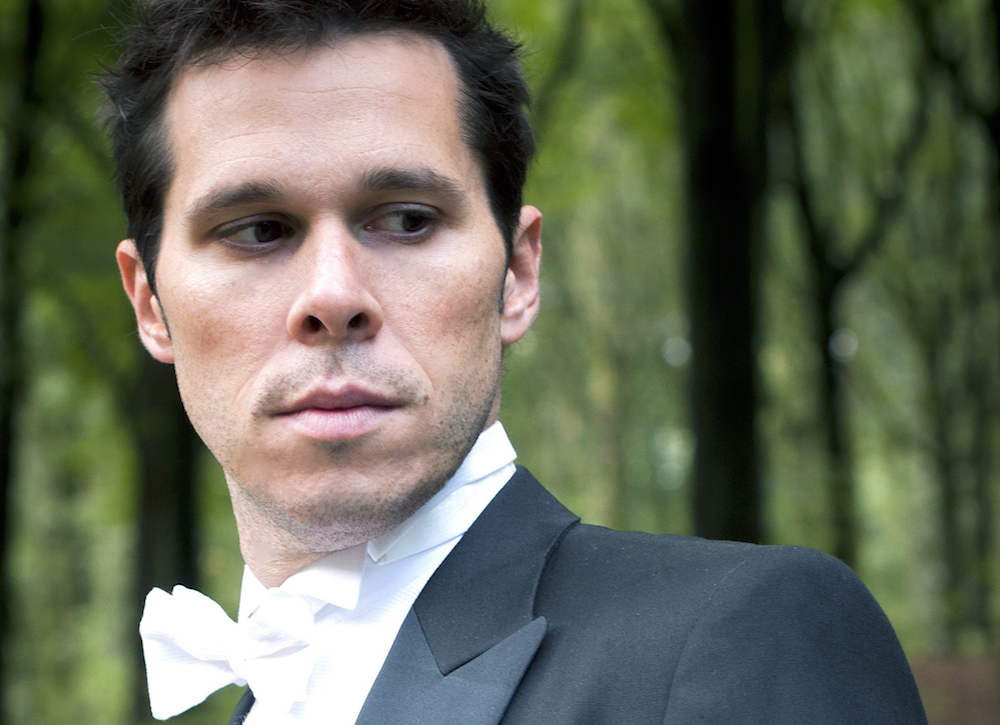
David Greco. Portrait supplied
It sounds to me like what you’re saying is it’s become more instinctual.
Totally. We recorded Schwanengesang in less time. We spoke less, and I didn’t write in any ornamentation. I did it when it happened. I practiced a few things, but I didn’t mark when I wanted to do portamento because now it is second nature to me: where I would add a slide that wasn’t written in the score; where I would choose to delay that rhythm and make it sound out of time to bring out the text. It all happened more instinctively.
How did you decide which other songs to include alongside Schwanengesang?
Oh, it’s a very unintellectual answer. Because I like them [laughs].
Do you have plans for what happens next? Have you got a Dichterliebe up your sleeve?
I’ve just done a Dichterliebe with Chad Kelly on a modern piano, and we are gonna do it on an early piano. Personally, I’d love to go to Brahms. That’s where I’d like to take it. The other half of my time I’m a teacher for my sins. I don’t want to force things on people, but I’d be happy if I’m able to rub some of this off in a positive way on the next generation.
David Greco and Erin Helyard’s Schwanengesang is out now on ABC Classic (ABCL0089D)







Comments
Log in to start the conversation.