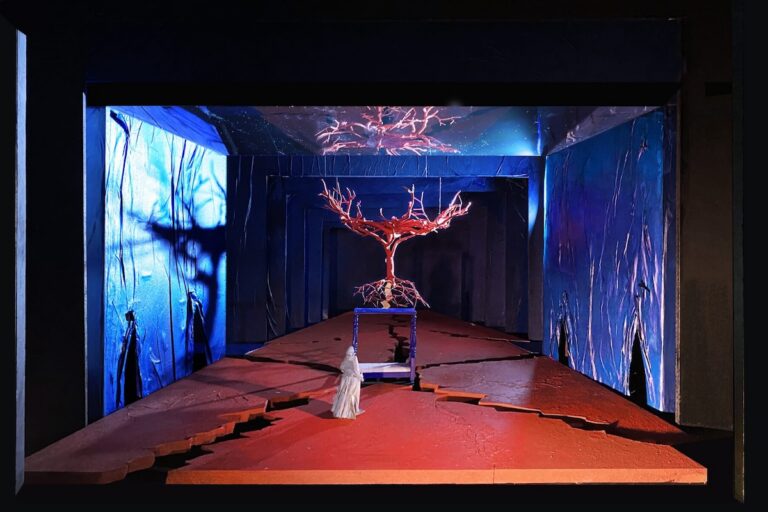
A sibling pair of colonial artists whose butterfly paintings helped shape Australian science will be brought vividly back to life in Sydney in September in an ambitious new theatrical production blending live period-instrument performance, animation, drama and archival material as part of the State Library of New South Wales’ 200th anniversary celebrations.

Created by Australian Haydn Ensemble artistic director Skye McIntosh, The Scott Sisters: Pioneers of Science and Art traces the lives of 19th-century natural history illustrators Harriet and Helena Scott through almost a century of Australian history.

Performed in the Library itself, the immersive work draws on letters, manuscripts, books and artworks preserved in the Library’s collections to tell a story that extends well beyond two remarkable women to encompass science, family, collecting and the preservation of knowledge.
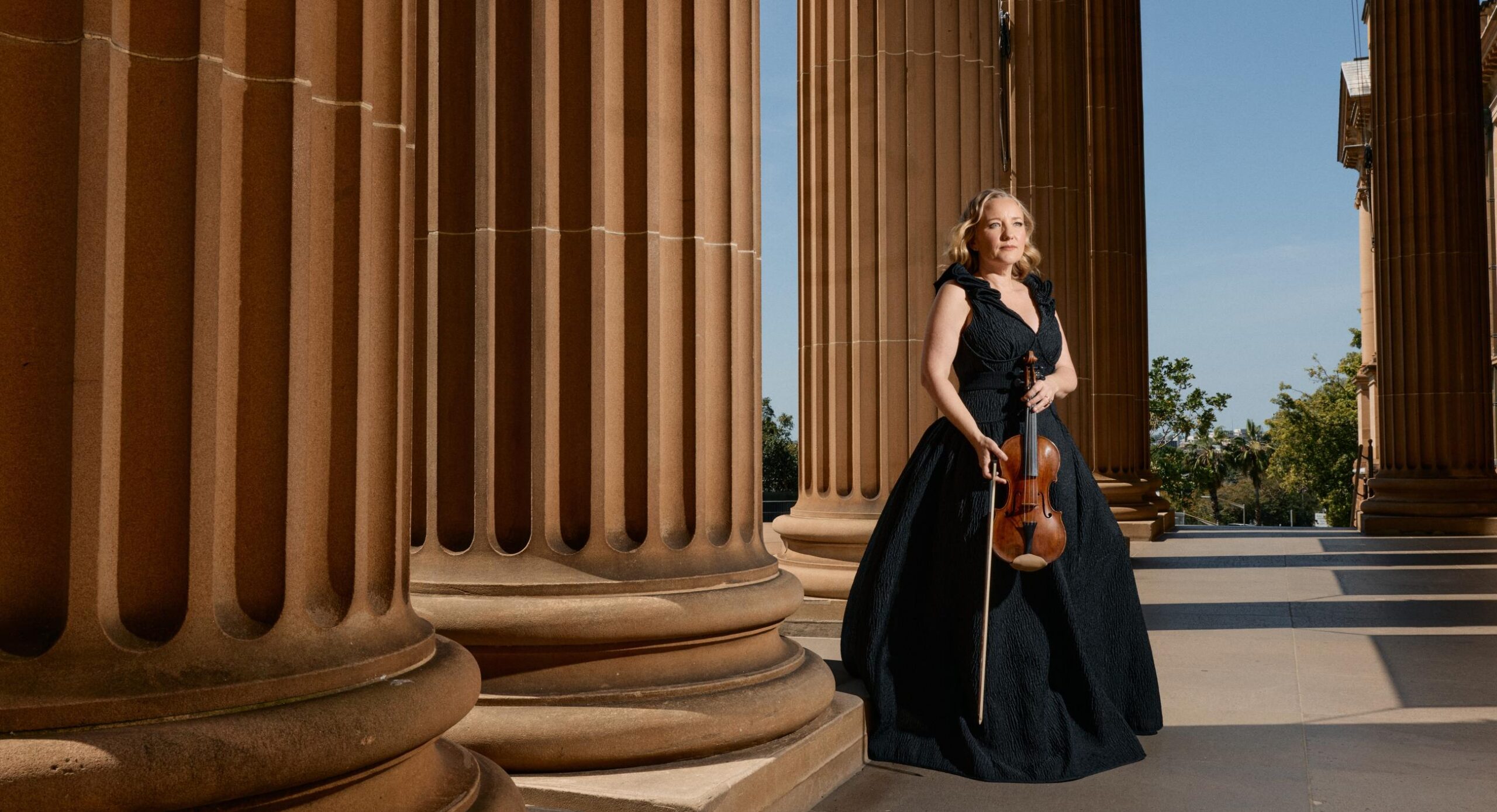
Skye McIntosh. Photo © Daniel Boud

“I’ve been captivated by Harriet and Helena Scott’s moth and butterfly illustrations for many years,” McIntosh says. “They possess an extraordinary combination of scientific precision and artistic beauty that remains just as striking today as it was more than 150 years ago.”

The production began life as a comparatively modest concert inspired by the sisters’ celebrated illustrations for Australian Lepidoptera and Their Transformations. But as McIntosh immersed herself in the Library’s archives, the project rapidly expanded.

“What began as a work about two remarkable women gradually expanded into a much broader story about science, family, collecting, libraries and the preservation of knowledge across generations,” she says. “In many ways, the Library itself became one of the central characters in the production.”

Detail of image from Australian Lepidoptera and their Transformations 1864.

Harriet and Helena Scott occupy a unique place in Australian cultural history. Trained by their father, naturalist Alexander Walker Scott, the sisters produced exquisitely detailed illustrations documenting every stage of butterflies’ and moths’ life cycles, from egg to caterpillar, chrysalis and adult insect. Their work combined scientific accuracy with exceptional artistic refinement at a time when women were largely excluded from formal scientific institutions.

Although highly respected by leading scientists of their day, including entomologists in Britain and Australia, the sisters never achieved the prominence accorded to many of their male contemporaries. Today their original watercolours, regarded as among the finest natural history illustrations produced in Australia, are held in major public collections, including the State Library of New South Wales and the Australian Museum.

McIntosh is careful, however, not to frame the sisters’ achievements solely through the lens of discrimination.

“The story is more nuanced than that,” she says. “One of the things that fascinated me was the role their father played in recognising and nurturing their extraordinary talents. This wasn’t simply a story of women succeeding despite their family; it was a family united by a shared passion for science, observation and the natural world.”

Image from Australian Lepidoptera and their Transformations, 1864.

The script also broadens its perspective beyond the Scott household. Alongside members of the colonial family, audiences encounter Lucy, an Awabakal mother whose presence acknowledges that Ash Island, where much of the family’s work took place, had been a place of deep cultural knowledge for thousands of years before European settlement. Cultural consultant Aaliyah-Jade Bradbury helped shape this dimension of the production.

McIntosh says the work aims to present multiple ways of understanding and preserving knowledge.

“I hope audiences come away recognising that there is no single story of women in 19th-century Australia,” she says. “These women experienced the world in profoundly different ways, yet each demonstrated remarkable resilience, intelligence and creativity.”

The narrative stretches from Regency England to colonial New South Wales, following the Scott family’s migration, their years on Ash Island near Newcastle, the creation of Australian Lepidoptera and Their Transformations and the family’s later connection to David Scott Mitchell, whose vast bequest established the Mitchell Library.

One of the production’s recurring themes is transformation, reflected not only in the butterfly life cycle but in the evolution of libraries themselves as repositories of knowledge.

That idea also informs the musical choices. Rather than serving as background accompaniment, McIntosh says each work advances the drama.

Skye McIntosh. Photo © Peter Hislop

Beethoven’s String Quartet Op.132 forms the emotional backbone of the score. Completed in 1825 while the composer recovered from serious illness, its celebrated “Holy Song of Thanksgiving” mirrors the production’s themes of renewal and transformation.

“The music doesn’t accompany the story; it is an essential part of the storytelling,” McIntosh says.

Alongside Beethoven are Marin Marais’ introspective Les Voix Humaines, Elena Kats-Chernin’s Butterflying and Tullia Cairns’ Ripples and Reflections, which McIntosh describes as becoming “the musical voice of Ash Island itself”.

Performed by a string quartet from the Australian Haydn Ensemble on period instruments, the music unfolds alongside theatrical scenes directed by Rachel McDonald and new animations by Studio Gilay. Original archival material from the State Library’s collections also features throughout the production.

Balancing so many artistic disciplines has required an unusually collaborative creative process.

“We’d uncover something new in the archives, which would reshape the script,” McIntosh says. “The script would influence the animation. The animation would suggest a musical idea, which in turn might lead us back to the historical research.”

For McIntosh, the project also reflects the philosophy underpinning historically informed performance itself. Just as musicians study original manuscripts and instruments to understand how music was experienced in its own time, Harriet and Helena Scott devoted painstaking attention to observing the natural world before committing it to paper.

“In both cases, careful observation becomes a pathway to understanding,” she says. “You’re constantly balancing historical evidence with artistic imagination.”

Perhaps the greatest revelation during the project’s development was discovering how extensively the Scott family’s lives are documented within the State Library’s collections.

“I love reading letters, diaries and personal papers because they reveal the human side of people we often think of only through their achievements,” McIntosh says. “Through the Scott family’s correspondence, I found humour, affection, disappointment, determination and resilience.”

The Australian Haydn Ensemble has increasingly explored ways of placing classical repertoire within broader historical narratives, but The Scott Sisters represents its most ambitious interdisciplinary undertaking to date.

“It has reinforced my belief that Australian stories belong within that conversation,” McIntosh says. “We don’t have to separate European music from Australian history. The Scott family’s story unfolded during Beethoven’s lifetime, and those parallel histories enrich one another in fascinating ways.”

Ultimately, she hopes audiences leave not simply admiring Harriet and Helena Scott’s artistry, but inspired to look more closely at the connections between science, music, history and the collections that preserve them.

“If people walk away wanting to learn more,” she says, “then I think we’ve done our job.”


Australian Haydn Ensemble and State Library NSW presents The Scott Sisters: Pioneers of Science and Art in the State Library Macquarie Auditorium on 25 September

Contribute to Limelight and support independent arts journalism.