


On 5 December, Brisbane-based arts series Dots+LOOPS presents its annual NONSTOP festival. Interpersed with experiemental DJ sets, there’s the Australian premiere of Christopher Cerrone’s Liminal Highway, a SOLCHILD collaboration with the Callum Pask Trio and orchestral punk outfit Matt Hsu’s Obscure Orchestra.
This year’s Performance Fellows – Uma Volkmer, Sophia Mackson, Sola Hughes and Layni Cameron – will perform with singer-songwriter Monique Clare, while Composition Fellows Artemis Bishop and Skylar Sansome will see brand new solo flute works premiered by flautist Tim Munro.
Ahead of NONSTOP, Limelight chats to Bishop and Sansome, about their practices and new works.
This year, Artemis Bishop’s music finds a home on screen, on Brisbane contemporary classical stages and artist-run Adelaide DIY clubs. To the Adelaide-based interdisciplinary artist, they’re not as disconnected as they might first appear.
“All of these practices kind of inform each other. I’ve always wanted to merge these worlds that I love,” she tells Limelight.
“With DJing, I’ve started thinking about sets in larger scale symphonic forms; how I can apply them to a set as a way of contouring the energy level over the course of an hour and a half or so.”
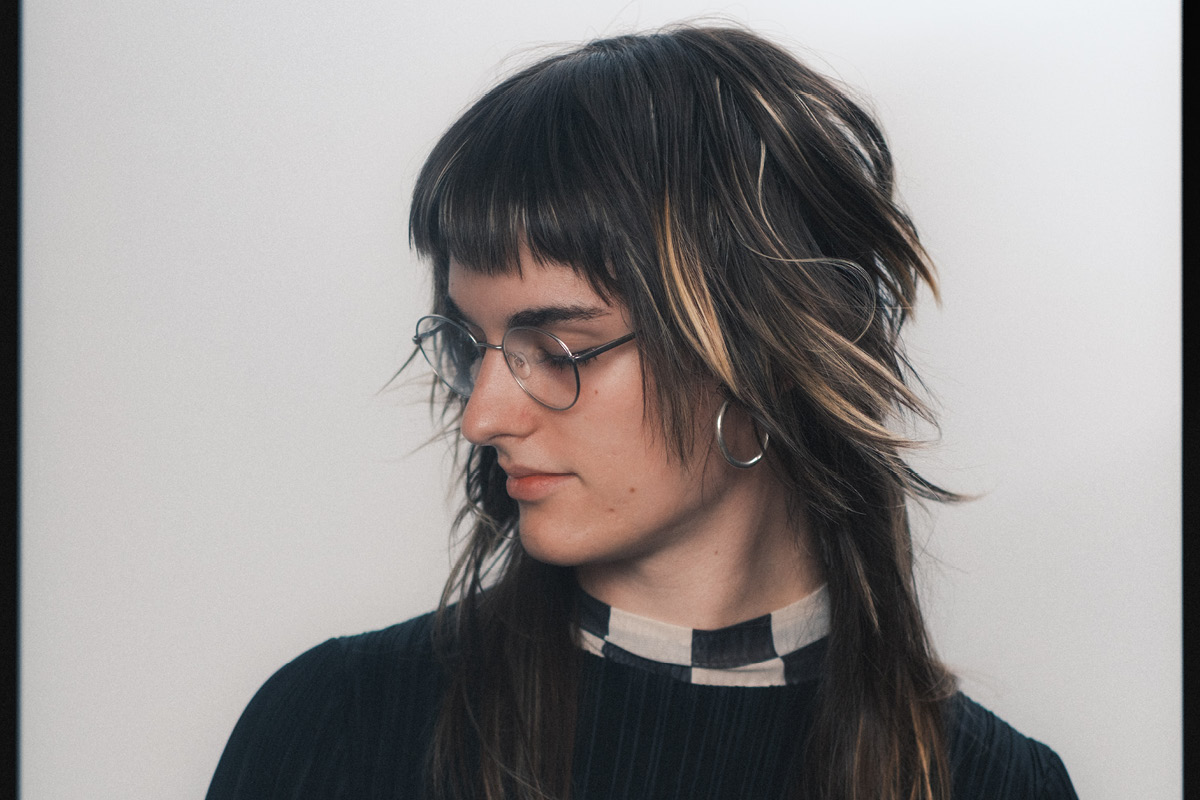
Artemis Bishop. Photo © Kyahm Ross
“One thing I have really enjoyed doing over the past year is that no matter what time I’m on, I’ll always start the set with either an ambient work or a contemporary concert work. The last set I played at [Adelaide venue] Ancient Worlds, I opened with Lachlan Skipworth’s Oboe Quintet No. 1, the opening movement. Because it’s gorgeous, and for me, it’s a wonderful way to allow the audience to have a bit of a breather, but also for people to experience music that maybe they otherwise wouldn’t hear.”
Perhaps the first to spin Skipworth on the dancefloor, Bishop is an emerging artists whose practice spans music, visual art and sonic arts. With a classical composition background, she primarily works as a media composer, but her practice also includes DJing, metalwork and sculpture, experimental electronics and the project EHNE, veering into club music and art pop.
As an artist, Bishop’s thematic interests lie in embodiment theory – the way in which experiences and interactions are shaped and held by the body – and how things and experiences that are “external from the body become part of the body”.
“A lot of my work is about breath; specifically, breath as a ritualistic motion, and as a really easy point of access for people to understand what it means to embody something versus it becoming disembodied or voluntary. I’m interested, especially when it comes to experimental electronic music, in how I can create systems that are able to be embodied by a performer, and this experience where they can perform with them without thinking,” says Bishop.
“I also look at how that works specifically for marginalized identities, especially in the realm of disability and my own experiences with disability and chronic illness, as well as anybody who kind of sits at an intersection that forces them to look at the world from a different perspective.”
This interest lies at the heart of Bishop’s new work for her Composition Fellowship. Written for alto flute and electronics, My Body A Body introduces textural flavour through extended techniques – jet whistles, singing through the flute, tongue rams – and asks its performer to operate a set of bellows strapped to their foot throughout the piece. A differential pressure sensor tracks the air speed in and out of the bellows; fed into a Max for Live patch and converted into MIDI, this data is used to control the intensity of a suite of digital effects to “shred apart the sound”. The bellows will also be mic’d up, while a slide potentiometer also tracks the impact of pressing.
“I like it as a way of talking about the impact of the external world on the imagined futures. It’s become this symbol of moments when people are breathing for you; there’s this second breath, which is not always in sync with Tim.”
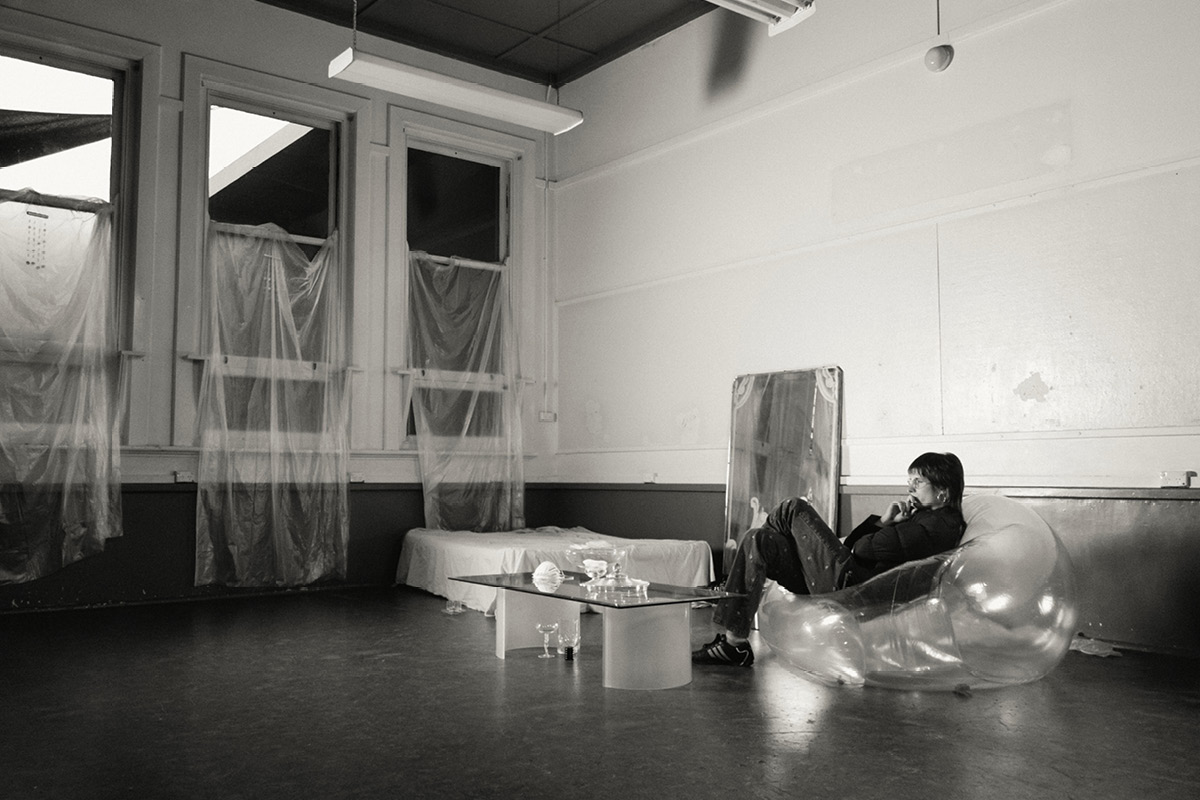
Artemis Bishop. Photo © Imari Calvert
Initially, My Body A Body looked at the public perception of trangender figures at different stages of life, especially in light of fame and the polarised responses that arise with it; but throughout the Fellowship development, it’s landed as a more personal mapping of Bishop’s own experience of being trans, and “what that has been like in relation to the futures I’ve been able to imagine for myself”.
“The work starts when life was at its worst and I couldn’t imagine a future, and then to survival, where it was I can imagine tomorrow but not much further than that, on to being able to kind of imagine futures but it being scary or feeling like I have to rise to that kind of big, successful level to get the support I need, and then all the problems that come with that,” she explains.
“Then there’s this added section, which looks at a small life that is still full; not sheltered or hiding away, but just being in community with those here in Adelaide; there’s this imagined future of a normal life, or at least some facsimile of a normal, quieter life.”
Bishop also imagines a future for My Body A Body beyond the NONSTOP performance, intrigued by the possibility of the work lending itself towards more interactivity with audiences.
“I like the idea of the bellows as a second set of lungs in the work; the way I’m writing the score lends itself to not just be flute and bellows, but, flute and multiple different configurations. I’ve had the idea of performing the work with a group of people breathing around a microphone, and using the volume from that in place of the air pressure from the bellows.”
Alongside the Fellowship work, Bishop is balancing a score for a brand new video game, Peppermint, a metalworking residency with a 2027 Adelaide Fringe exhibition and an upcoming “art pop-leaning” EP, which saw her take on another mentorship with experimental electronic artist Alice 4ever in Brisbane last week.
“There was a working title for a little while; Diaphanous Basilisk. Bit of a mouthful, but I liked the idea of this semi-transparent snake-like creature, and I think that worked when it was more IDM and deconstructed club music. As it’s going into another direction, I’m really curious to see where the title comes from. It’ll be that thing where I’ll have an interaction with somebody at a coffee shop and they’ll say something, and I’ll be like, “Oh, that’s it! That’s the title.”
Bishop’s fellow Composition fellow, Skylar Sansome, also has something curious in the works.
“I’m working on this video horror story about percussion instruments about how all of the instruments have their own character, and how they can sort of haunt you in all of these ways, whether or not you’re learning percussion. What does a xylophone mean to someone?” they tell Limelight.
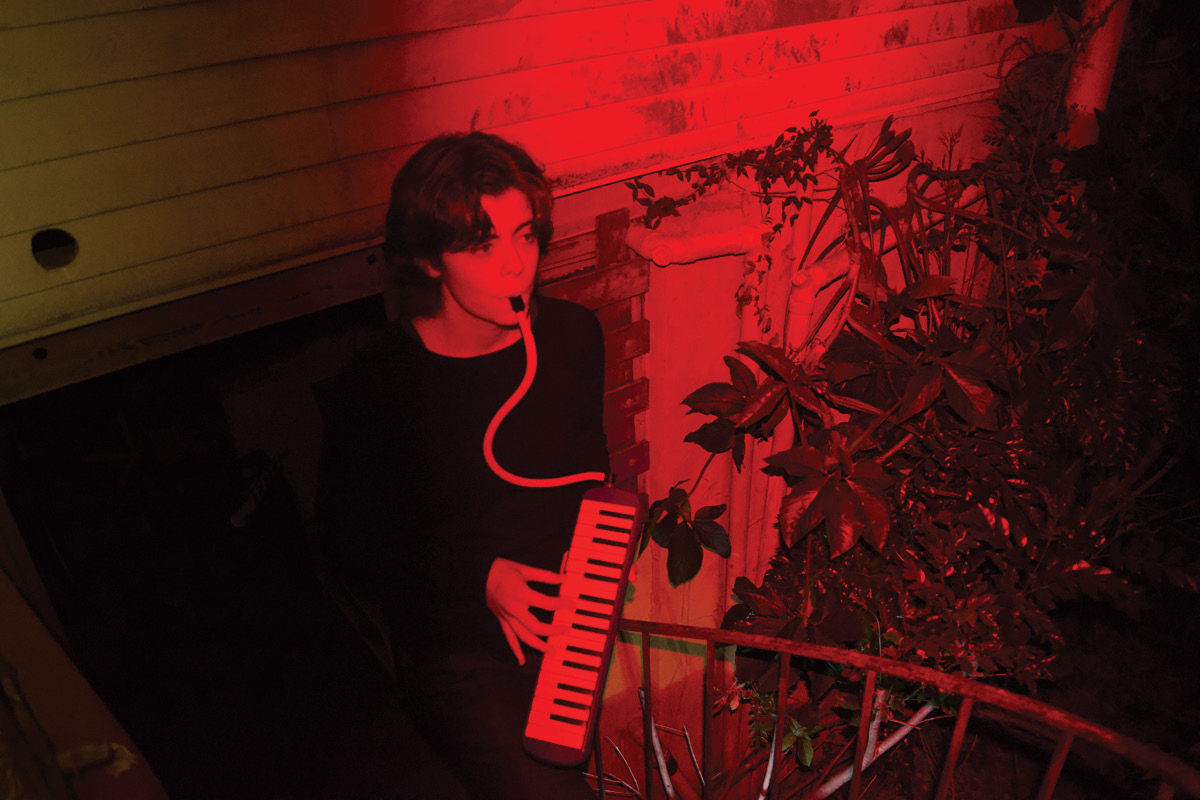
Skylar Sansome. Photo © Isla Scott
Sansome is a classically-trained percussionist who also works across dance, theatre and music. They thrive on collaboration and multidisciplinary artists; their output spans from work with experimental folk-improv duo Beagle Vortex and experimental alt-sludge with group Illawarra Most Wanted to performances with Camerata – Queensland’s Chamber Orchestra and Southern Cross Symphony and beyond.
“I really like the muddiness of forms when there’s all of these different things in one place, for one product,” Sansome says.
“The movement involved with playing percussion invites this interdisciplinary or more movement-based approach, and the built instrument aspect, which is sort of unique in the classical world, has inspired me to use found objects and create things that aren’t strictly instruments. There’s so many things that I own that I don’t realise are beautiful instruments.”
Opening for Sir Richard Bishop of Sun City Girls fame last month at Brisbane’s Season Three, Sansome lugged their metallic bedframe to the venue, and rigged it up with contact mics (the bed was foldable, so it actually made for one of their easier gigs). Each rung produces a different tone when bowed.
“And I’ve just made lemon curd tarts, and the tart shells …” Sansome says, holding one up over Zoom. “They have these beautiful qualities, even just moving them across the table.”
Sansome’s work for Dots+Loops is NOIBS; it centres around a solo flautist playing alongside “a past version” of themselves, featuring projections and recordings; Munro will perform with next to a pre-recorded video; capturing the “organic sort of feeling of a chamber duet”.
“It’s almost like a ghost of the live performer on stage. The work is in the vein of how you deal with yourself in moments where, say, you really want to laugh, and the context is really inappropriate for it, or you fart, and the other parts of yourself are so embarrassed.It plays into the awkwardness and the incongruence of having a cheeky self and a more disciplined self in one place.”
NOIBS unpacks the vulnerability in interacting with yourself in the presence of other people; it shifts in an interesting way, Sansome notes, when others’ perceptions are increasingly informed by online interactions; manicured social media profiles, or data profiles assembled with less individual agency. In Sansome’s work, an artist takes this on publicly and willingly; the inverse to how a public fart normally plays out.
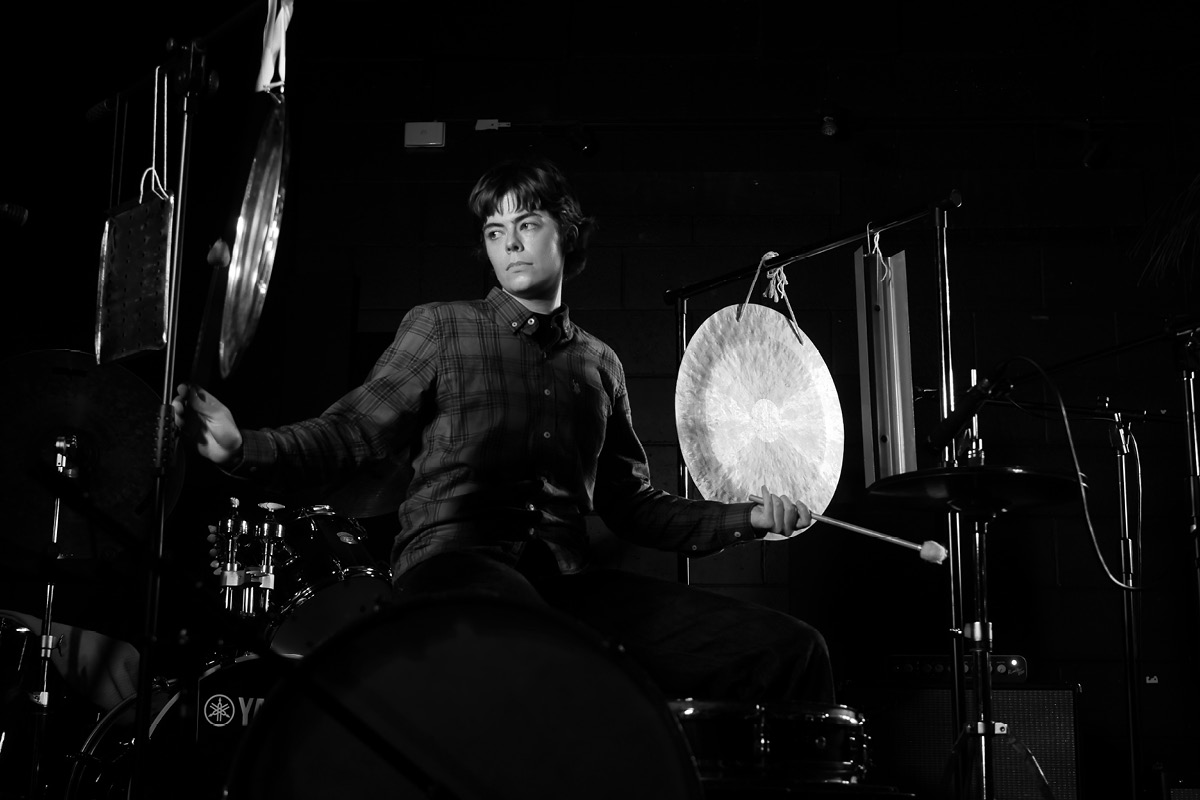
Skylar Sansome. Photo © Matt Harding
‘NOIBS” is sort of onomatopoeic; struggling to name it, Sansome prompted someone sitting next to them to give them a word from looking at the score, and took it on as the piece name.
“I searched it up to check the meaning, and there’s two things. One’s a data privacy company, and the other is an Australian-based digital game about creating ‘funny little characters’. Thematically, there’s a relation to both of those.”
The flute material was developed throughout the Fellowship, working with Connor D’Netto and Lisa Cheney. Based in Brisbane, Sansome has also been able to undertake workshopping sessions with Tim Munro.
“I’ve written a combination of humming, singing, whistling, and fluting, and combinations of those happening all at once. The first thing was trying to work out what was possible with one person playing a flute and teasing out that sound world.”
NOIBS will be Sansome’s first work outside of percussion and dance, and their first time tackling the flute. They’ve been borrowing a friend’s instrument to learn the basics (and “almost passed out a few times!”), but
“I didn’t really know much about the flute when I accepted the Fellowship; playing into the unknown of that and the natural character of a flute without really knowing many details has been interesting,” says Sansome.
“I love these random situations and opportunities that arise.I’ve been asked to do various things from kid’s theater shows to dance and chamber musicals and each new project brings these new possibilities for what my practice means. It’s really exciting and encouraging, especially as an emerging artist.”
Dots+Loops presents NONSTOP on 5 December at the Brisbane Powerhouse.





Comments
Log in to start the conversation.