


When he tackles the often-dire subject matter of climate change, Robert McIntyre’s music can be serious, but rarely despondent. Limelight’s Steve Moffatt used the words “beautiful [and] lushly melodic” to describe his climate-linked Solastalgia, which premiered in August. Purposefully, McIntyre privileges the pensive and tonal and the hopeful, the Melbourne-based composer tells Limelight.
“Particularly when I do climate music, I want to make sure there is an equal balance of melancholy and hope; that it’s not always bogged down by doom and gloom. It’s important to hold space for those negative emotions, but at the same time, we need to work through them – whether it’s tragedy or heartbreak or something else.”
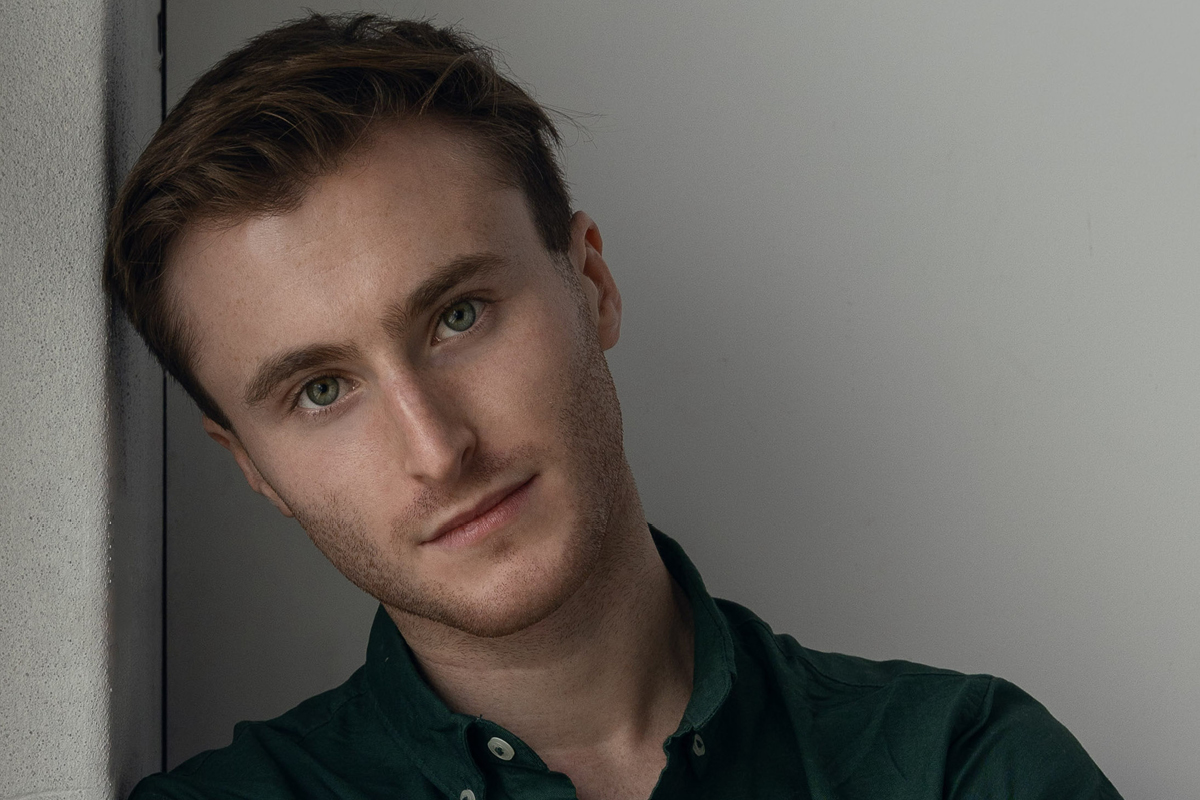
Robert McIntyre. Photo © Rudi Lo
“With my music, I make sure there’s room that allows you to contemplate the darker subject matter, but then also not totally get lost in it. You want to come out the other side and hopefully feel more energised or even just seen. I want to spark this collective experience, realising you’re not alone, and this confidence that comes with knowing we can do something about it. There’s urgency, but we have everything at our fingertips; we just have to act.”
On 10 November, McIntyre’s Changing Wilds Ensemble will premiere his brand-new work, 85 Seconds to Midnight, at Melbourne Recital Centre. The piece takes inspiration from the Doomsday Clock, the Bulletin of the Atomic Scientists’ symbolic measure of humanity’s proximity to global disaster.
The closer to midnight the clock is set, the closer the world is to speculative catastrophe.
The Clock began at seven minutes to midnight in 1947 and has been set forward and backward throughout its history. On 26 January this year, however, the Bulletin set it to 85 seconds – the closest to midnight yet.
“For me, there was just something about ‘85 seconds’. It just felt quite stark,” says McIntyre. “It kind of set the tone for 2026, and this idea of time really stuck with me – how we spend it, but also how we perceive its value.”
The program, titled 85 Seconds to Midnight after McIntyre’s piece, features a collection of works centred around time by Pärt, Ólafur Arnalds and Australian composers Alex Turley, Laura Abram, Stuart Greenbaum and McIntyre himself. In his new work, McIntyre is excited to “get down to the nitty-gritty notes of piano trio” again, with rhythm as his starting point.
“I always start writing the piano improvising, and this time I was thinking about how to create a sense of urgency without an actual ‘tick-tock’ countdown. I wanted this jittery sense of urgency in the rhythm. I wanted movement, and started with this piano motif with repeated chords,” he says.
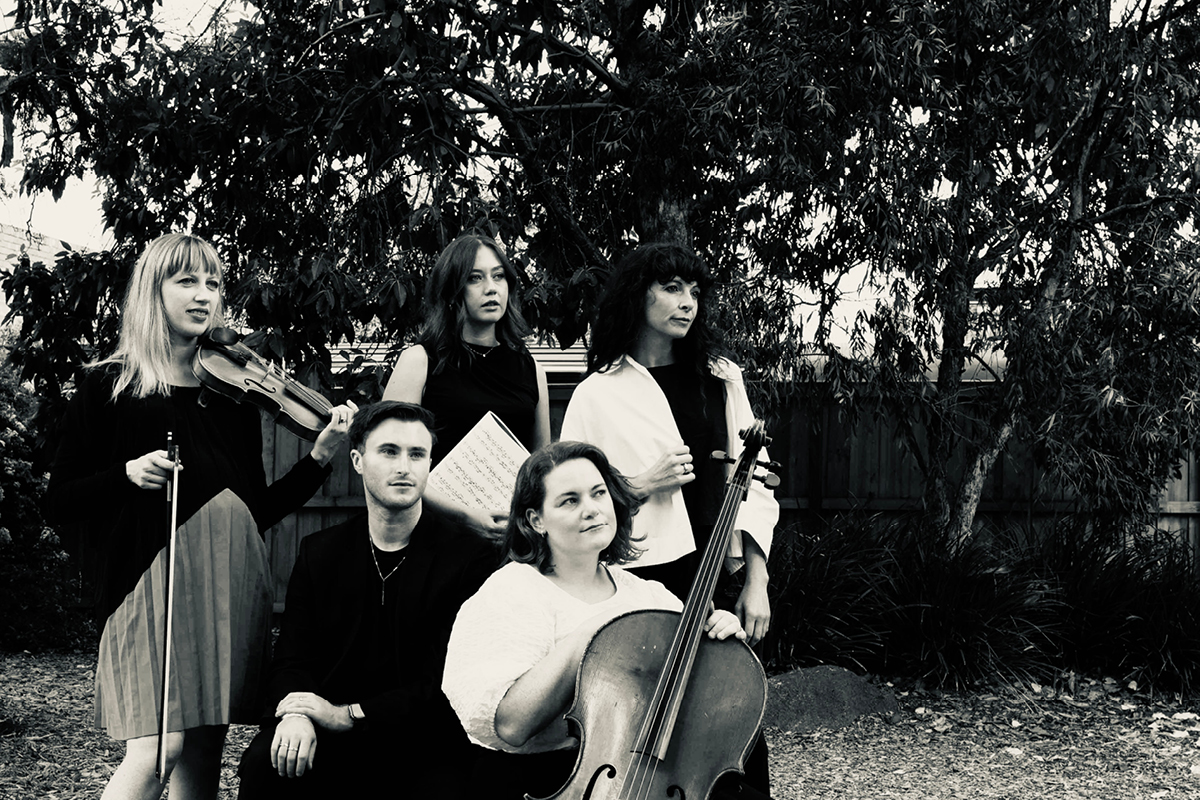
Changing Wilds Ensemble. Photo © Rudi Lo
“How can I actually really leverage the shit out of what I’m doing, if it suits the music, and then move on? That’s how it’s working in my artistic kind of approach at the moment, but who knows? Maybe in 10 years I’ll just be writing stuff that changes keys every three bars. It remains to be seen.”
Alongside pianist Georgina Lewis, McIntyre is co-artistic director of Changing Wilds Ensemble. The group was originally founded for his 2023 work Our Duty to Care, composed during his Wattle Fellowship (also on the program for 10 November).
The lineup comprises cellist Gemma Kneale, violinist Isabel Hede and soprano Bridgette Kelsey. While Kelsey is studying overseas, soprano Jessica Aszodi steps in for 85 Seconds to Midnight.
“We’ve done this climate curation series over the past few years, and societal discussions around climate are a big part of what we’re looking at. It’s a bit ad hoc and project-based, but we’re working to create momentum from year to year, particularly in this climate space.”
McIntyre is particularly excited about the panel discussion following the performance, which will offer a forum to reflect on the topics explored in the work. The panel will include climate justice lawyer Brad Jessup, CLIMARTE Creative Chair Deborah Hart and a cross-disciplinary artist who also works as a doctor from the Wattle Fellowship.
“I think that’s an exciting thing, and something I want to see more of at concerts. There are such big topics and such big pieces always happening, and it’s nice to talk a little more distinctly about what we’ve all experienced. We have some really cool experts, so it’ll be a really interesting discussion.”
McIntyre sees music as an incredibly effective tool for communicating about climate change. Whether you’re a composer, performer or listener, it creates a space for engagement that is more comfortable and has fewer barriers to entry, he says.
“Music is transcendental in that it helps communicate things that words fail to. With something as big as climate change or global issues like that, which are collectively felt, there is something uniquely unifying about music which helps to translate it.”
“What’s really beautiful about it is that everyone can be involved in their own way, rather than always just feeling like you’re a little bit out of the loop. Music is a way to engage with these big topics without pulling your hair out and thinking that you’re not doing enough.”
Robert McIntyre’s 85 Seconds to Midnight premieres at the Melbourne Recital Centre on 10 November.





Comments
Log in to start the conversation.