When Australian composer Lee Bradshaw was approached by Jack Liebeck, the Artistic Director of the Australian Festival of Chamber Music, about a possible co-commission with the Brundibár Arts Festival in the UK, he was naturally keen to hear more – but surprised that Liebeck knew about him.

“I believe a couple of friends may have mentioned me,” he tells Limelight. “Anyway, I got an email and next thing we were having a Zoom meeting, all three of us – Jack, Sasha (Alexandra) Raikhlina, the Artistic Director of the Brundibár Arts Festival, and me – and they were chatting away about this person, Gideon Klein, as if I knew he was.”
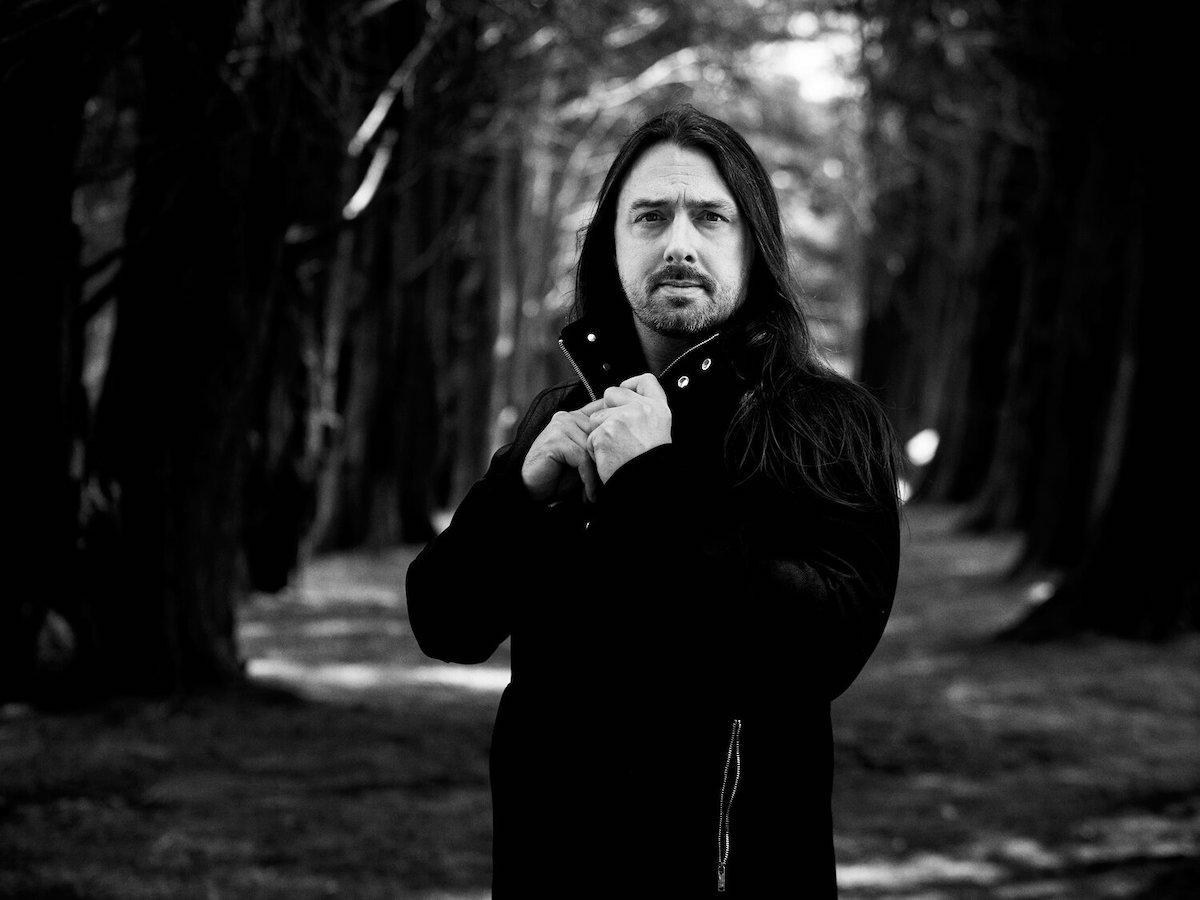
Lee Bradshaw

Lee Bradshaw. Photo © Peter M. Lamont

“Embarrassingly, I had to say, ‘I don’t know who you’re talking about.’ But that is a part of what Brundibár Arts Festival is about – drawing awareness to the composers who were imprisoned at the Theresienstadt ghetto in Terezín,” explains Bradshaw.

Born in 1919, Klein was a Czech pianist and composer. In December 1941, he was deported to Theresienstadt, a concentration camp and ghetto established by the Nazis in occupied Czechoslovakia, where he helped organise musical and cultural events. Together with friends, he smuggled a contraband piano into the camp so he could compose and perform for fellow prisoners.

In October 1944, he was deported to Auschwitz and then to Fürstengrube, a labour camp. He was murdered on or around 27 January 1945, aged just 25. His music survives because he gave his manuscripts to Irma Semecká, his girlfriend at Theresienstadt, who hid them, then handed them over to Klein’s sister Eliška at the end of the war.

Based in Melbourne, Bradshaw’s credits include Resolve, a specially commissioned string quartet for the 2023 Melbourne International Chamber Music Competition, and an opera called Zarqa Al Yamama, which had its world premiere in Riyadh in 2024. The first opera staged in Saudi Arabia, as well as the first Western opera sung in Arabic, it starred Dame Sarah Connolly.

Liebeck and Raikhlina (both violinists) explained to Bradshaw that they were looking for a composer to complete a work begun by Klein before his death.

“I said, ‘Why are you asking me to do this?’” recalls Bradshaw. “And Jack said, ‘Well, we’ve been listening to your music, particularly your string trio, and maybe you need to have a listen to Gideon’s string trio.”

“So, I did that and it felt like I was listening to the music of a long-lost brother. It was very strange. I did a bit more research and discovered that Klein was born in Brno and I’d been there rehearsing my opera. My grandmother was born in Bratislava. She escaped on foot to Austria and eventually emigrated to Australia, but she could easily have found herself in Terezín. So it felt like there was a little bit of coincidental magic.”

Gideon Klein

Photographs of Gideon Klein

Bradshaw has expanded Klein’s unfinished Duo for Violin and Cello into a Piano Quintet called January 27, 1945 – the probable date on which Klein was murdered. The commission has inspired him to develop a much larger project beyond the quintet. He is now developing a chamber opera about Theresienstadt, which includes the staging of the children’s opera Brundibár by Jewish Czech composer Hans Krasá and writer Adolf Hoffmeister, performed in Terezín as part of the Nazis’ efforts to conceal the reality of the camp during a Red Cross visit.

“It’s become a bit of a mission for me,” says Bradshaw. “I visited Terezín last November and got to go to the musical archive where they showed us some of Klein’s handwritten scores, covertly created in the camp. It was just an extraordinary experience.”

Bradshaw’s piano quintet January 27, 1945 had its world premiere in April at the Brundibár Arts Festival in Newcastle upon Tyne.

“Jack made a beautiful comment after the premiere [in which he performed]. He said, ‘Klein would be really pleased with this.’ And that was lovely,” says Bradshaw.

It will now be performed at this year’s Australian Festival of Chamber Music. “Sasha is coming, so two of the performers who performed in the original premiere will be with us in Cairns, which is great,” adds Bradshaw.

It begins with Klein’s unfinished Duo for Violin and Cello, to be performed by Liebeck and cellist Charlotte Miles.

“Klein composed nearly two movements – a complete first movement and an incomplete second movement, which ends abruptly,” says Bradshaw.

“I read the score and there’s an aspect of his musical language which I related to very much. It felt like I didn’t need to be particularly analytical about it. I just looked at it and I pretty much took it from there [by wondering], ‘If he were able to make some kind of artistic comment about his own murder, what would it be?’ And that was my starting point.”

“The violin-cello duo opening the piece is Klein’s work. As soon as you hear the first note of the piano, that’s where the quintet begins,” explains Bradshaw.

In his program notes, Bradshaw writes, “The first movement, which follows directly from his unfinished violin-cello duo, is an expression of frustration, shock and anger.”

“The second movement pulls back and deals bluntly with the terror prisoners must have felt … The third movement is a variation on a lullaby by Klein, and from there the work turns into a prayer in the fourth and final movement – like a wordless Lux Aeterna: a prayer not only for Klein but for all who suffered and lost their lives in this way, that they may be carried from that place into peace.”

Bradshaw is now well versed in Klein’s music, and full of praise.

“He’s such an interesting composer and he was a baby. When he died, he was only 25. When you listen to his other music – his string trio and his piano sonata in particular – he was mercurial. He would have been extraordinary had he got the chance to pursue his gift.”

“It’s always great to get a commission, but it has been a huge privilege to write this piece,” adds Bradshaw. “Hopefully it will draw people’s attention to the rest of his repertoire.”


Lee Bradshaw’s 27 January, 1945 will be performed at the CPAC Theatre, Cairns on 31 July at 5pm as part of this year’s Australian Festival of Chamber Music. More information here.

Contribute to Limelight and support independent arts journalism.