




Ahead of the Australian Brandenburg Orchestra’s performances of Ignaz Josef Pleyel’s rediscovered Concerto for Violone in E-flat major, Principal bass Robert Nairn tells Jansson J. Antmann about the detective work that brought the work to light.
When he taught at Juilliard, Robert Nairn would ask his students to prepare their own editions of Johannes Matthias Sperger’s 18 contrabass concerti.
Sperger was a Moravian double bass virtuoso and composer whose manuscripts are held at the Landesbibliothek Mecklenburg-Vorpommern Günther Uecker in Schwerin, Germany.
Recent research has revealed, however, that the fifth of these concerti was written by Ignaz Josef Pleyel, the Austrian-born composer and pupil of Haydn.
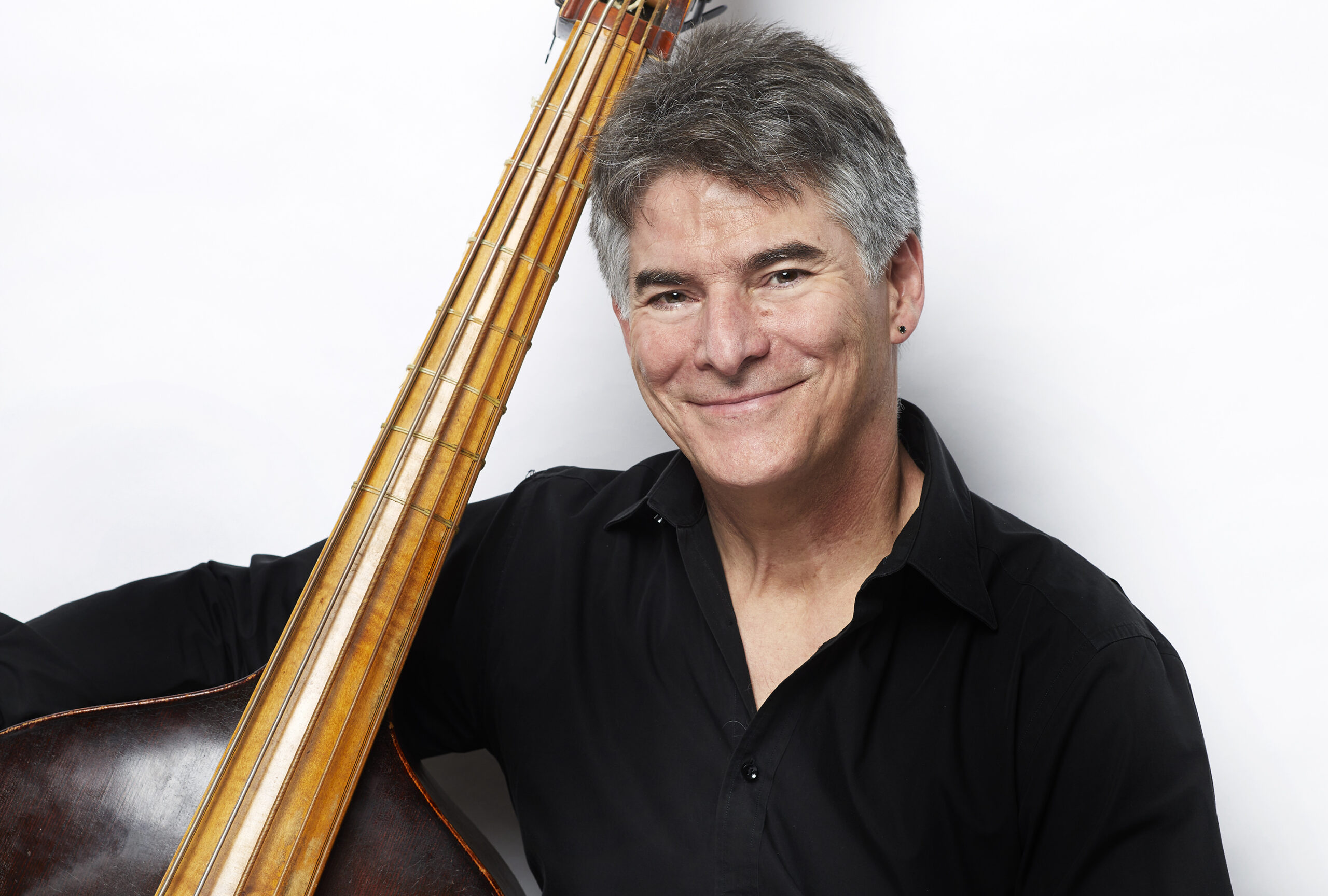
ABO Principal Bass Robert Nairn. Photo © Keith Saunders
Nairn has long known of the uncertainty surrounding the concerto’s provenance thanks to German musicologist Adolf Meier, who first noted that the score was not in Sperger’s hand in his 1969 publication Konzertante Musik für Kontrabaß in der Wiener Klassik.
The real composer’s name had been erased from the first page, the manuscript carried no date, and its presence among Sperger’s papers had helped sustain the misattribution.
Political divisions in 20th-century Europe didn’t help either. As Nairn explains, Sperger’s manuscripts remained behind the Iron Curtain in Schwerin, where access was difficult but not impossible. “There were no modern editions of any of his 18 concerti, but as historical bass players, we all knew they were there, and you could get microfilm copies of some of them.”
These were the copies Nairn distributed at Juilliard, all of them ascribed to Sperger despite Meier’s findings to the contrary.
He once counted Wolfgang Amadeus Mozart among his greatest admirers.
This month, however, Nairn will help set the record straight when he joins the Australian Brandenburg Orchestra for the world premiere of Pleyel’s correctly attributed Concerto for Violone in E-flat major.
For Nairn, it is a chance to hear a composer whose reputation has faded despite his popularity in the late 18th and early 19th centuries.
Today, Pleyel is perhaps better remembered for his publishing house and piano-making business, but he once counted Wolfgang Amadeus Mozart among his greatest admirers. In fact, Mozart was so impressed by Pleyel’s string quartets that he wrote to his father to say how fortunate the music world would be if Pleyel could, “in due time, be our replacement for Haydn.”
Nairn also recalls reading letters that the explorer and amateur flautist Matthew Flinders wrote to his wife while imprisoned in Mauritius.
“He wrote that he’s been playing some Pleyel, and when he gets back to London, he must have all of the Pleyels, Mozarts and Haydns, as if the three were a triumvirate. And I think that is a reflection of how incredibly popular his chamber music was.”
Nairn puts that popularity down to Pleyel’s melodic invention. “It’s the same sort of thing that Corelli had; there’s a timelessness about it.”
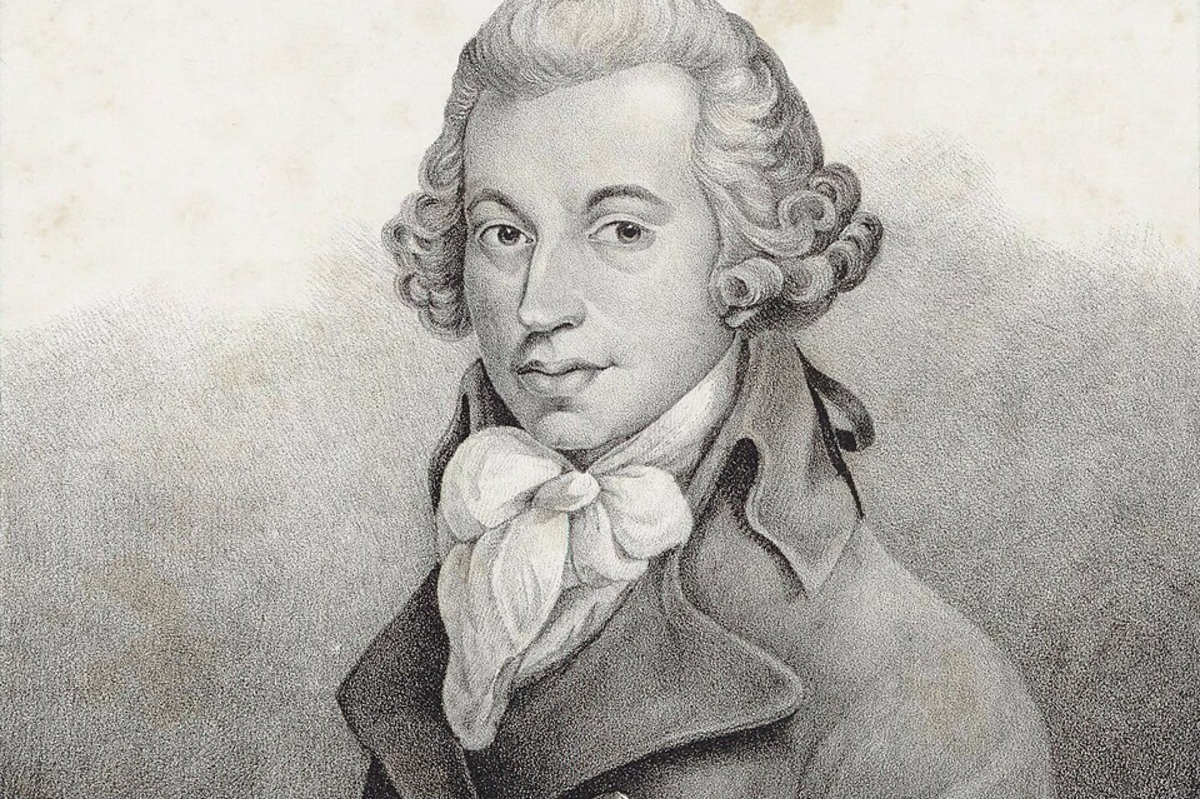
A portrait of Ignaz Josef Pleyel by an unknown artist. Image supplied
The Violone Concerto owes its rediscovery to bassist, musicologist and Schola Cantorum Basiliensis alumna Darija Andelic-Andzakovic, whose research into the folk references in Sperger’s music led her to question the attribution of the concerto Adolf Meier had first challenged.
Andelic-Andzakovic, whose research is dedicated to Meier, used the online search tool of the Répertoire International des Sources Musicales (RISM), which allows users to search more than two million musical incipits (the opening notes or measures of a work or movement) to identify anonymous works and compare different sources of the same music.
She discovered that a rondo theme from the third movement of the contentious Fifth Contrabass Concerto also appeared in Pleyel’s Duetto No. 1 in C major for violin and violoncello, published in 1788. “It’s exactly the same melody,” Nairn says.
The rondo theme also popped up in arrangements for other instrumental combinations, virtually all of them by Pleyel.
Following this lead, Andelic-Andzakovic conducted a handwriting analysis on Sperger’s manuscript. Sure enough, beneath his annotations, the music was written in Pleyel’s hand. What’s more, three tiny remnants of the erased signature were also consistent with the way Pleyel signed his other works.
Andelic-Andzakovic also identified a separate part for the solo bass, which was discovered after Meier’s findings, and was by the same copyist who prepared the solo contrabass parts for Sperger’s Pressburg-era concerti.
This evidence makes a compelling case for Pleyel’s authorship and places the work within the musical world of Pressburg, now Bratislava, where Pleyel and Sperger were employed from around 1777, albeit by different courts.
Given that both composers were working in the same city at the time, and that Sperger annotated the score, it is not unreasonable to conclude that Pleyel wrote the concerto for him.
When Nairn heard from Andelic-Andzakovic in early 2025, the prospect of performing it seemed almost too good to be true.
“I was thrilled because it’s always great to hear that something like this has been discovered,” he says.
He called Australian Brandenburg Orchestra Artistic Director Paul Dyer, who responded by saying, “Well, we’ve got to do the premiere!”
Initially, Nairn says, he thought it would get snapped up in Europe, and when he didn’t hear anything for a while, he assumed it was off the cards.
Then, with preparations for ABO’s 2026 season gathering pace, Dyer informed him that the world premiere would be his.
“My job is to convince the audience and particularly the bass players who are out there that this really is a fantastic concerto, and to try and show all its colours and highlights,” Nairn says.
“He’s got something to say and, right off the cuff, he’s decided to be extremely dramatic with it.”
“At 28 minutes, it’s an enormous piece of music. The first movement is probably double the length of the first movements of any of the standard Viennese bass concerti, which basically became our classical repertoire as double bassists in the 21st century.”
Fortunately, he says, Pleyel has given him plenty to work with. “It starts off with this very dramatic statement of the theme with the whole orchestra and the soloist accompanying it,” he says, noting the “almost Beethoven-esque” Sturm und Drang of the opening. “He’s got something to say and, right off the cuff, he’s decided to be extremely dramatic with it.”
“The Adagio cantabile speaks for itself,” Nairn continues. “It’s absolutely gorgeous, while the third movement sort of skips along. It’s got lots of crazy stuff and really wonderful ideas that just fit.”
Nairn points out that the version he is performing is not simply a reproduction of Pleyel’s original score.
Sperger made considerable changes to the solo writing, including octave adjustments and crossed-out sections. This edition, prepared by Andelic-Andzakovic, “resurrects” those passages while retaining some of Sperger’s adaptations.
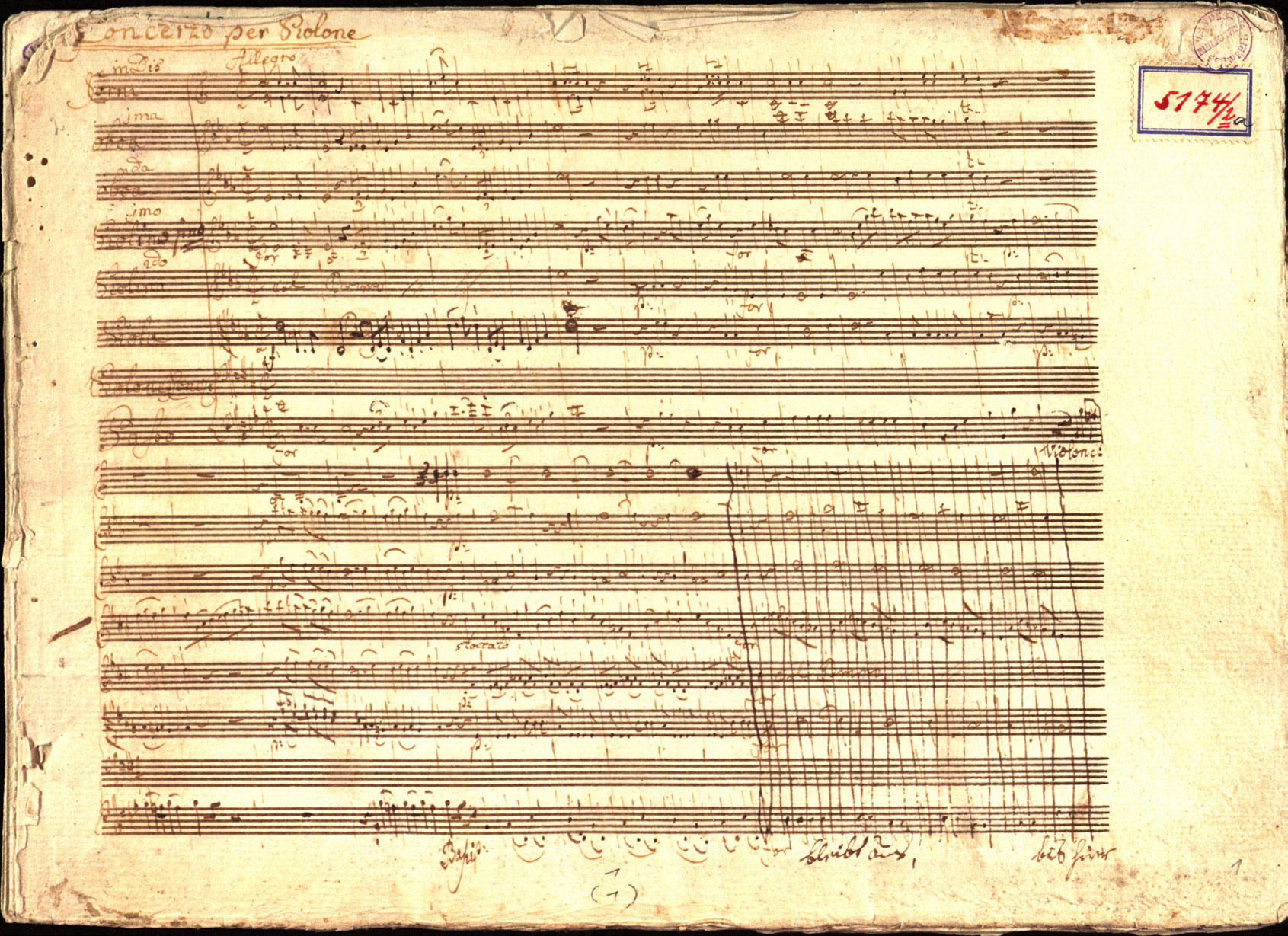
Manuscript of the first movement of Pleyel’s Concerto for Violone in E-flat major. Image supplied
The Viennese violone also plays a central role. Emerging in the late 17th century, it was a five-stringed, fretted instrument whose distinctive tuning became increasingly popular among Austrian players during the 18th century, enabling chordal writing, bariolage and rapid passagework.
Nairn says its tuning will directly shape his interpretation of the concerto.
On a modern double bass, players move up and down the fingerboard primarily on the top strings. Viennese tuning, by contrast, brings particular string crossings, fingerboard positions and harmonics into play, lending the music a different colour and character.
“Working with that instrument requires a certain skill level that is not familiar at all,” Nairn says. “When I taught at Juilliard, I had to have the concerti up all the time because I needed to be able to demonstrate them to my students.”
“I’ve been back in Australia for 10 years now and only been in that tuning a couple of times, so I was much more versed in it when I was in America.”
Is it like riding a bike, then?
“I’ve been in Viennese tuning for the last couple of weeks, and it hasn’t bothered me at all,” Nairn replies. “But when I first got back into it, I was like, ‘Oh my God!’ So yes, it is like riding a bike; for the first couple of miles, you’re a little bit wonky, and then it comes back again.”
As to the honour of giving the first recorded performance of a work written for someone of Sperger’s virtuosity, Nairn says, “I’m humbled and very excited to do it. Sperger’s technique must have been absolutely phenomenal, because he goes right off the end of the fingerboard and up and down the instrument at breakneck speed.”
“There’s going to be a lot riding on this in terms of people coming and judging the concerto on its first performance,” he adds. “I’m just grateful to Paul and the Brandenburg for having the courage to make it part of this program.”
Robert Nairn will perform Pleyel’s Concerto for Violone in E-flat major as part of the Australian Brandenburg Orchestra’s Mozart, Salieri & Pleyel concert at Melbourne Recital Centre, 15–18 October, and City Recital Hall, Sydney, 21–27 October.







Comments
Log in to start the conversation.