




Mitsuko Uchida and Beethoven is a self-recommending combination. If the most incisive of pianists has always been her own touchstone, her point of reference has equally always been authenticity to the score. Never one to settle for the presumption of delivering “definitive” performances and ever-alert to the new, here she makes use of the Urtext edition of the last three piano sonatas overseen by Jonathan Del Mar and published by Bärenreiter as recently as 2022.
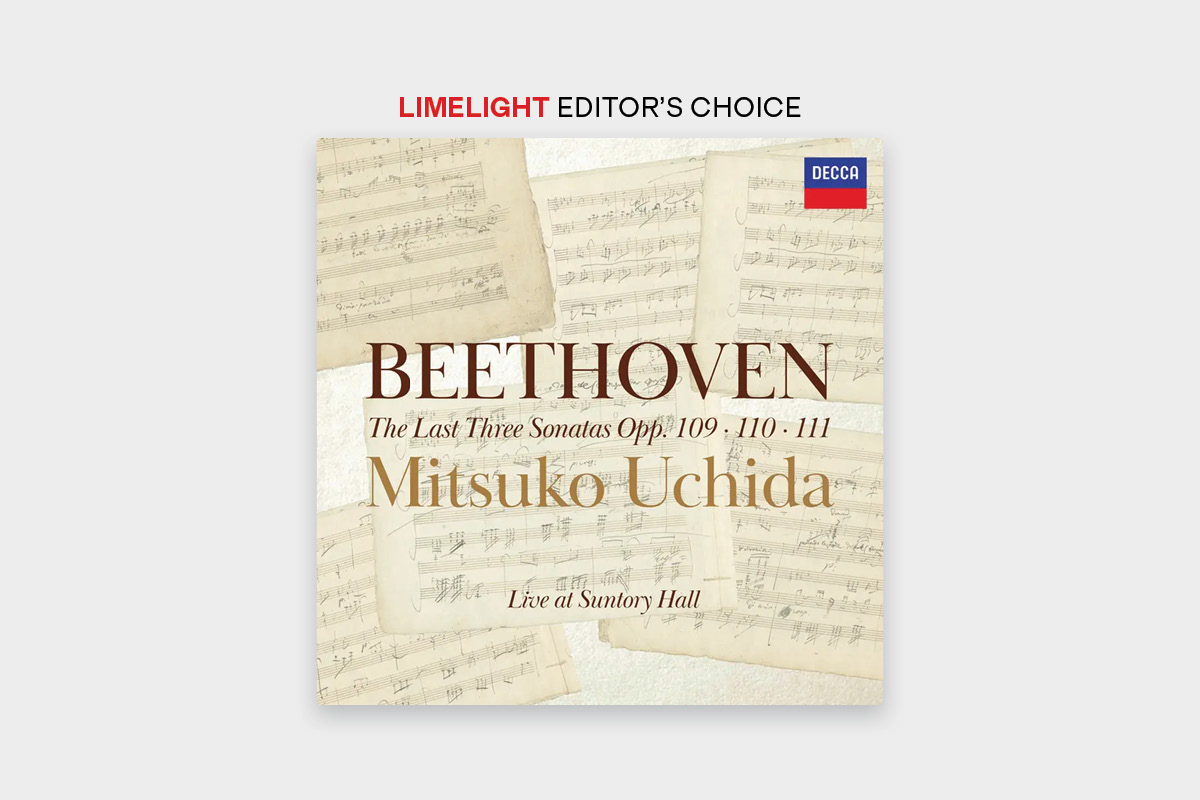
This second take on disc comes in the long, still revered shadow of her now two-decades-old studio versions, also on Decca. Those who have those earlier accounts will want to know that the use of the revised scores, and the context of this live recording in Tokyo’s Suntory Hall in October 2025, have resulted in differences of interpretation that are as marked as they are subtle.
Responding to the spacious, 2,000-seat breadth of Suntory’s acoustic, Uchida adroitly lights on both the inviting largesse of an audience and the improvisatory quality that threads through the sonatas with a fresh, inquisitive immediacy. The approach gives her ample creative lebensraum to take advantage of the sonatas’ formal innovations, and to excavate and bring to the surface their sophistication and inscrutable complexity.
Most striking, though it shouldn’t come as a surprise, is Uchida’s unassuming deference to the music. Similarly, her willingness to allow it to surprise her. There is no obvious agenda beyond the music itself, no grandstanding, no super-imposed novelty for its own sake. The overall impression is of two supreme artists communing with each other, a notion heightened by the beginning of Op. 109 which blends spontaneity and precision with eloquent ease, as if the music was being composed in the moment, the ink drying on each bar even as it is played.
If the ensuing Prestissimo seems a little less energised, not as driven this time around, there is no loss of tension, the whole seeming more deliberate and biting. If that quality is initially delayed in the concluding set of variations, it is reinforced by the utmost control of their intricate shuffling of tempo and rhythm.
Op. 110 is a masterful exercise in chiaroscuro contrasts, artfully blending interior profundity and high-spirited ebullience, Uchida at her most poetic in the Adagio, at her most meticulous in the carefully manipulated transition of the fugal ending, its contrapuntal zeal owing an obvious debt to Bach.
As a summation of all that came before – and of what might have been had further sonatas appeared – Uchida approaches the two-movement Op. 111 with a compelling sureness of touch. There is an appropriate austerity to the tentative opening of the Maestoso, something combustible about the urgency of its surging towards and retreating from new territory, unknown and mysterious, yet to be mapped. The transcendent expanse of the Arietta is exquisitely realised, Uchida measuring out each note, every phrase with consummate interpretative intelligence and the utmost sensitivity to the intricate changes of attitude, mood and execution in the rich landscape of the variations that follow.
If these are to be Uchida’s last thoughts on these enigmatic sonatas, they’re as illuminating a place any to stop. And all the more treasurable for the obvious communion they reveal between pianist and composer.
Everett Porter’s crystal-clear recording with a minimum of off-stage audience noise, excellent notes by Misha Donat, and the pleasingly faux notebook design of the booklet add to the considerable pleasure.
Composer: Ludwig van Beethoven
Works: Piano Sonatas Opp. 109, 110, 111
Performers: Mitsuko Uchida
Label: Decca 4872064
★★★★★







Comments
Log in to start the conversation.