Prefacing Beethoven’s middle-period masterpiece with two early works by Russian composers was always likely to pay aesthetic dividends. So it proved in this electrifying Friday night concert featuring WASO Chief Conductor Asher Fisch and Australian-based pianist Konstantin Shamray.

Written in 1869 and revised for a second and final time in 1880, Tchaikovsky’s fantasy-overture Romeo and Juliet economically weaves together religiosity, violence and love in an intense musical commentary on Shakespeare’s play while offering up some of the composer’s most memorable melodies. Fisch’s account was symphonic in scope, human in scale, WASO responding with a collective sense of drama and precision to the baton.
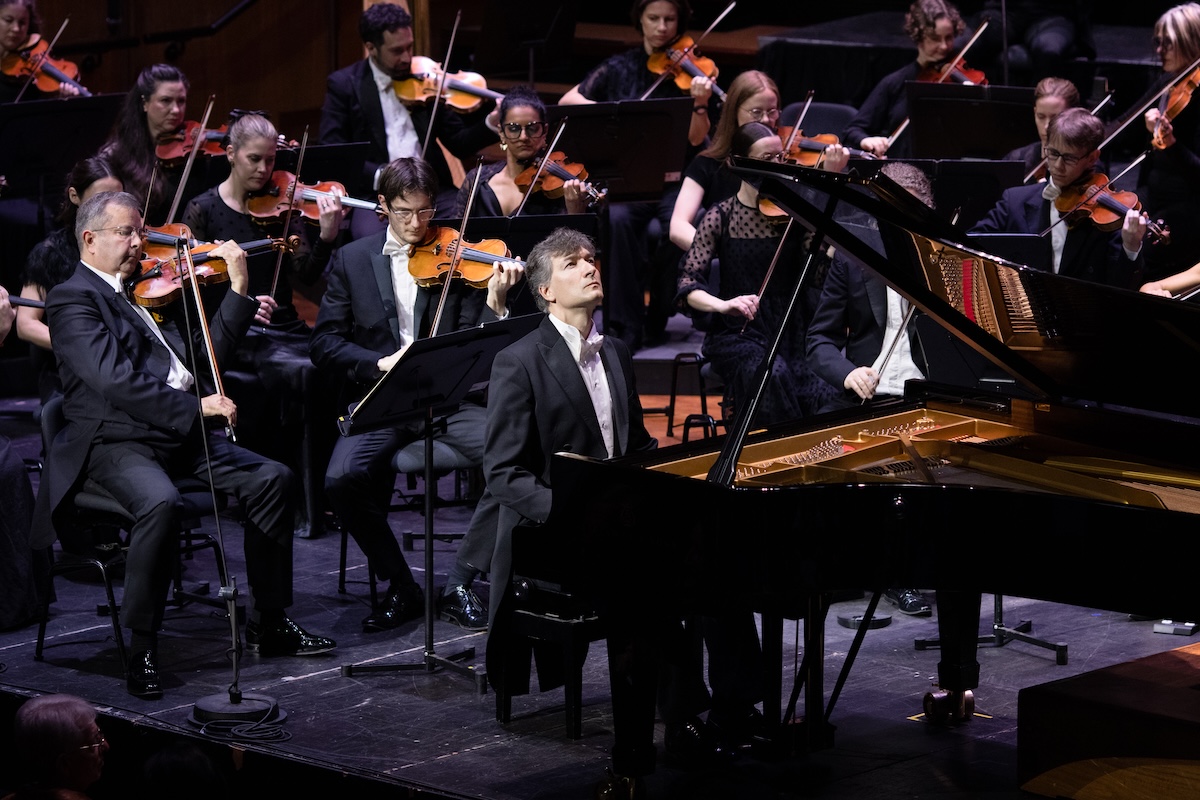
Konstantin Shamray and the West Australian Symphony Orchestra. Photo supplied

Despite being another youthful work by a Russian composer, Prokofiev’s Piano Concerto No. 1 in D Flat, Op. 10 (1911) shares with the Tchaikovsky only its concentrated form; indeed, its single movement lasts barely 15 minutes. Otherwise, we are in a different world entirely, one where classical form is strained by spiky scintillation and ironic grandeur.

Shamray – a welcome regular visitor to WA – donned a deceptive nonchalance to take the edge off a clear seriousness of purpose, his delicious combination of whimsy and virtuosity cleanly carrying through the work’s three contrasting sections, Fisch and WASO aiding and abetting Shamray’s good-humoured assault with equal enthusiasm. Shamray’s encore, a lyrical excerpt from Prokofiev’s ballet Cinderella, was the perfect choice, both footnote and postlude.

Asher Fisch and the West Australian Symphony Orchestra. Photo supplied

Following the interval, Beethoven’s Symphony No. 7 in A, Op. 92, the account of which, conducted from memory, reminded one that both composer and orchestra had performed this work together on numerous occasions and thus wore the score like a second skin. Perhaps the most notable aspect of the performance was however Fisch’s ability to inject the qualities of youthful brio and freshness heard in the Tchaikovsky and Prokofiev into this old warhorse and give it bold new life.

Indeed, there were no breaks between the first and second movements, and between the third and fourth, which not only harkened back to the preceding two works’ single-movement structures but emphasised Beethoven’s integrated vision – in Wagner’s words, “the apotheosis of the dance”.

Shattering the expectant atmosphere of the Poco sosenuto with a propulsive Vivace, Fisch then led WASO through an Allegretto of quiet intensity and a marvellously differentiated scherzo and trio before delivering an exhilarating, exuberant Allegro con brio of exceptional vivacity. Playing across all sections was less exceptional than equal to the best we’ve come to expect from this fine orchestra.


WASO performs Beethoven’s Seventh on 28 and 29 August at Albany Entertainment Centre. For more information on West Australian Symphony Orchestra events, visit waso.com.au

Contribute to Limelight and support independent arts journalism.