This year marks the 20th anniversary of the Melbourne Bach Choir. Formed principally to celebrate the work of JS Bach, its debut performance was the St Matthew Passion in 2006. It’s a milestone of which Artistic Director and conductor Rick Prakhoff should be proud, and augurs well for a long and successful future.

Surprising, then, that in this celebratory anniversary performance, he should select works by Brahms and Szymanowski that were inspired by death and reflections on the end of life. Brahms’ Nänie – roughly translated as ‘funeral ode’ – is based on a poem by Friedrich Schiller that references Greek mythology to mourn the loss of Beauty.

Written after the untimely death of Brahms’ friend, the painter Anselm Feuerbach, it opens with a wistful oboe solo leading to a full-throated choral and orchestral passage that leaves the listener with feelings of hope rather than despair.

It calls for a full choir and orchestra, and the Zelman Memorial Symphony Orchestra, a long-established non-professional group of players, partnered with the MBC for Friday night’s performance at the Melbourne Recital Centre.
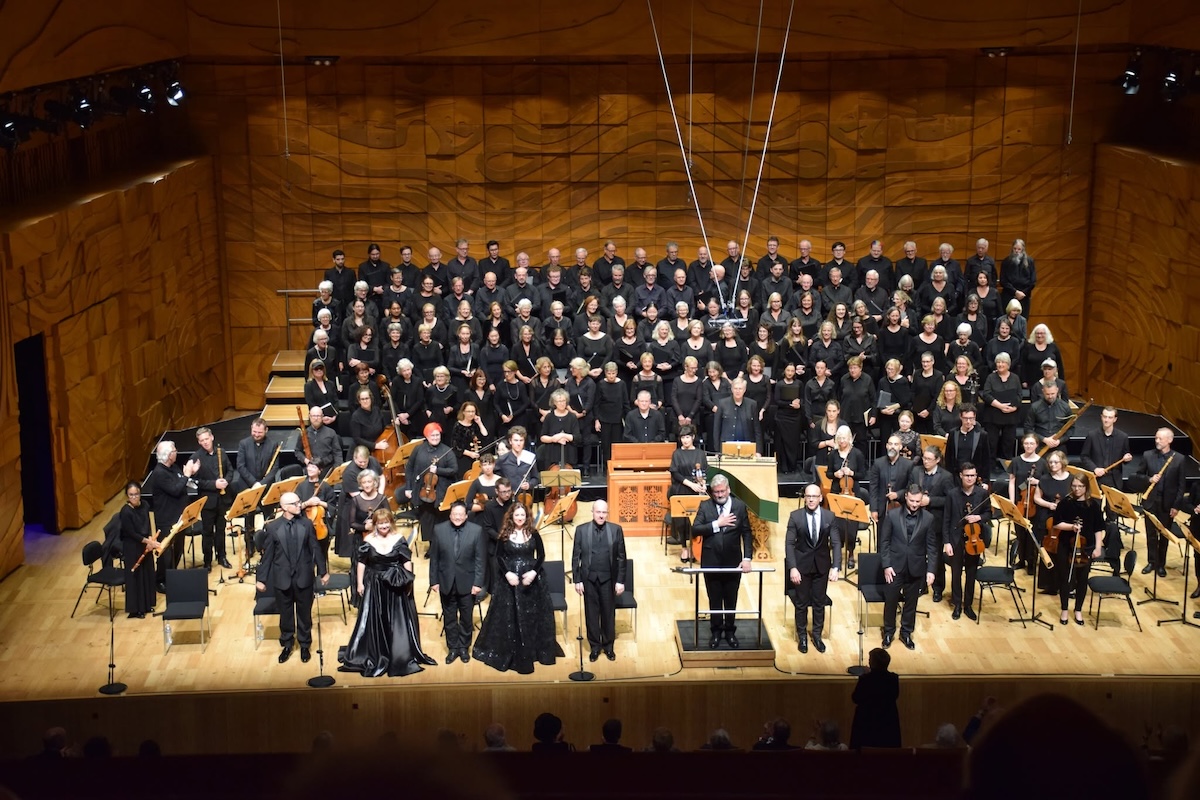
Melbourne Bach Choir. Photo supplied

Conducted by Jessica Zuk and assisted by the excellent acoustics of the MRC, the orchestra tackled the challenge with enthusiasm. Oboist Kailen Cresp was a standout, as was harpist Tijana Kozarčić, whose playing evoked, as intended, the heavenly intervention of the Greek gods’ favourite instrument, the lyre.

Karol Szymanowski’s Stabat Mater, composed a century ago, was a rare foray into religious text for the composer, who was known mostly for secular rather than liturgical composition. Inspired by a combination of Polish folk music and 16th-century Polish sacred music, it was written in response to Szymanowski’s ‘inner personal experiences’ of grief and loss. Friday night’s performance was sung in Polish rather than Latin, a rare thing outside Poland and all the more poignant for it.

Soprano Helena Dix manages to absorb the mood of any piece she performs. Her rendition of the plaintive opening lament was spine-tingling. Warwick Fyfe’s fine baritone voice was just the right combination of strength and sympathy required to bear witness to the grief of the mother. Mezzo Belinda Paterson acquitted herself well in the lesser of the three roles.

Brahms’ Ein Deutsches Requiem is so named purely because it was written in German and was a reflection on death. Brahms himself lost his faith early in life, and wrote this piece with the intention of consoling the bereaved rather than from any religious motive.

Watching Warwick Fyfe perform this piece was a masterclass in how to conduct oneself onstage during a highly emotional, challenging piece of music such as this. He paid close attention to the other solo performers and took on the gravity and emotion of the music even when he wasn’t on his feet. Helena Dix’s role was smaller but delivered with her customary skill and nuance.

Friday night’s program was a challenging one for both musicians and audience. At 80 minutes long, the Requiem was a demanding post-interval listen that merited a standalone performance.

A little bit of Bach at his most joyous might not have gone astray.

Contribute to Limelight and support independent arts journalism.