We are used to hearing works by Haydn and Beethoven juxtaposed with music from other eras, so it was illuminating to see them alongside two contemporaries in the Australian Haydn Ensemble’s Divine Bohemians program.
It takes its name from the nickname ‘il divino boemo’ affectionately given to the charismatic Bohemian composer Josef Mysliveček, who spent much of his life in Italy.
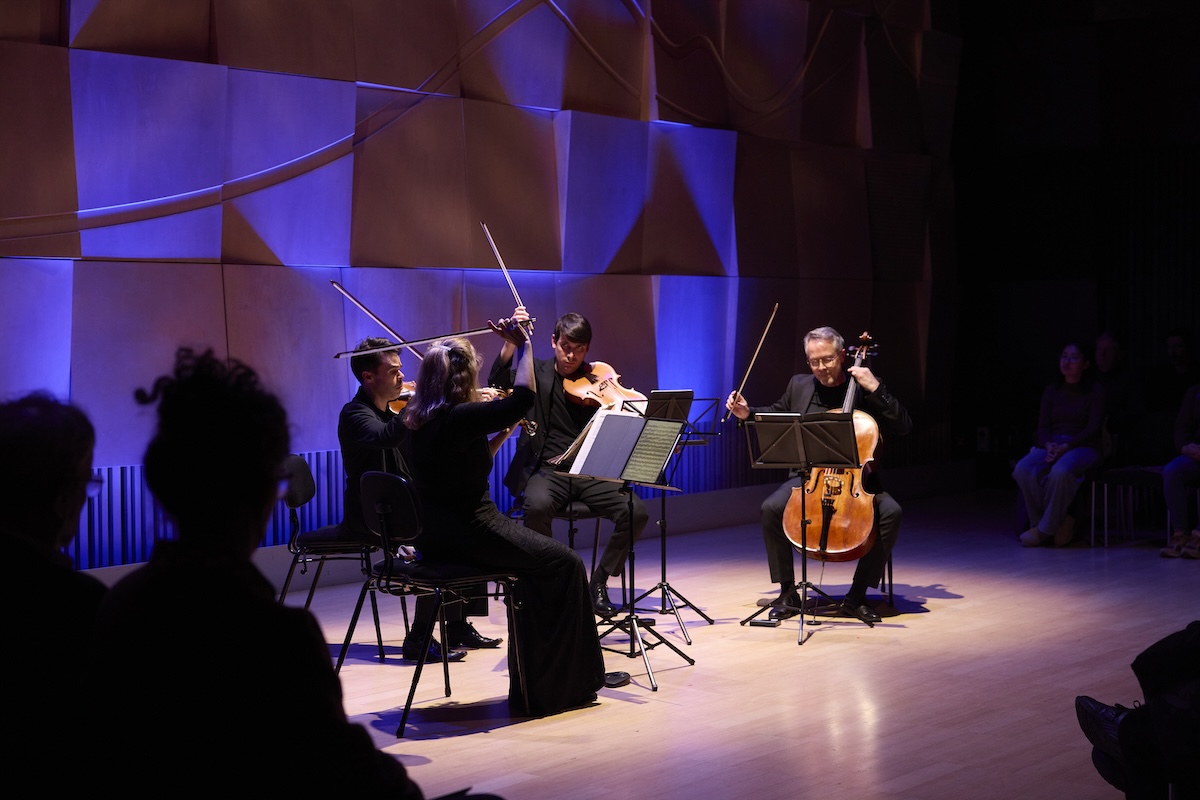
Australian Haydn Ensemble: Divine Bohemians. Photo © Laura Manariti
The program opened a Haydn quartet and closed with a Beethoven quartet. These two seminal works – written at the same time (1798-1800) – have a Bohemian connection: both were commissioned by the Bohemian arts patron Prince Franz Joseph Maximilian Lobkowitz.
Haydn’s G major quartet (Op. 77 No. 1) reveals the composer’s consummate skill with this genre. In the first movement, a quirky theme is repeatedly disrupted by bravura passages, ferocious chords, contrapuntal digressions, and dramatic pauses. The Ensemble carried it off with aplomb and gave an assured performance of three contrasting movements that followed.
Moravian Paul Wranitzky was a prolific composer and sought-after conductor in Vienna at the turn of the century. (He qualified as a Bohemian, Artistic Director Skye McIntosh told us, because he came from a Czech-speaking family.) The restless undertone of Wranitzky’s D minor quartet distinguished it from Haydn’s work. Here the individual colours of the four players’ instruments brought out the more intense, emotional character of Wranitzky’s music.

Skye McIntosh and Australian Haydn Ensemble: Divine Bohemians. Photo © Laura Manariti
Mysliveček’s warm and gentle ‘Larghetto’, played with muted strings, had a calming effect. The Bohemian was (at times) a close friend of Mozart’s, and the latter’s influence can be detected in Mysliveček’s writing. The Ensemble gave a nuanced performance of this delicately written work.
Beethoven’s first string quartet (confusingly published as Opus 18 No. 3) was a highlight of this concert. His writing sets all four instruments on an equal footing; and, while this work has a cheerful mood, it takes the audience on an emotional journey that exploits the string quartet’s vast repertoire of tones and techniques.
Each of the four members of the Australian Haydn Ensemble – Skye McIntosh (violin), Matthew Greco (violin), Rafel Font (viola) and Daniel Yeadon (cello) – has a rich, but distinctive sound, and one of Ensemble’s strengths is the way they combine without losing their individuality.
Focussing on the Bohemians exposed connections not evident when great works are played in isolation and provided an enlightening glimpse of the network of composers, conductors and patrons that fuelled musical life in those times.
__________________________________________________________________________________
Australian Haydn Ensemble presents Divine Bohemians on 31 July at Berry Uniting Church Hall; 1 August at Bowral Memorial Hall and on August in The Neilson, ACO On The Pier, Sydney.

Comments
Log in to start the conversation.