


Faris Ishaq’s playing of the ney melds together the ancient world of Middle Eastern music and contemporary jazz. The sound of the instrument itself evokes that historic connection but some if the diverse ways Ishaq plays it have a contemporary and creative feel.
The Palestinian musician’s performance at the new Bennetts Lane Jazz was an affirmation of the seemingly limitless melodic and rhythmic possibilities of this overlooked instrument.
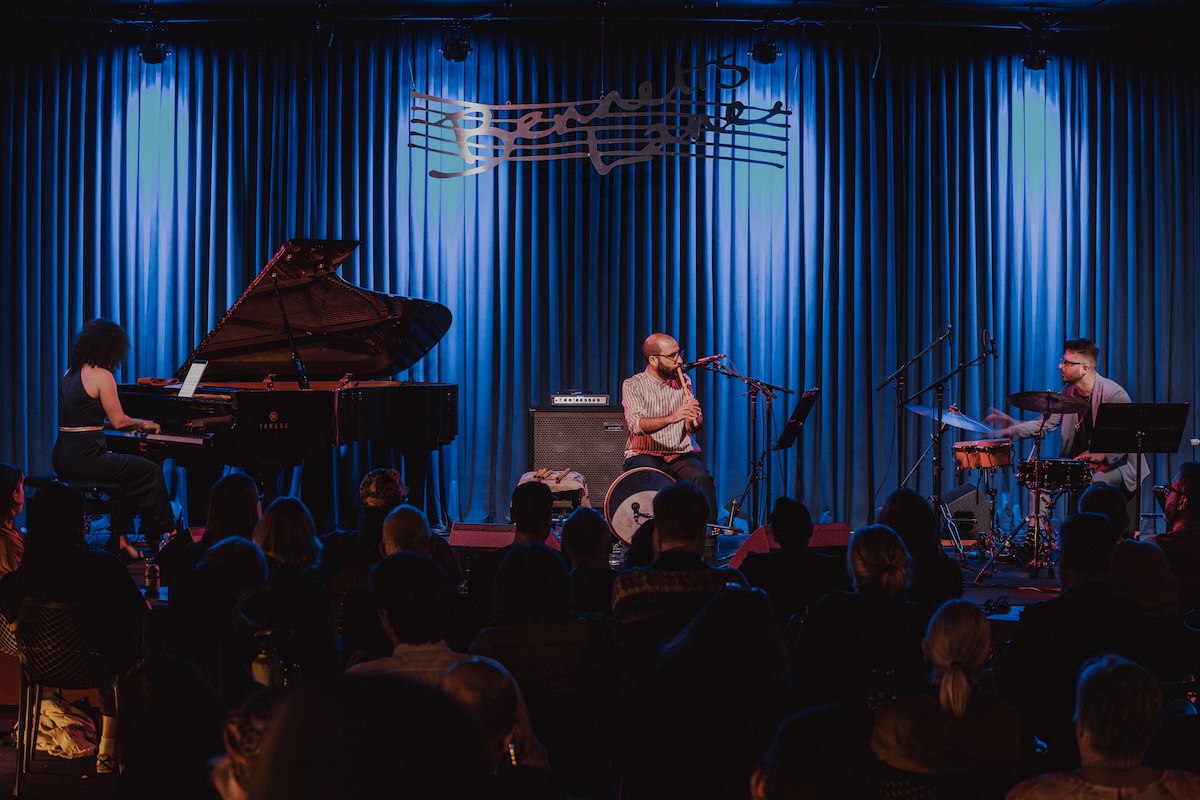
Zela Margossian, Faris Ishaq and Adem Yilmay. Photo © Duncographic/MIJF
The ney is similar to a flute but it is made of cane reed of different lengths for different keys. As distinct from a metal flute, which is played with the lips resting on the side of the flute held sideways, Ishaq plays the ney by breathing into the very end of the instrument and holding it downwards.
From the very first breath he took, there was no doubting his virtuosity as he held the sell-out house spellbound. He opened with Carved an original composition from his solo album, Jasad. The melody he conjured was haunting interspersed with rhythmic sounds like the flutter of birds. He slid smoothly into high pitch notes as if he was singing. He used effects like trilling. Other times there was a swishing sound he injected into the music. The overall effect was the creative a sense of the natural world.
Accompanying Ishaq was Sydney pianist Zela Margossian who played lyrical introductions to some of the numbers and added enhancing phrases behind his playing. Sometimes he would play a repeated motif and she would take it up and tease it out.
Adding to the energy of the performance was the hypnotic beats of Turkish percussionist Adem Yilmay. He created an insistent beat with a small djembe held between his knees while alternative using his hands to tap out different patterns on drums or to add percussive effects with bells.
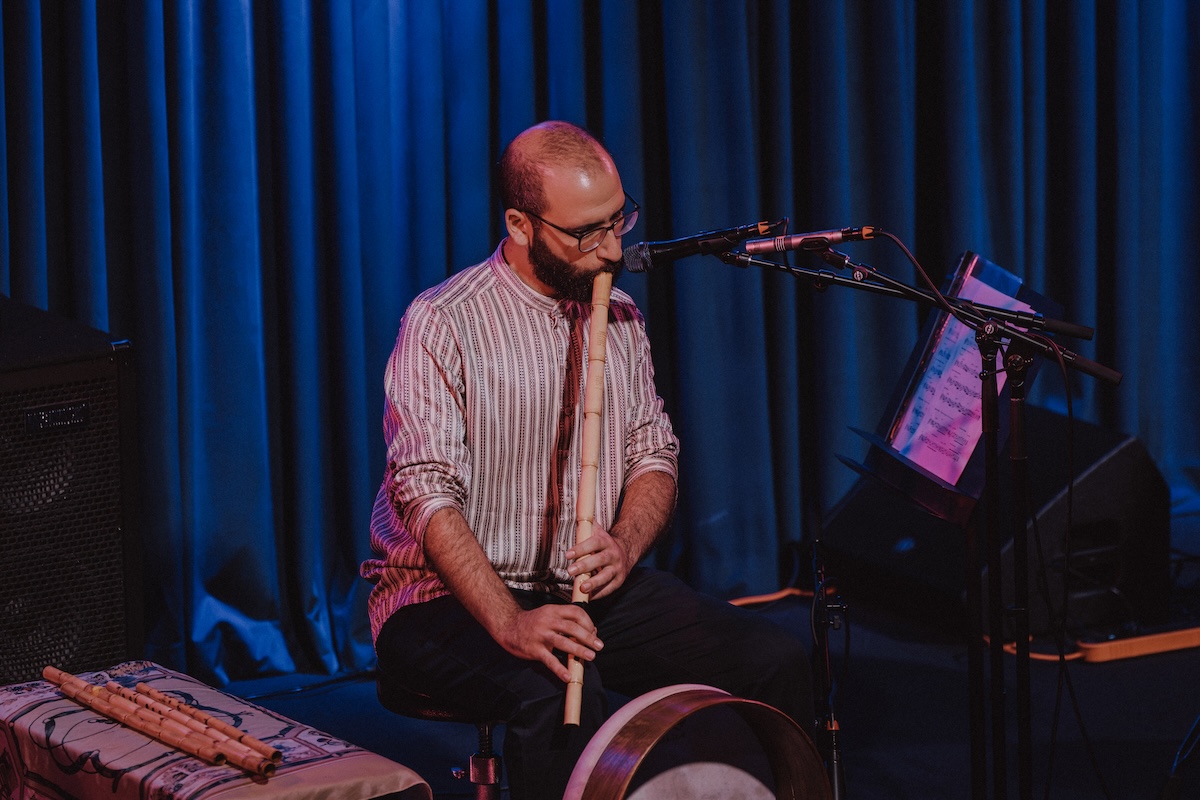
Faris Ishaq. Photo © Duncographic/MIJF
Ishaq’s compositions drew on Palestinian traditions such as wedding ceremonies. On original compositions such as The Incense Trail and Moses Snake Ishaq created exciting breathy rhythm exchanges with Yilmay. His staccato breathy thrusts on the nay were compelling and reminiscent of the driving flute playing of the great Afro-American multi-instrumentalist Rahsaan Roland Kirk.
Ishaq’s rendition of the traditional Arabic poem Lamma Bada Yathana was moving as he conveyed the lines in an earthy low register voice. His jazz sensibility was exemplified in the standard My Favourite Things. Ishaq built up to it melodically with an introduction that blended different influences and sounds with no hint to the tune to come, before he weaved in a tiny fragment of the tune. That fragment was quickly repeated by Margossian and then fleshed out with her take on it. It was then taken back by Ishaq to add another reshaping of the tune.
On Twilight, another of Ishaq’s originals, he created a sense of swirling, colourful melodies alongside infections rhythms.
The audience spontaneously clapped along to his singing. Evident in much of the music was the influence of the Dabkeh, the Palestinian dance.
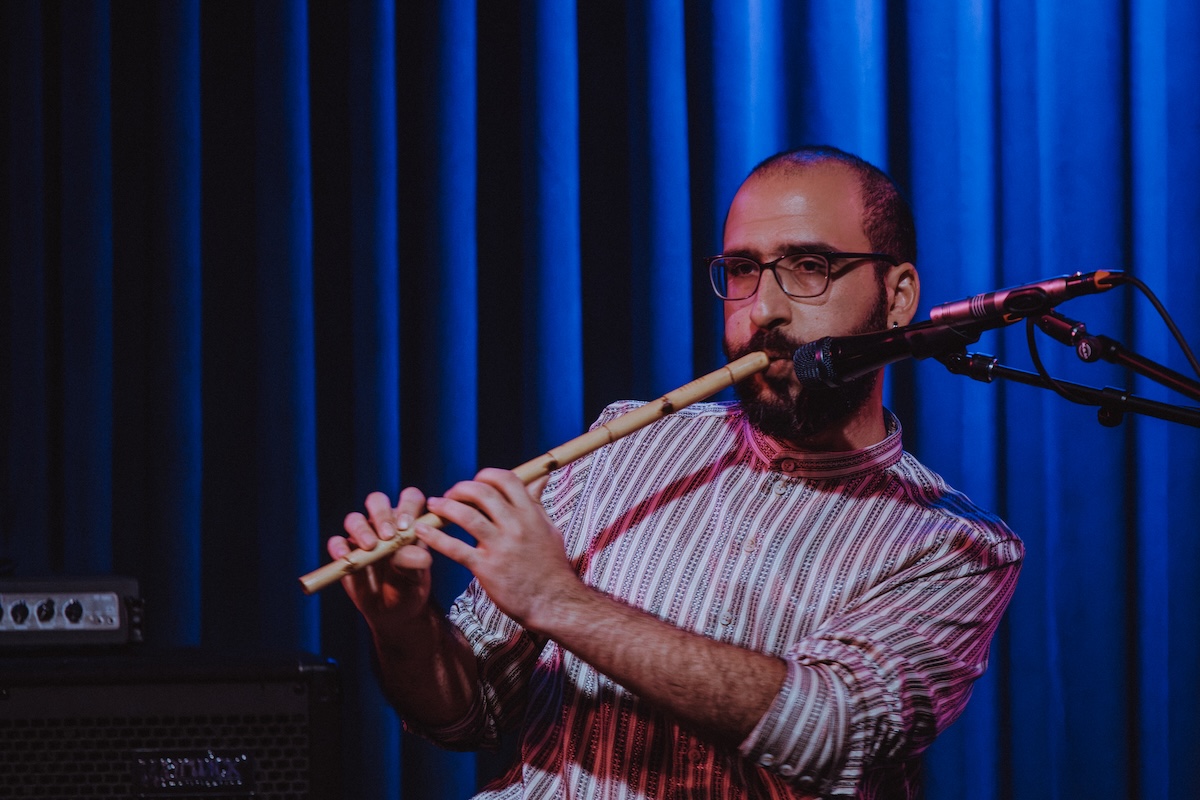
Faris Ishaq. Photo © Duncographic/MIJF
At the end of the concert, Ishaq was greeted with a standing ovation. He quipped they had played all their rehearsed repertoire but that these musicians could respond to anything. They played a short piece that featured the flute and percussion in rhythmic conversation along with Margossian’s shimmering piano response.
The 2026 Melbourne International Jazz Festival continues until 25 October.




Comments
Log in to start the conversation.