


A massive chamber orchestra of 30 musicians launched into Mozart’s Symphony No. 25 on a blazing-red-lit stage with ferocity. The violins lashed at the cowering cellos while the oboe wailed mournfully, as we were thrown into Dante’s torrid inferno.
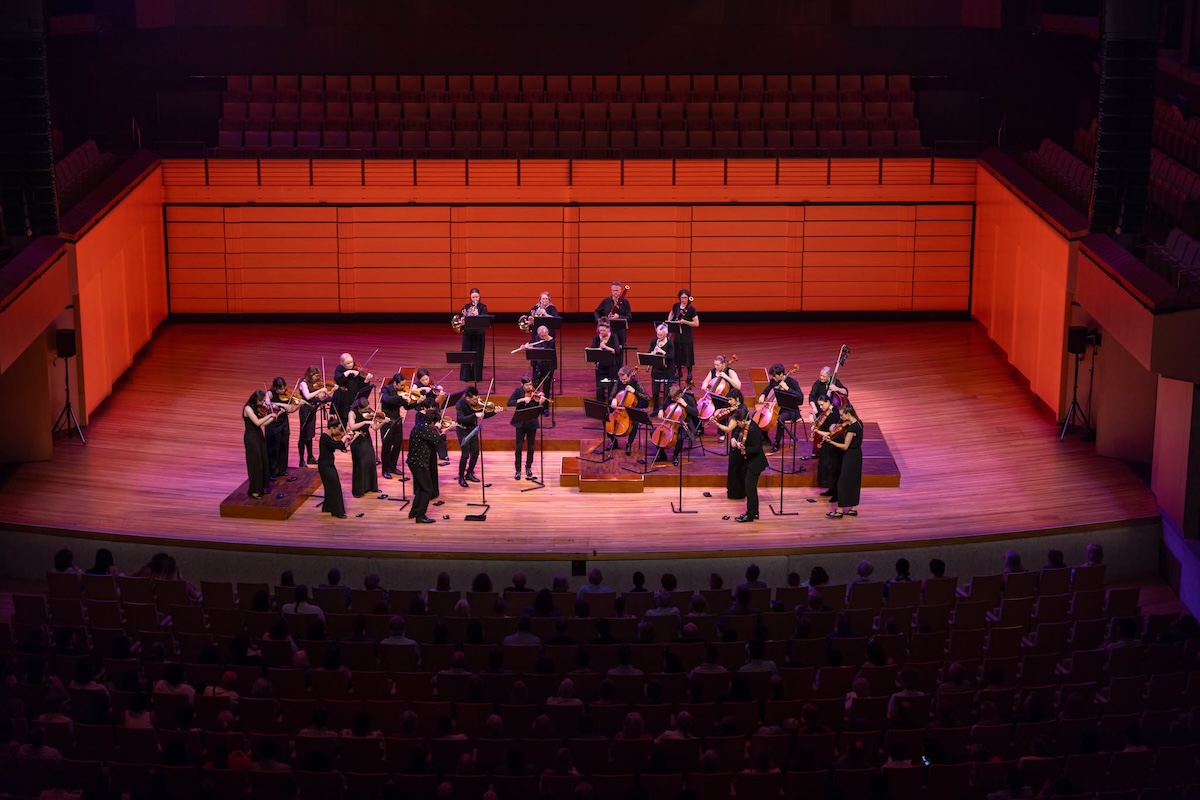
Camerata – Queensland’s Chamber Orchestra: Fire and Finesse. Photo © Alex Jamieson
Camerata’s Fire and Finesse concert was the brainchild of bass player Marian Heckenberg, who chose to sandwich Mozart’s two stormy G minor symphonies, Nos 25 and 40, with a creamy filling of cello and strings in Peter Sculthorpe’s Lament and Jean Françaix’s Variations. It was an inspirational program featuring QSO principal cellist Hyung Suk Bae as guest soloist. Bae graduated from the prestigious Juilliard School and teaches music at both the University of Queensland and the Queensland Conservatorium, Griffith University.
Both intense Sturm und Drang (Storm and Stress) symphonies belong to a late 18th-century German style, far removed from the usual melodic Mozart, and are considered expressions of his rebellion against the “Salzburg Slavery” of provincial music commissioning. No. 25, nicknamed his “Little G Minor”, is one of his early rebellious works, written when he was just 17 – the Smells Like Teen Spirit of its era.
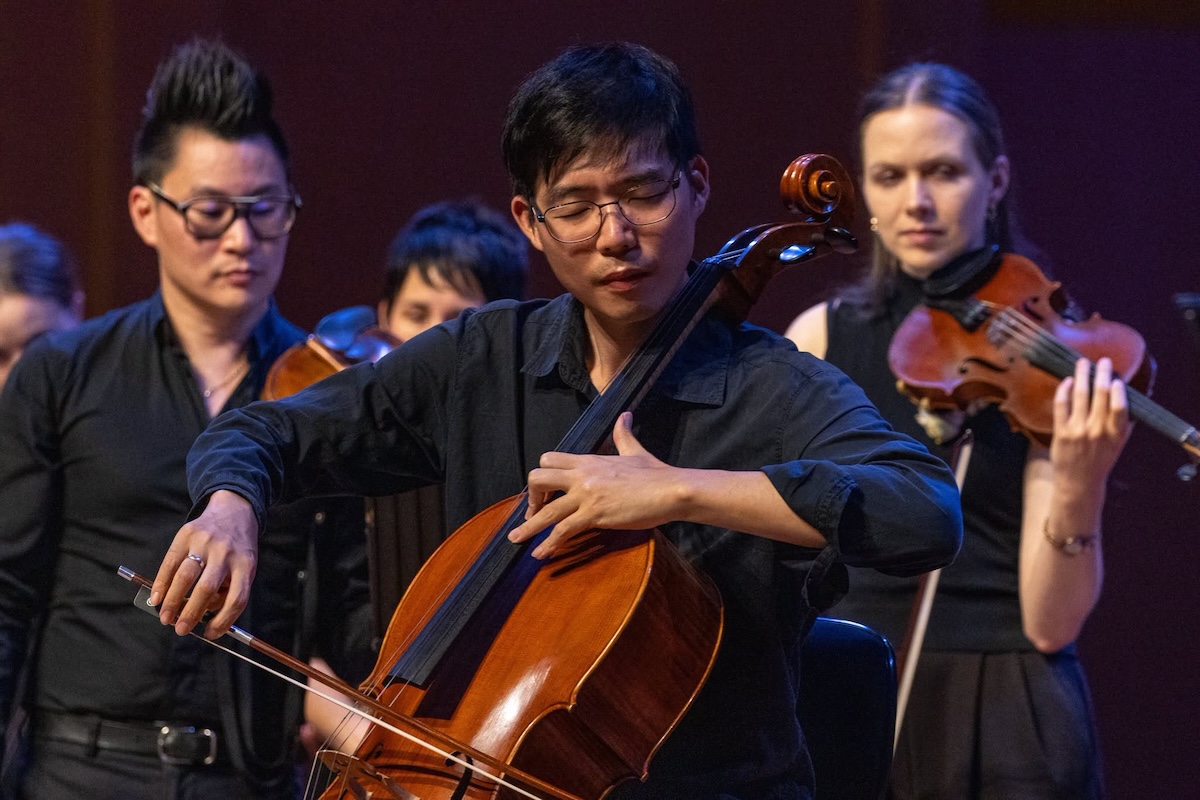
Camerata – Queensland’s Chamber Orchestra and guest soloist Hyung Suk Bae. Photo © Alex Jamieson
The ferocity of the syncopated violins and descending crescendos is punctuated by the woodwinds and four horns with two different tunings, which fight back against the pestering strings. The blistering Allegro finale has hints of the Romanian and Moldovan folk dance, The Horă, bombarding the senses with an emotive harmonic storm.
Sculthorpe’s 1976 Lament for Cello and Strings highlights a melancholic musical period, describing the perceived hostility of the harsh Australian landscape. Artistic Director Brendan Joyce’s violin wept among the mournful violas, beneath a deliciously emotive solo from Bae.
The 1991 extended solo cello version showcased Bae’s synergistic mastery of his 1700 Giovanni Grancino cello. The creamy tones melted like butter on toast, contrasting with scratchy violins evoking swaying gum trees and the odd note from Heckenberg’s bass.
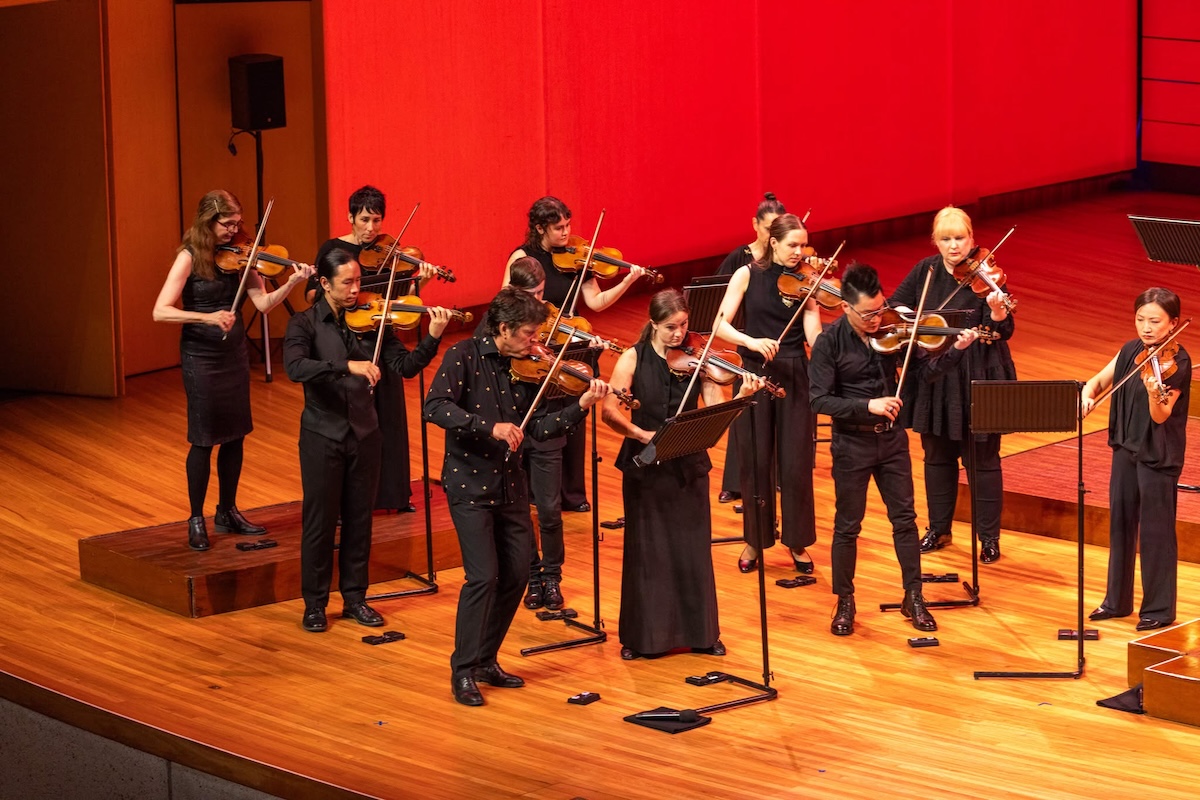
Brendan Joyce and Camerata – Queensland’s Chamber Orchestra: Fire and Finesse. Photo © Alex Jamieson
The 10 movements of Françaix’s Variations for Cello and Strings were delightfully silly, like a collection of musical skits, making effective use of pizzicato and pauses for comic effect. The frivolous ditties disguise the virtuosity of this rarely performed work. Bae paused and grinned amid the musical mélange, bursting with Gallic gusto and notational gasps, rewarded with foot-stamping and cheers from a delighted audience.
Mozart’s mighty ‘Great G minor’ Symphony No. 40, one of my favourites, set off at a gallop, faster than usual and without an annoying conductor to rein them in. They flew along the furlongs. The Molto Allegro encapsulates the ‘Mannheim sigh’, evoking longing and desperation through a descending two-note figure.
Eve Newsome’s oboe and Monika Koerner’s flute danced among the strings, while the fanfaring horns were gorgeous. In the finale, the strings chased the horns and woodwinds through a “near twelve-tone row”, using 10 of the 12 tones in the chromatic scale. Mozart’s anxiety-inducing removal of the tonic (G) and dominant (D) throws the Finale into a musical uncanny valley, making for a disturbing and thunderous finish.
It was an incandescent end to the 2026 main-stage concerts, closing a packed season of 89 performances around Queensland for this consummate chamber orchestra.
For information on Camerata – Queensland’s Chamber Orchestra in 2027, visit camerata.net.au







Comments
Log in to start the conversation.