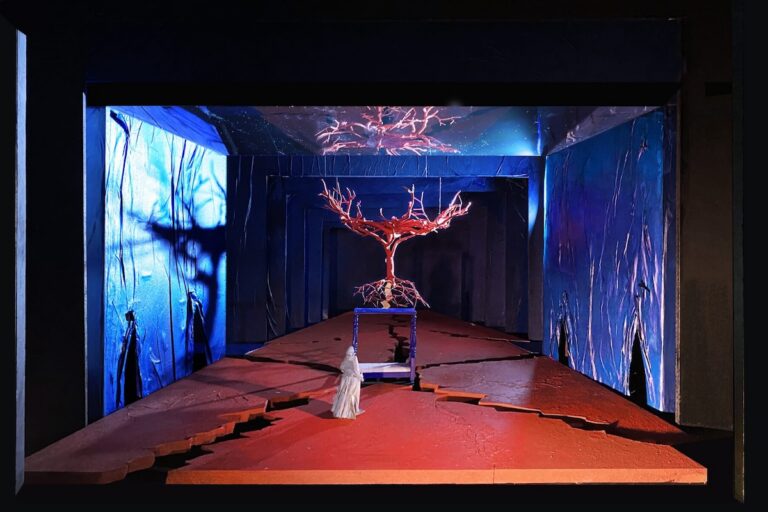


Before heading to Paris as featured artists at the Festival d’Automne, Back to Back Theatre is briefly reviving its most celebrated work on home soil. Premiering in Melbourne in 2011, Ganesh Versus the Third Reich has since been performed around Australia and the world, collecting numerous awards along the way.

The company itself has received everything from a Venice Biennale Golden Lion for Lifetime Achievement, and the International Ibsen Award, aka the ‘Nobel Prize for Theatre’. Not bad for a Geelong-based ensemble of actors who have intellectual disabilities or are neurodivergent.
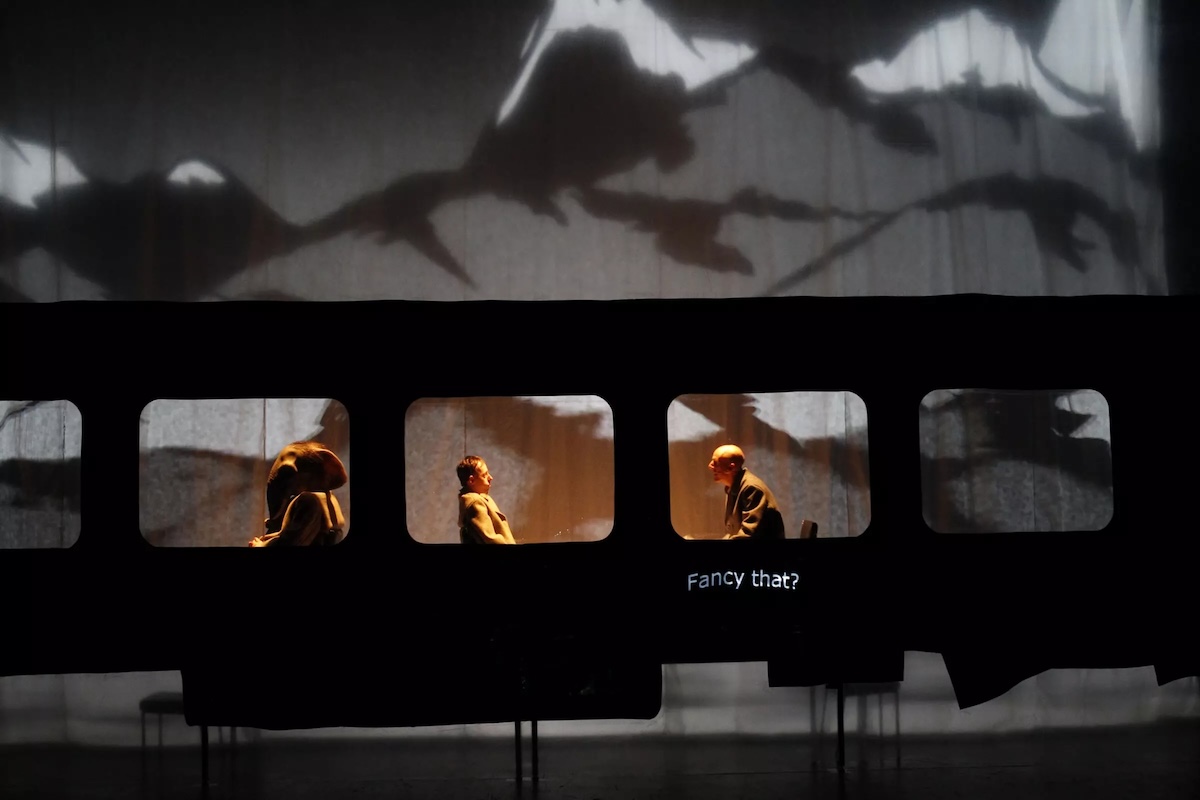
Brian Tilley, Simon Laherty and David Woods in Ganesh Versus the Third Reich. Photo © Jeff Busby

Directed, designed and co-devised by Back to Back’s Artistic Director Bruce Gladwin, Ganesh Versus the Third Reich is on one level just that. The elephant-headed Hindu god of obstacles travels to Germany in 1943 to take back a sacred symbol appropriated by the Nazis: the swastika.

It’s also a play within a play that echoes and amplifies the mythological-historical story’s themes by dramatising tensions that arose during this work’s creation. The actors are uncomfortable about cultural appropriation and the blurring of reality and simulation, insults are hurled, and the director’s coercive control turns violent.

Above all Ganesh Versus the Third Reich is an exploration of how people with disabilities are marginalised and mistreated and, through the very act of creating and performing it, challenges society’s prejudices and misconceptions.

Brian Tilley as Ganesh in Back to Back Theatre’s Ganesh vs The Third Reich. Photo © Jeff Busby

Ganesh’s encounter with Josef Mengele, the Nazi doctor who had a sadistic fascination with the disabled and deformed, recalls the Victorian-era “freak” known as the Elephant Man. Later, in one of the play’s most confronting moments, the on-stage director accuses the audience of wanting “freak porn”.

Back to Back collaborator David Woods interprets both the director and Mengele. The steely, at times threatening performance of this actor who does not identify as disabled makes the characters’ obvious parallels profoundly uncomfortable.

Simon Laherty, Scott Price, Tamika Simpson and Brian Tilley bring their lived experience of difference to the stage in powerful ways. Playing versions of themselves, they endure verbal and physical violence, are withdrawn, speak up, defend each other and crack jokes. For all its discomfort, this play is sprinkled with humour and disarming charm.

In the role of Levi, Mengele’s Jewish assistant and subject of experimentation, slight but determined Laherty is a heartbreaking embodiment of countless Holocaust victims.

During most of the play’s overtly narrative scenes, a series of translucent plastic curtains with simple designs conjure backlit shadow plays or a moving train.

We return to an almost bare rehearsal space when the curtains are gathered up at the wings. Shio Otani’s over-sized character costumes and the lifelike elephant mask Tilley wears as Ganesh are removed, Andrew Livingston’s lighting brightens and Jóhann Jóhannsson’s music fades.

This simplicity contrasts with Ganesh Versus the Third Reich’s complexity of meaning and emotion. I occasionally struggled to understand what some actors say, yet this 100-minute classic of contemporary Australian theatre never fails to engage. It’s audacious, insightful, moving – and in Melbourne for three performances only, so get in quick.


Ganesh Versus the Third Reich is at the Union Theatre, Melbourne, until 19 June.

Contribute to Limelight and support independent arts journalism.