The August edition of Limelight features an account of the renaissance of the countertenor after years of obscurity following its glory days in the 17th and 18th centuries.

As the modern countertenor becomes increasingly popular and integrated into new works, there is a new boundary being nudged. Not content to conquer the range of the female alto voice, male voices are now challenging the heights and roles previously owned by female sopranos, giving rise to a new phenomenon in the canon of voice types – the sopranista.

Sopranistas are still a rarity, but one of them, Maayan Licht, is presented to us by Live at Yours in Coloratura Queen, a program of mostly Baroque classics, performed on period instruments with a band of experts comprising Neal Peres Da Costa at the harpsichord, violinists Julia Fredersdorff and Anna McMichael, and cellist Anton Baba.

Sydney’s Great Synagogue exudes nightclub vibes as the sounds of ambient jazz floats onto the street. The mood is relaxed and intimate, the room and its incandescent ceiling bathed in soft lighting, transforming the experience of this immersive, classical chamber music concert.

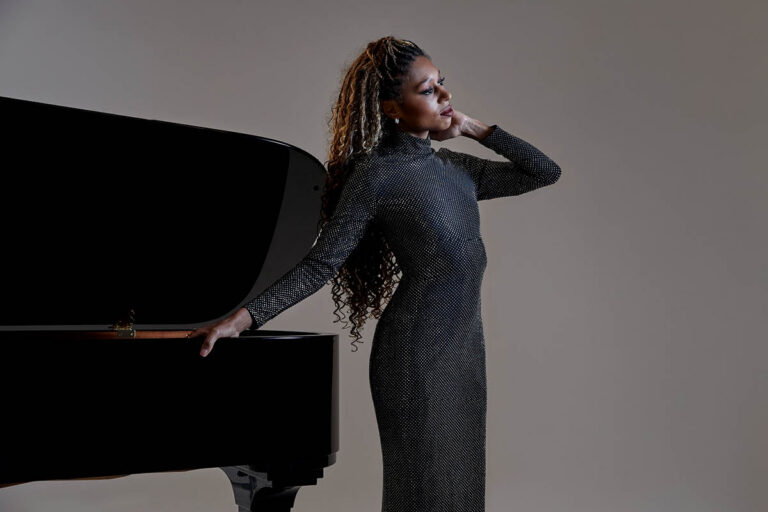
Maayan Licht. Portrait @ Nelya Agdeeva

The charismatic Licht performs a collection of mostly Italian arias by Vivaldi and Handel, designed to entertain and showcase his extraordinary range and sublime coloratura. The arias themselves are fine examples of the word painting developed by the composers of the Baroque era to speak their dramas.

Pure in tone and with laser-like accuracy, Licht’s thrilling virtuosity is underpinned by exemplary technique and capacious breath control. Finessed with passion and sorrow, jealousy and reverence, Licht’s dazzling energy, accompanied by the judiciously balanced instrumental ensemble, entertains with a program steeped in the early history of the high male voice, its exponents and those who wrote for it.

Impresario Vladimir Fanshil entertains with light and informed patter as he introduces the instrumentalists, who themselves contribute to the narrative with morsels of information about their instruments. Fredersdorff’s violin is a century older than the synagogue; Peres Da Costa, plays his own keyboard which houses a 200-year-old soundboard sourced in Amsterdam.

After a sweetening concerto by Vivaldi from the instrumentalists, Licht opens his account with Vivaldi’s explosive ‘rage’ aria Gelosia, tu già rendi l’alma mia from Ottone in Villa. Brief but intense, the da capo form suits Licht’s extraordinary ability, with a silken middle section on the heels of which follow relentless fioriture in the repeat.

Licht flags his vocal athleticism throughout the line-up, tossing off cascades of coloratura, extended trills, cheeky cadenzas, leaps in register and a spectrum of colours and dynamics, occasionally reaching down into chest voice.

There is the bravura aria, Son qual nave ch’agitata, with its impressive messa di voce, written by Riccardo Broschi for his brother, the castrato Farinelli for his English stage debut in 1734; and the splendid Un pensiero nemico di pace from Handel’s oratorio Il trionfo del Tempo e del Disinganno.

Licht’s softer side, his mastery of legato line and uncanny ability to seemingly suspend notes in thin air for an eternity, are evident in the slower arias like Nel già bramoso petto, composed by the noted technician Nicolo Porpora, also for Farinelli, and the chilly, falling phrases of Gelido in ogni vena from Vivaldi’s Farnace, reminiscent of Winter from his Four Seasons and featuring lovely imitative work from the violins.

Licht pays homage to his heritage and surroundings with two pieces by Cristiano Giuseppe Lidarti, the 18th century Austrian composer. Kol Haneshama was written to commemorate the centenary of the Portuguese Jewish community in Amsterdam; Zed Yahir, mimeni heref comes from Ester, the first opera written in Hebrew.

Welcome surprises during the evening included the ensemble showcasing pieces by Vivaldi and a moving account of the Jewish prayer Avinu Malkeinu by guest artist clarinettist Oliver Schermacher who grew up in rural New South Wales and who now lives in Freiburg. The two soloists then join forces in a duet as the audience is recruited to hold a hum, breaking into Hava Nagila with jubilant clapping at the end.

Lastly, Licht takes ownership of an aria written for mezzo-soprano, L’amour est un oiseau rebelle from Bizet’s Carmen, perfectly accompanied by Baba setting the rhythm, with pizzicato violins.

Inevitably there are encores – an achingly beautiful rendition of Handel’s Lascia ch’io pianga from Rinaldo, Queen’s Bohemian Rhapsody with microphone, and an incredible, extemporised, whistled version of another Handel aria, Da tempeste il legno infranto from Giulio Cesare. Extraordinary as his whistling is, there is a part of me that wishes we might have heard Licht sing rather than toot this.

There are few boundaries between performers and audience in the Live at Yours presentations with an ask-anything-Q-and A-session at the end and a chocolate for all on departure. Fanshil injects a sense of fun and informality into what are ultimately, expert performances of important repertoire by serious artistes.


Maayan Licht: Coluratura Queen is at the Great Synagogue, Sydney 11 and 12 August, the Toorak Synagogue, Melbourne on 13 August, at the Castlemaine Festival, Victoria on 14 August and at Adelaide Town Hall on 15 August.

Contribute to Limelight and support independent arts journalism.