


Simone Young and the Sydney Symphony Orchestra added further laurels to their reputation in the second instalment of what many hope will be a complete traversal of Mahler symphonic canon, here with his Third Symphony, the longest in the standard repertoire and one absolutely fraught with a plethora of potential pitfalls.
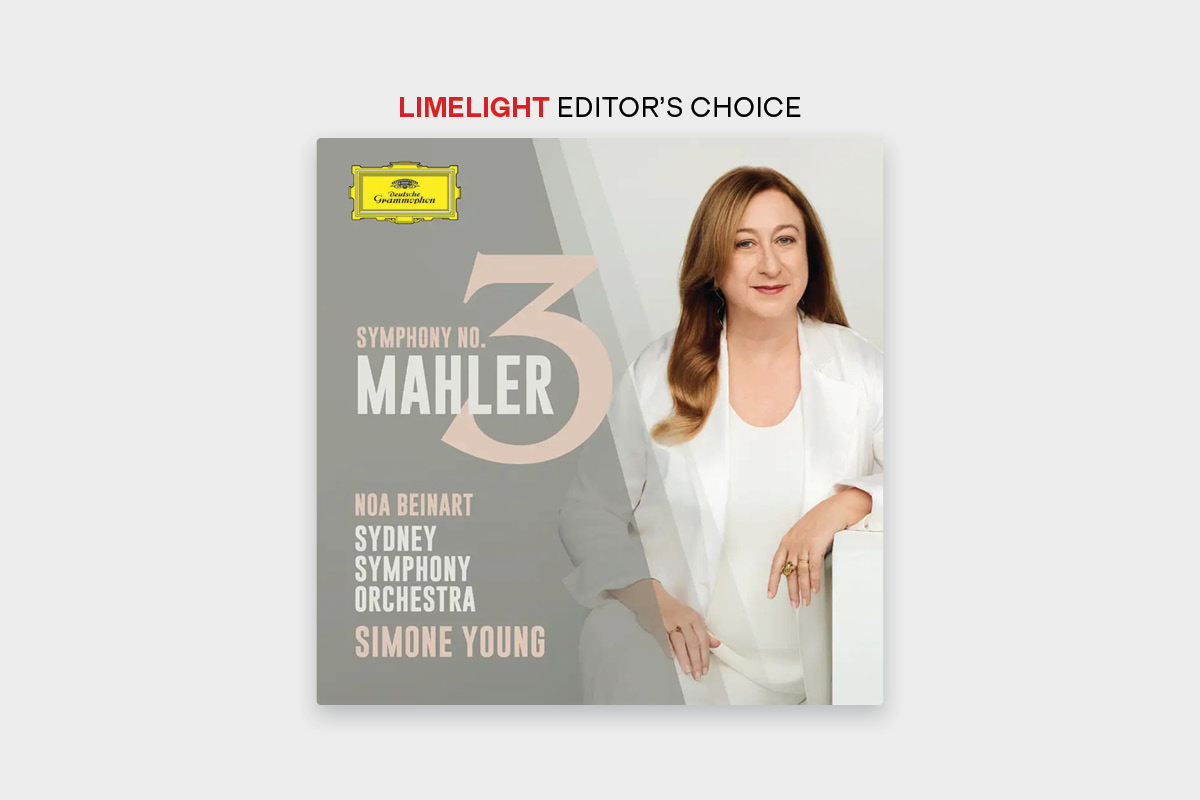
In the wrong hands, this work can sound like a dozy anaconda trying to move after having just ingested a water buffalo. In his declining years, Lorin Maazel took a few minutes under two hours to trundle through it, with most of the audience presumably having lost the will to live in the meantime. Simone Young takes just on 98, and her forces do Mahler’s great hymn to the glories of every level of nature proud. At this duration she hits on convincing tempos from first notes to last.
Apart from in the Seventh, no other Mahler symphony throws up such a kaleidoscopic array of moods and bizarre orchestral effects (i.e. the coalescing of the primordial murk at the opening, the sneering in-your-face trombone glissandos at the beginning and the peculiar drooping woodwind slides in the fourth movement – absurdly grotesque in Simon Rattle’s Berlin version, where they sound like a braying elephant, but not here).
The long first movement needs three basic qualities to succeed: great brass playing, woodwinds willing to screech and scream, and a conductor willing to “let go” when the music goes crazy, as at the end of the development section. Here we find all three. No one will ever make the central march section of the sprawling 34-minute first movement sound as manically but magnificently over-the-top as Bernstein in his original mid-sixties on CBS, when this music was virtually unknown (one critic brilliantly observed that the “pandemonium” episode anticipates Ives or Sousa).
In the scherzo, the rapt, dreamy post horn solo perfectly evokes the heat-hazed torpor of a summer’s day and, at the opposing extreme, the downward “laughing” scale really cackles. The bravado of the hunting fanfares is in the spirit of the scherzo of Bruckner’s Fourth Symphony. Check out the fourth-movement where Israeli mezzo-soprano Noa Beinart brings a sort of earth mother gravity in the “Midnight Song”, and the sinister eruption at the centre of the otherwise bright, chirpy “Bim Bam” fifth movement, enveloping the music like a dark storm cloud over a sunny sky.
The finale presents other challenges and can sometimes almost blight an otherwise fine performance. Simon Rattle virtually throws his recording away with the perfunctory disposal of the final chords. Young’s tempo for the finale (a few seconds short of 24 minutes) strikes me as ideal, not too fast but never dragging or bloated. The SSO strings play very eloquently here, and the soft brass chorale before the final triumphant climax is truly luminous. The trumpets and trombones also play magnificently in this brass-led symphony, particularly in the finale’s closing chorale, and the fact that they manage it in a live recording (even one which may have been put together from multiple performances) is astonishing.
There’s no question that Simone Young’s tenure as chief conductor has raised the Orchestra’s performance standard to a new level – especially in the music of Mahler. The generally excellent recording captures this to perfection.
Composer: Mahler
Work: Symphony No. 3 in D minor
Performers: Noa Beinart ms, Sydney Symphony Orchestra, Sydney Philharmonia Choirs/Simone Young
Label: DG









Comments
Log in to start the conversation.