


For more than half a century, John Williams has given cinema some of its most memorable earworms, across every genre, from sci-fi to historical epic. You need only hum the first few notes of his themes from Jurassic Park, Indiana Jones and Star Wars before someone else gamely joins in.
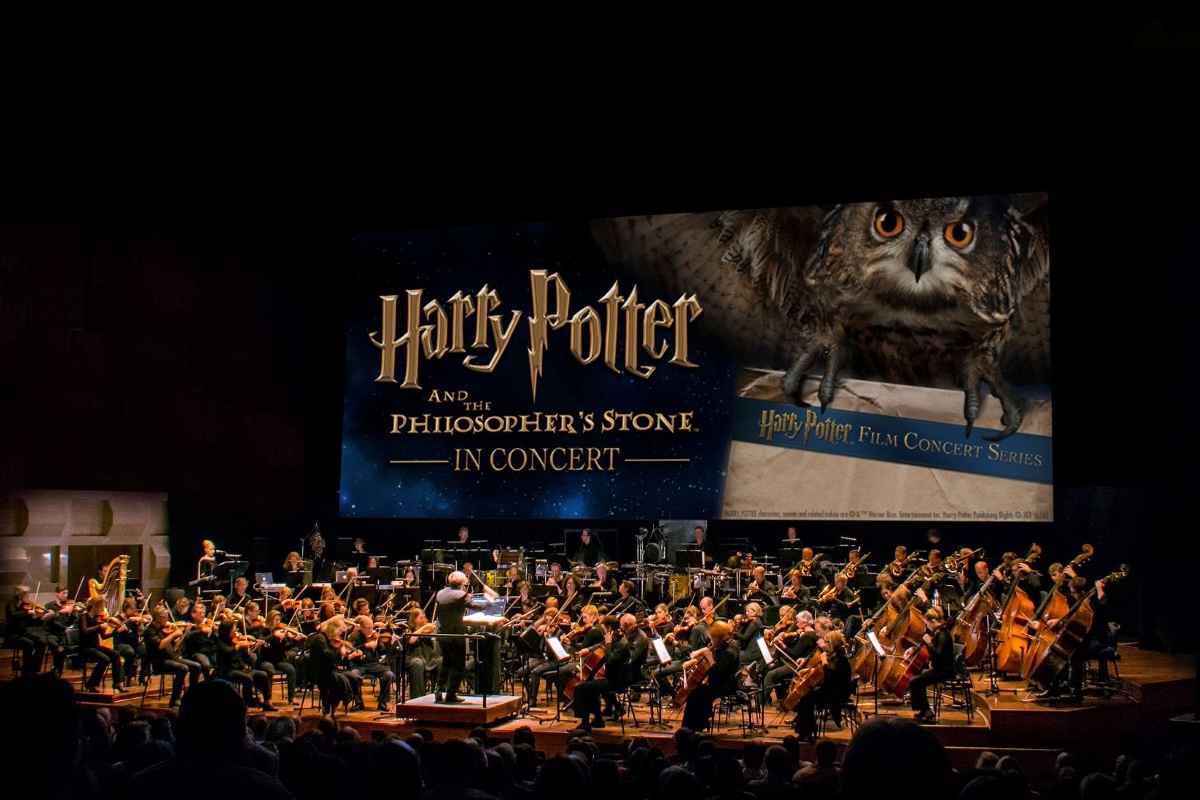
Among his contributions to 21st-century film music, Williams’s score for Harry Potter and the Philosopher’s Stone is one of the most enduring. Now celebrating its 25th anniversary, the film is being presented in a special live-in-concert performance by the Sydney Symphony Orchestra, under the baton of SSO Conductor-in-Residence Benjamin Northey.
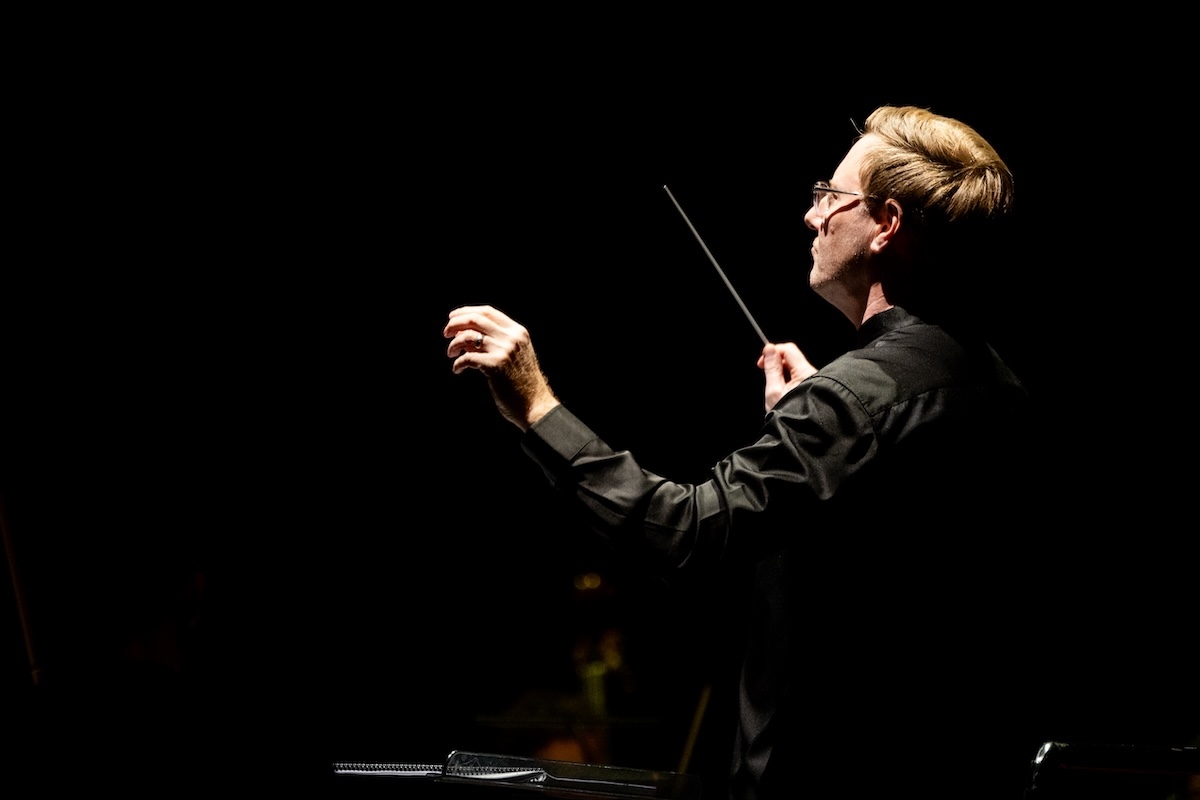
Benjamin Northey conducting the Sydney Symphony Orchestra. Photo supplied
Coming of age with the release of E.T. and Raiders of the Lost Ark, Northey is keenly familiar with the great composer’s work. “For a younger generation,” he says, “Harry Potter has provided that same powerful connection between music, storytelling, and imagination. It’s wonderful to see audiences embracing these concerts, dressing up and making the occasion such a special experience.”
Northey suggests that the enormous popularity of live-to-film concerts also challenges assumptions about the boundaries between art and entertainment. The enduring popularity beyond the concert hall of Mozart’s operas and Tchaikovsky’s ballet music, long a fixture of Christmastime television advertising, suggests that film music can enjoy a similar standing.
“Williams has introduced generations of listeners to the expressive possibilities of the symphony orchestra,” Northey enthuses. “That’s an extraordinary achievement, whatever labels we apply. Ultimately, the impact of the music matters far more than the circumstances of its creation.”
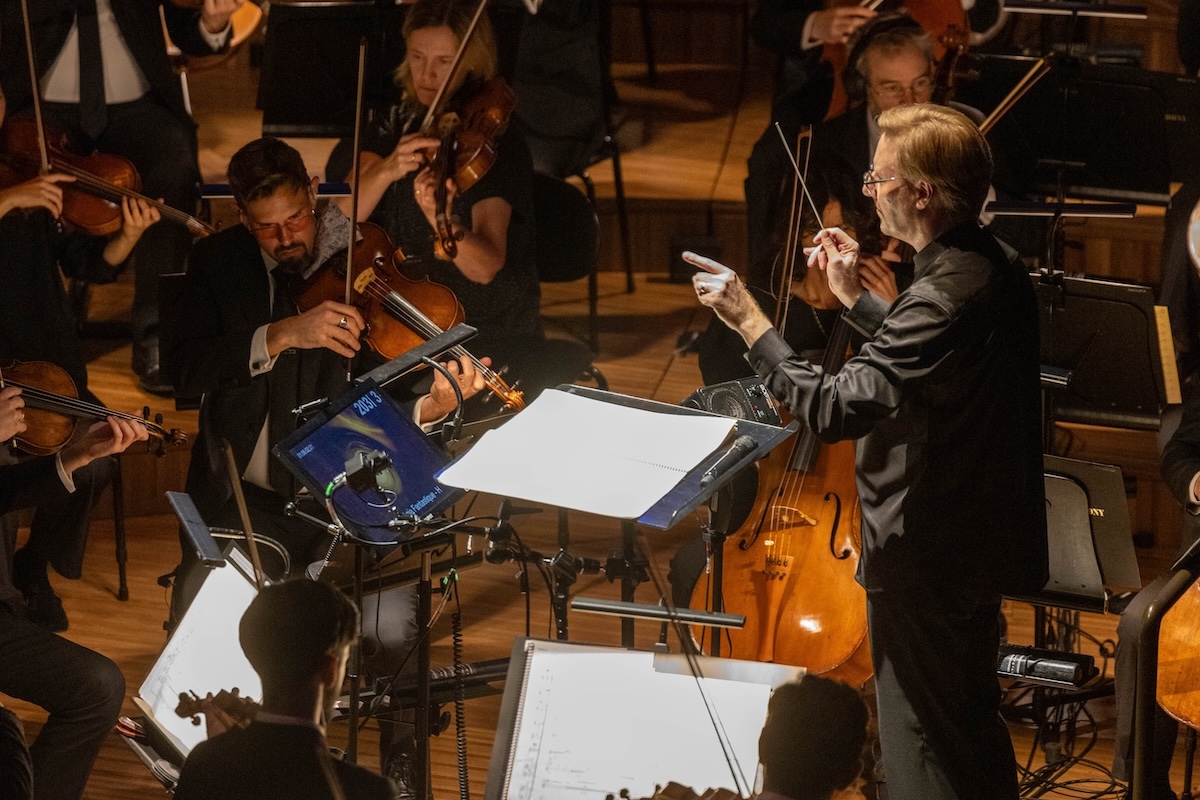
Benjamin Northey conducting the Sydney Symphony Orchestra. Photo supplied
Listening to Williams’s first Harry Potter score, it is clear that this is an immensely accomplished work of film music. Beyond its impressive instrumental diversity, many of the tracks sustain a blistering tempo and extraordinary density of notes. Indeed, Williams’s astonishing orchestral sophistication is perhaps best demonstrated in the score’s major action sequence, The Quidditch Match.
“The sheer energy, rhythmic complexity and virtuosity of the writing is extraordinary. There is so much happening simultaneously across the orchestra, yet every detail contributes to the dramatic momentum,” Northey says of the mammoth eight-minute piece. “What I particularly admire is that Williams writes with the fluency of a great symphonic composer. The music is incredibly demanding, but it sits naturally within the late-Romantic and twentieth-century orchestral tradition.”
The demands of a live performance such as this require exceptional precision: every beat must synchronise with the action onscreen. But the format also offers opportunities for discovery and spontaneity. The challenge of presenting such a familiar score is finding something new for audiences to appreciate, a quarter-century after The Philosopher’s Stone made its indelible mark on popular culture.
Conducting with the aid of visual markers on a small screen at his podium, Northey says, “These projects are enormously demanding, both physically and mentally. The playing is almost constant, often at extraordinary intensity. The orchestra has to synchronise precisely with the film while maintaining the natural phrasing, energy and spontaneity of a live musical performance.”
With five performances, including two on a Saturday, the task calls for endurance, concentration and physical energy. Despite the extraordinary precision required for these concerts, the goal is to cultivate a sense of spontaneity within such tightly controlled conditions.
As Northey says of the wider score, “There is an enormous amount to discover beyond those famous themes.” Listeners will also encounter a rich musical tradition from which Williams draws in creating his celebrated scores. Addressing the comparisons between Holst’s The Planets and Williams’s early Star Wars scores, Northey argues that Williams’s achievements as a composer extend well beyond such influences.
“In Harry Potter, I hear the broader influence of composers such as Wagner, Richard Strauss, Prokofiev, and the great Hollywood composers,” he says, “particularly Korngold. It’s a musical language he has absorbed and made unmistakably his own.
“We sometimes forget that composers have always drawn upon the musical languages of their predecessors.”
The Sydney Symphony Orchestra presents Harry Potter and the Philosopher’s Stone in Concert from 2–5 December, in the Concert Hall, Sydney Opera House.





Comments
Log in to start the conversation.