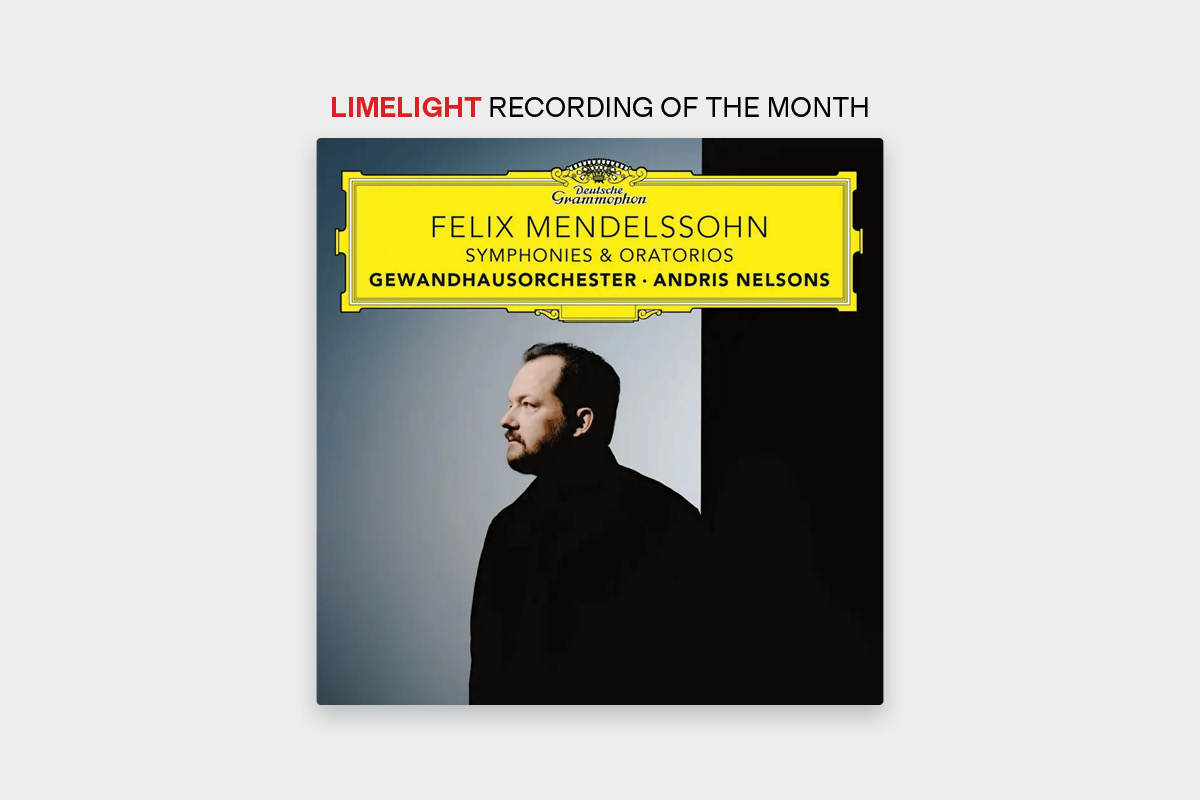
Mendelssohn symphony cycles are by no means uncommon but one that includes both his oratorios, Paulus (St Paul) which depicts the conversion and ministry of the apostle, and Elias (Elijah), depicting the travails of the Israelites and their ultimate triumph, is exceptional. The oratorios, each more than two hours long, showcase the composer’s homage to JS Bach, a composer whose musical reputation no one tried harder than Mendelssohn to rehabilitate after its decline in the first half of the 19th century.
Mendelssohn’s own reputation (especially in relation to his oratorios at least) suffered a similar decline in the late 19th and early 20th centuries, prompting the famous jibe “He began as pure genius and ended as mere talent!” Fusty, musty and dusty was how they were seen as describing what came to be regarded in more secular times as “Victorian”’ piety. Mendelssohn may have adopted such a stance when he converted to Lutheranism after feeling the chill wind of Prussian anti-Semitism that affected even a scion of a distinguished intellectual and banking dynasty.
Andris Nelsons might be persona non grata in Boston (among orchestral management at least) but it’s clear he’s revered in Leipzig, a city that boasts the ultimate pedigree with the Leipzig Gewandthaus Orchestra as the ensemble Mendelssohn himself conducted from 1825 until 1837. I was delighted to be reminded just what stirring stuff so much of this music is.
Nelsons sweeps into the First Symphony with an unapologetic elan that makes it reminiscent of Weber as well as of Mozart. Surely it deserves to be heard more often. The (misleadingly) called “Second” was composed to celebrate the 400th anniversary of Gutenberg’s invention of the printing press in 1840 as a major milestone in both the Renaissance and the genesis of the German Enlightenment. It’s somewhat generic title, Hymn of Praise, an awkward format – three orchestral movements followed by a secular, cantata-like, choral section – the uncomfortable resemblance to Beethoven’s Choral Symphony, and its relatively obscure origins have all militated against its acceptance. The only performance I could discern in this country occurred in 1997! Nonetheless, the soloists, sopranos Christiane Karg and Elsa Benoit and Werner Güra (yet again) with the MDR chorus and Leipzig Gewandhaus are again excellent.
Despite this embarrassment of riches there will still be some who will be more fascinated by the prospect of a new Scottish and Italian Symphony. In the Scottish, textures are again arrestingly transparent, with plenty of inner clarity given the excellent wind players. Ensemble in the “highland fling” scherzo is wonderfully tight even at this tempo and the abundance of detail and careful attention to rhythm and phrasing keep the music from sounding excessively sentimental in the Adagio. The finale also has whipcrack precision.
The Italian’s first movement is a whirlwind: it’s almost too fast but what playing! I loved the inclusion of the repeat in this movement which surely must be preceded by the most beautiful “lead back” in all music. The inner movements of the Italian Symphony so often create dead spots, but here have an unusual degree of forward drive and Nelsons takes the finale at a good clip too, quick enough to be exciting but never at the expense of clean articulation. Here though, the competition is fiercer, with Edward Gardner, Muti and the New Philharmonia and Klemperer (surprisingly) with the “old” Philharmonia in superb form. For all that I still love the good-natured charm of Beecham and Peter Maag with the LSO.
Nelsons and his forces do what they can with the pretentious banalities of the Reformation Symphony. And so, to the oratorios. Nelson’s approach is an inspired blend of grandeur with robust, stately, never stodgy choruses, yet transparent textures and contemplative recitatives, all suffused with Protestant warmth (although I always find the Be not afraid chorus in Elijah bears a surreal resemblance to Five Little Ducks went out One Day, which I used to sing in kindergarten).
Soloists are all first rate, with the bass Georg Zeppenfeld rock solid as St Paul, Golda Schultz radiant throughout and Julia Kleiter, in her Hymn to Jerusalem in St Paul, putting her in the Kathleen Ferrier/Dame Janet Baker class. Tenor Werner Güra and alto Wiebke Lelmkuhl in both oratorios, and André Schuen as Elijah are equally distinguished.
Composer: Mendelssohn
Works: Symphonies Nos. 1 to 5, Paulus, Elias
Performers: Leipzig Gewandthaus Orchestra, MDR Chorus/Andris Nelsons
Label: DG 4868178 (7CD)

Comments
Log in to start the conversation.