


The Australian Brandenburg Orchestra’s Mozart, Salieri and Pleyel: A Classical Powerhouse brings together three musical contemporaries who work in similar professional circles.
It is an inspired program that showcases not only the contrasts between the composers but also comes as close as possible to recreating the sound of a period instrument ensemble as it would have been heard during their lifetimes.
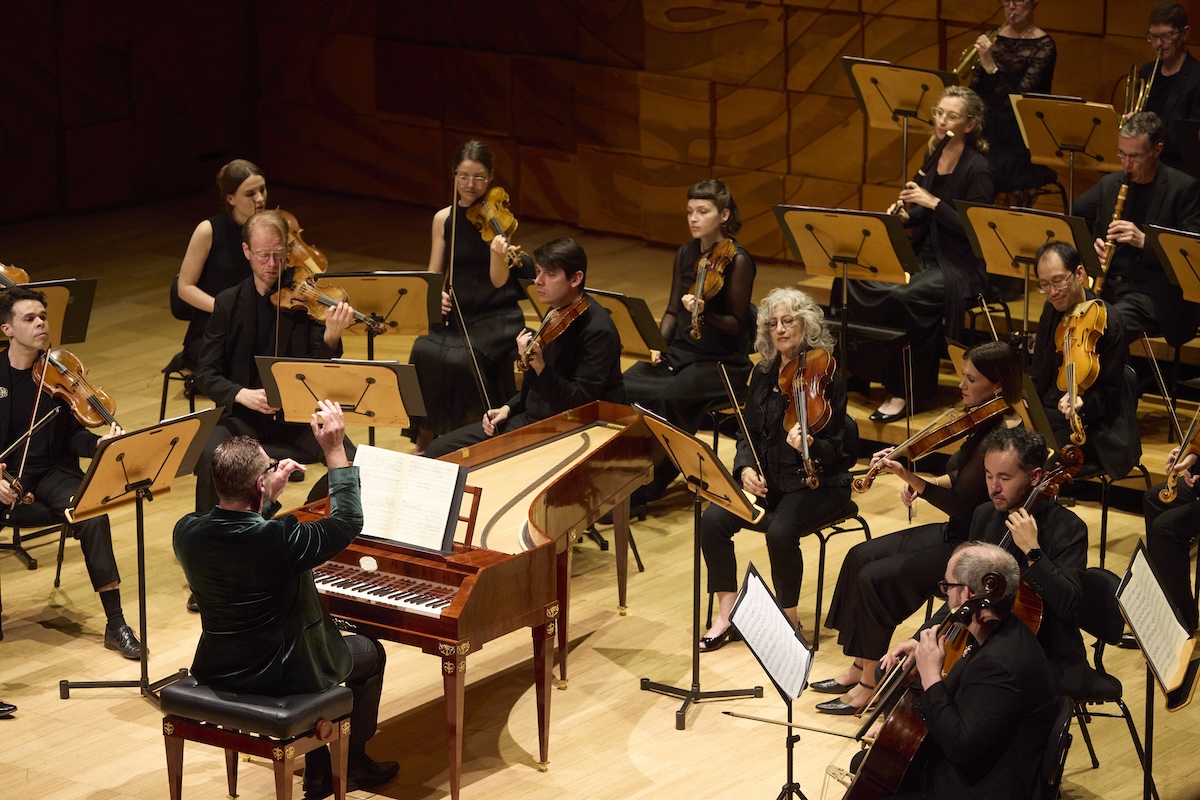
Australian Brandenburg Orchestra: Mozart, Salieri and Pleyel. Photo © Laura Manariti
The program opens with Antonio Salieri’s Sinfonia from Cublai, gran Kan de Tartari, an ill-fated ‘heroic-comic’ opera drawing unflattering parallels between the rule of Kublai Khan and that of Tsar Peter the Great. Its unpopular subject matter means that its premiere is delayed by more than 200 years, when it finally receives overwhelmingly positive reviews.
Opening with a drumroll and strings, the addition of horns sounds the triumphant arrival of Kublai Khan into his capital. It is a rousing start that has first violin Shaun Lee-Chen almost jumping out of his seat. He is a man who clearly loves his job.
The same can be said of the entire orchestra. Part of the charm of an ABO performance is the joy that emanates from the stage. Most of these musicians have been together for a long time, and each is a period instrument specialist. The orchestra’s success is due both to the musicians’ skill and to the leadership of artistic director Paul Dyer.
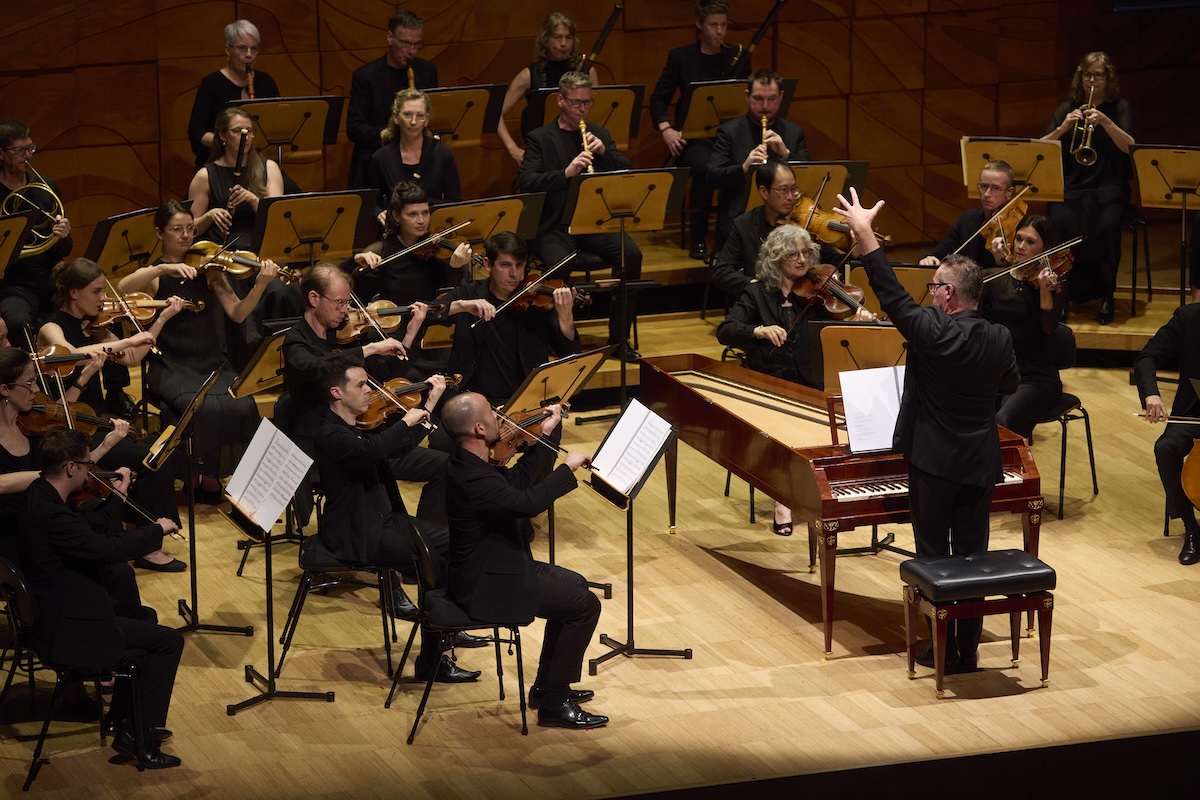
Australian Brandenburg Orchestra: Mozart, Salieri and Pleyel. Photo © Laura Manariti
Dyer is a musical multi-tasker of epic proportions. A co-founder of the ABO, he is a period music specialist, educator and conductor, often while playing the keyboard from a standing position. He is also a raconteur. His pre-concert ‘fireside chats’ are both enlightening and entertaining, providing insights into the music that enrich the listener’s experience.
Dyer’s use of onstage choreography heightens the drama and is particularly effective during a silent transition from the grandiose Salieri to Mozart’s joyful Divertimento for Strings in D major. There is no time for applause as the horn and most of the wind section file quietly offstage, making the contrast between the Salieri Sinfonia and the Allegro movement of the Divertimento even more marked.
This piece of music is so much more than a ‘diversion’, with its slow second movement and frenetic finale, played here with skill and gusto. I am more than ever convinced that Shaun Lee-Chen’s preferred playing position is on his feet.
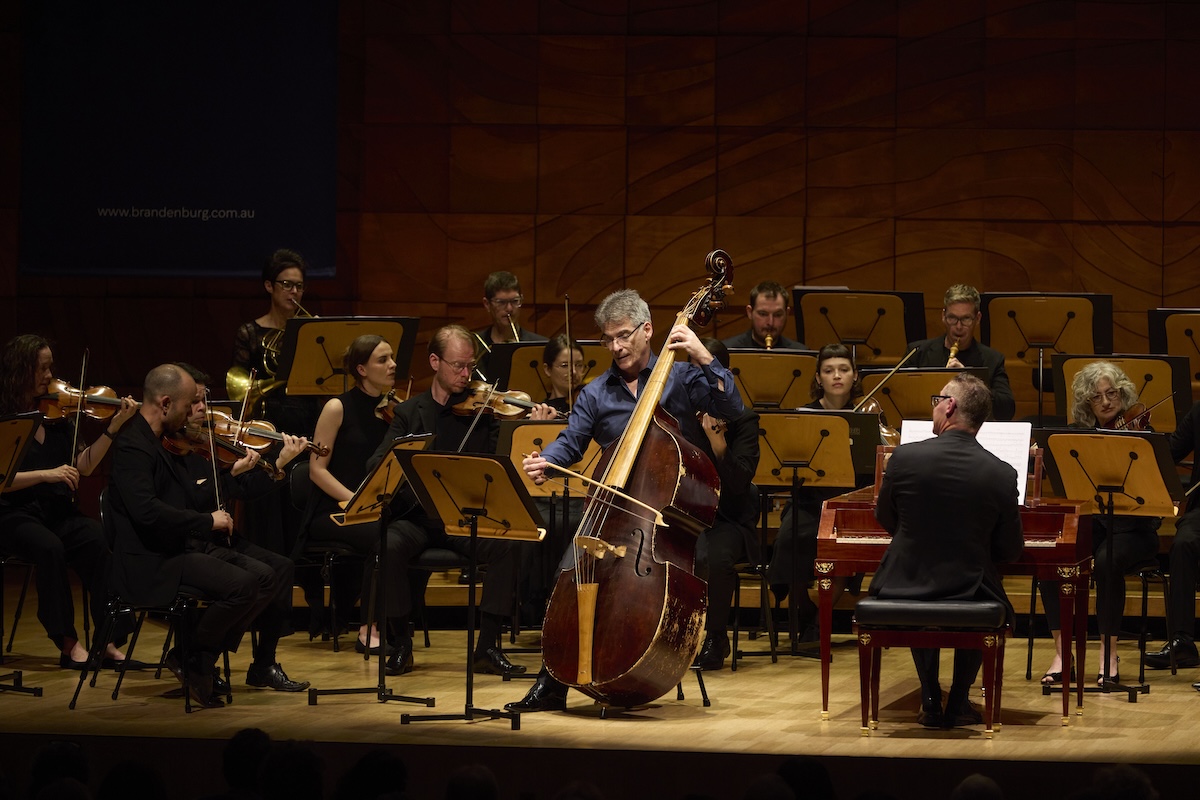
Robert Nairn and the Australian Brandenburg Orchestra. Photo © Laura Manariti
If the Salieri is a revelation and the Mozart a highlight, anticipation is especially high for Ignaz Josef Pleyel’s recently discovered Concerto for Violone in E-flat major. Now a lesser-known figure, Pleyel was, in his day, a celebrated composer, piano manufacturer and founder of the Pleyel Maison music publishing house.
Robert Nairn, the Brandenburg’s principal bass, was the first to be told of the concerto’s existence following its discovery 12 months ago. He brings it to Melbourne audiences in a world premiere performance.
Nairn’s violone is a predecessor of the double bass, but has a deeper, more ponderous sound than its modern counterpart. Accompanied by Dyer on a 1780s replica period pianoforte (the type of instrument Pleyel himself both plays and makes), Nairn’s premiere performance of the concerto comes as close as possible to recreating its original sound in the 21st century.
The violone is a difficult instrument to play. The bow is held palm-up and used to produce a variety of effects, including vigorous tapping. A slower, plucked section sounds almost jazz-like, a reminder that the double bass is a staple of jazz as well as Baroque music. There is a touch of Spain, too, and a sublime short passage featuring violone and pianoforte contrasts the rich, deep sound of the former with the tinkling of the latter.
The concerto’s faster movements pose greater technical challenges, as the instrument’s size means there is more real estate to cover. Nairn’s mastery of the instrument is never in doubt, but the nature of the beast requires frequent tuning, which occasionally veers towards dissonance.
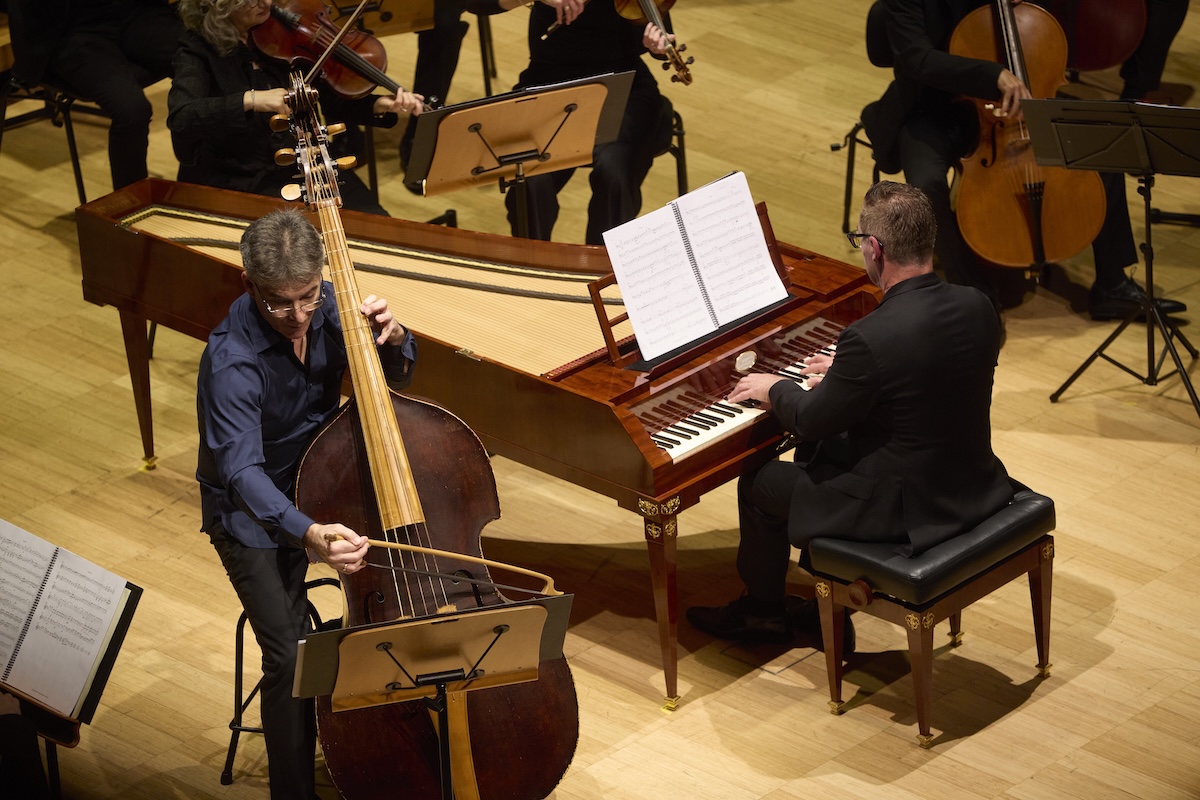
Robert Nairn, Paul Dyer and the Australian Brandenburg Orchestra. Photo © Laura Manariti
The post-interval program returns to Mozart with a superbly executed performance of Symphony No. 39 in E-flat major. Flautist Melissa Farrow lifts the spirits in the uplifting Allegro finale, ending the concert on a joyful high.
The ABO always delivers. Its audience ranges from rabid fans to first-timers, and all are made welcome by the warm onstage presence of Dyer and his band of highly skilled musicians.
This reviewer has taken a six-year-old to one of their concerts and would encourage anyone thinking of attending a live classical music concert for the first time, or the five-hundredth, to look no further than the Australian Brandenburg Orchestra.
Australian Brandenburg Orchestra presents Mozart, Salieri & Pleyel concert at City Recital Hall, Sydney, 21–27 October.
Read Limelight’s interview with Robert Nairn in the rediscovery of Pleyel’s Concerto for Violone.







Comments
Log in to start the conversation.