


I think Shostakovich’s Eighth Symphony is his greatest, beating the Tenth by a nose. Whereas the latter is generally considered a portrait of Stalin, with the euphoric finale after the dictator’s death in 1953, the Eighth is a more complex layered masterpiece, simultaneously a description of and rumination on, the physical, psychological and spiritual desolation of the Second World War on the Russian people.
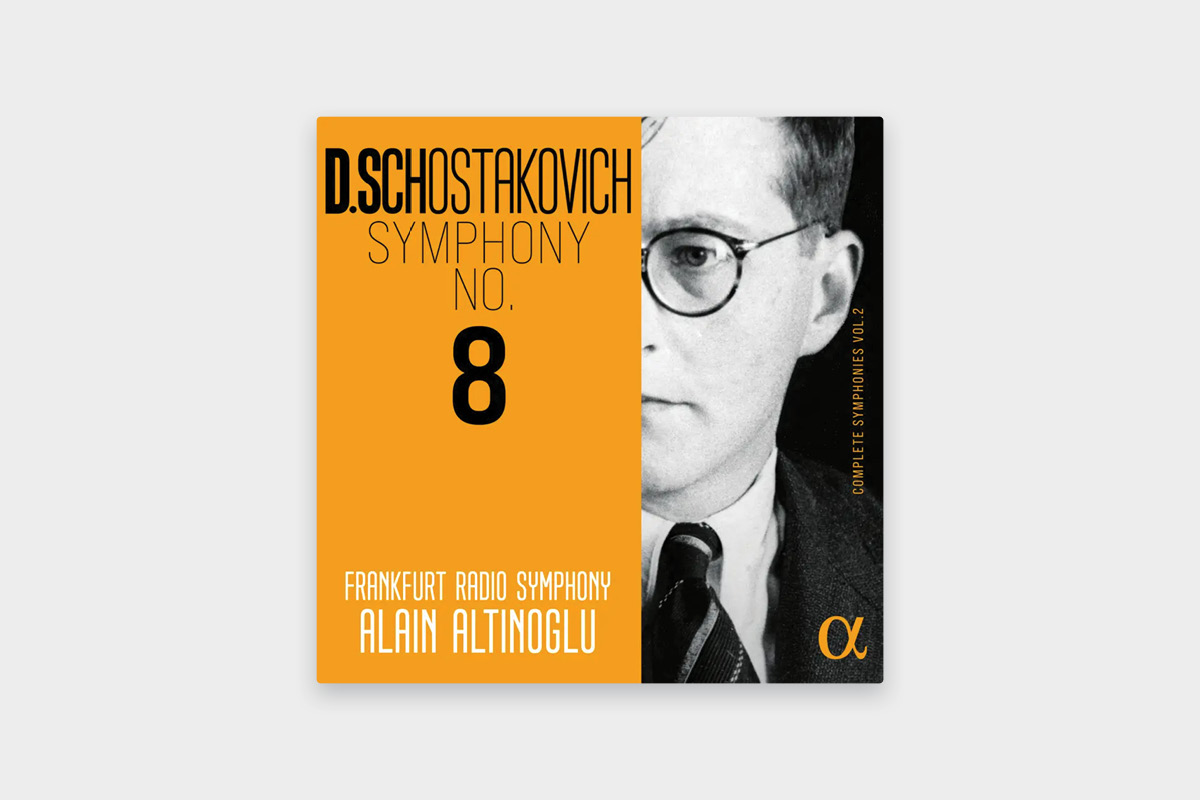
The Eighth is the central panel of Shostakovich’s “wartime trilogy”, sitting in between the bloated Leningrad and the skittish Ninth. If ever a work deserved the now almost cliched description “dystopian” here it is! Antiloglu handles the transition between movements with an exceptional overarching kinetic flow. His timing in the opening Adagio movement at 25’, is splendidly central (although this is by no means a middle-of-the-road performance). Mark Wigglesworth, a fine Shostakovich interpreter, takes 29’ and the equally fine Oleg Caetani takes 20’, proving there’s more than one way to depict despair.
The sonata-like movement is superbly shaped, and never descends into a dismal trudge through treacle, with no grey patches. The handling of the first “idea” is a dotted rhythm on the lower strings whose vehemence gradually subsides into an anguished episode in C minor succeeded by an E minor subject with the first violins in a brooding, disconsolate theme in 5/4 time. The cor anglaise solo is beautifully sculpted.
When Schubert wrote a movement called an allegretto, it usually depicted a congenial trot in an open carriage through the Vienna woods. In Shostakovich, more often than not it depicts manic grotesquerie: here the strutting conquerors. One can easily imagine Goering with his Reichs Marshall baton, powder blue Hugo Boss outfit and imbecilic leer.
The latter three movements – a Toccata, a Largo (essentially a ghostly passacaglia) and an Allegretto finale fascinate me as superb examples, on one level, of emotional ambiguity, which are the equal of anything Mahler produced. The third movement is a relentless, militantly motor-driven perpetuum mobile Toccata, reminiscent of Mossolov’s Iron Foundry (Soviet realism in its purest form), where the trumpet solo (fabulous here) assumes an almost carnival-like hysteria.
The passacaglia (basically a theme and variations) clearly fascinated Shostakovich as it crops up regularly throughout his oeuvre. Here, it has variously been described as serene and contemplative; I prefer to hear it as ghostly and benumbed, in the same vein as the post-nuclear Epilogue in Vaughan Williams’ Sixth Symphony, composed a few years later.
The final movement follows without a break and initially seems to offer a faltering sense of optimism, like a few rays of wan sunlight through a bleak sky, accompanying a few green shoots but these soon succumb to the traumatised bleakness which Shostakovich conveys better than any composer who ever lived. The beautifully paced final bars, with flute and pizzicato strings sounding like breath ebbing from a dying body, are especially haunting, reminding us that he was also mourning the era of Stalin’s purges and man-made famines, which killed at least as many Russians as Hitler’s armies.
Antiloglu has developed a spectacularly effective synergy with the Frankfurt Radio Symphony, which, as far as I know does not have an established Shostakovich “tradition”. The performance is superbly captured by excellent engineering. All sections acquit themselves nobly (this is not a work which tolerates any orchestral “passengers”). There are many distinguished recordings of this work, beginning with Mravinsky and continuing through Previn (both on EMI and DG with the London Symphony), Caetani, Wigglesworth, Petrenko and Berglund. I have no hesitation of placing this one among their ranks.
Composer: Shostakovich
Works: Symphony No. 8
Performers: Frankfurt Radio Symphony Orchestra with Alain Antiloglu
Label: Alpha ALPHA1287






Comments
Log in to start the conversation.