




For Sir Bryn Terfel, one of the most valuable experiences of his early career came not in the form of a major opera-house debut, or a triumphant performance but in time spent with someone who had, as he says, “already been there and done that”.

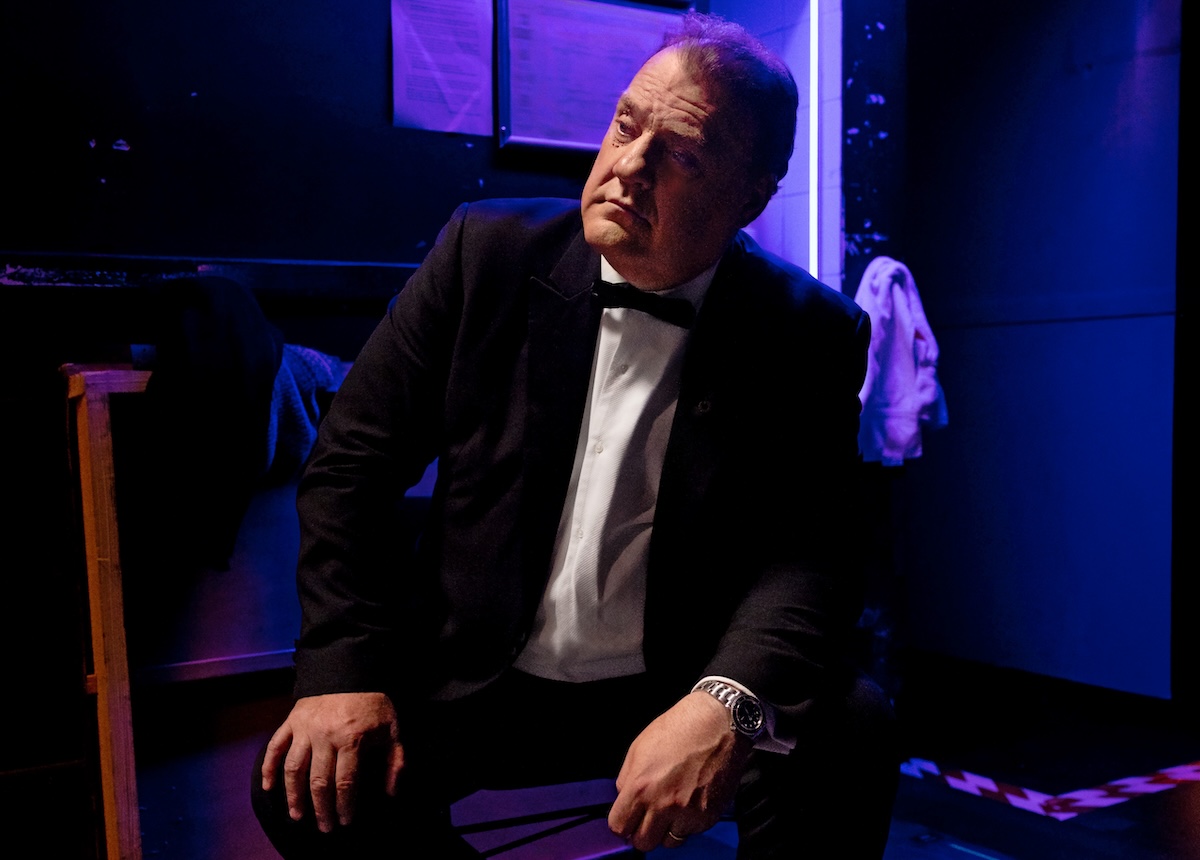
Bryn Terfel. Photo © Mitch Jenkins
Terfel was then in his fourth year of training at the Guildhall School of Music and Drama, a talented but frustrated young singer who had yet to win a competition. Benjamin Luxon, the celebrated English baritone, came to work with the students, bringing not only his musical knowledge but a sense of style, presence and professional possibility.
“He was so charismatic, so good-looking, so incredibly well dressed,” Terfel recalls. “And talk about beards! His was just perfect, as if he had his own barber. Within three weeks, you could even see the fashion change in that room. We went from T-shirts and jeans to proper trousers, dress shirts and brogues.”
Fashion aside and more importantly, Luxon changed the way Terfel thought about singing.
“I was very boisterous then as a young singer. I knew I had a good voice, and I knew that I could have some decibels in certain ranges of my voice. What Ben did was tame that with real encouragement and wanted me to start having a palette of colours in the voice.”
Luxon introduced him to songs by Vaughan Williams, Terfel recalls, including The Infinite Shining Heavens. “It demanded a different kind of vocal expression for me mezzo voce, delicate pianissimi and, above all, storytelling. And ultimately, we are storytellers.”
His encounter with Luxon came at a pivotal moment. After three years without a competition win, Terfel was beginning to wonder whether he should abandon music and return to the family farm in North Wales. Luxon’s intervention helped persuade him to persevere. In his final year at Guildhall, in 1989, he was awarded the school’s gold medal, the most significant prize available to its students.
“That’s the only thing I won in those four years,” he says. “So thank you, Ben Luxon!”
Practical inspiration
Terfel is now set to replicate something of his formative experience in Australia, where he is making time in a broad and busy touring schedule to work with emerging singers in masterclasses in Sydney (27 October, with three Sydney Conservatorium of Music students chosen through auditions and interviews, as part of a long-standing education partnership with the SSO) and in Melbourne on 20 November.
Terfel says he doesn’t subscribe to the traditional idea of the ‘masterclass’.
“I sort of see my job as listening to these young singers, and being supportive,” he says. “I’ll dig from the knowledge I’ve gained over the last 40 years.”
Terfel’s approach isn’t about talent-spotting or passing judgement on a voice, either. No singer’s potential can be assessed in a single encounter, he says.
“There’s a process with the developing voice that you somehow have to adhere to,” he says. “That might, for example, mean spending a couple of years singing Mozart, rather than pursuing the more glamorous roles.”
In the masterclasses, Terfel will also share his insights into the profession – his understanding of the ways in which opera houses work and how to build relationships with the people who make performances possible. Modesty, humility and positivity are just as vital to a singer as a fine voice.
“Being collegial and kind means that you maybe get invited back, even before you’ve sung a note on the stage.”
Practical insights like that are especially resonant for young artists who, like Terfel himself, arrive at conservatoire training without the privelege of inherited familiarity with the cultural world they are entering.
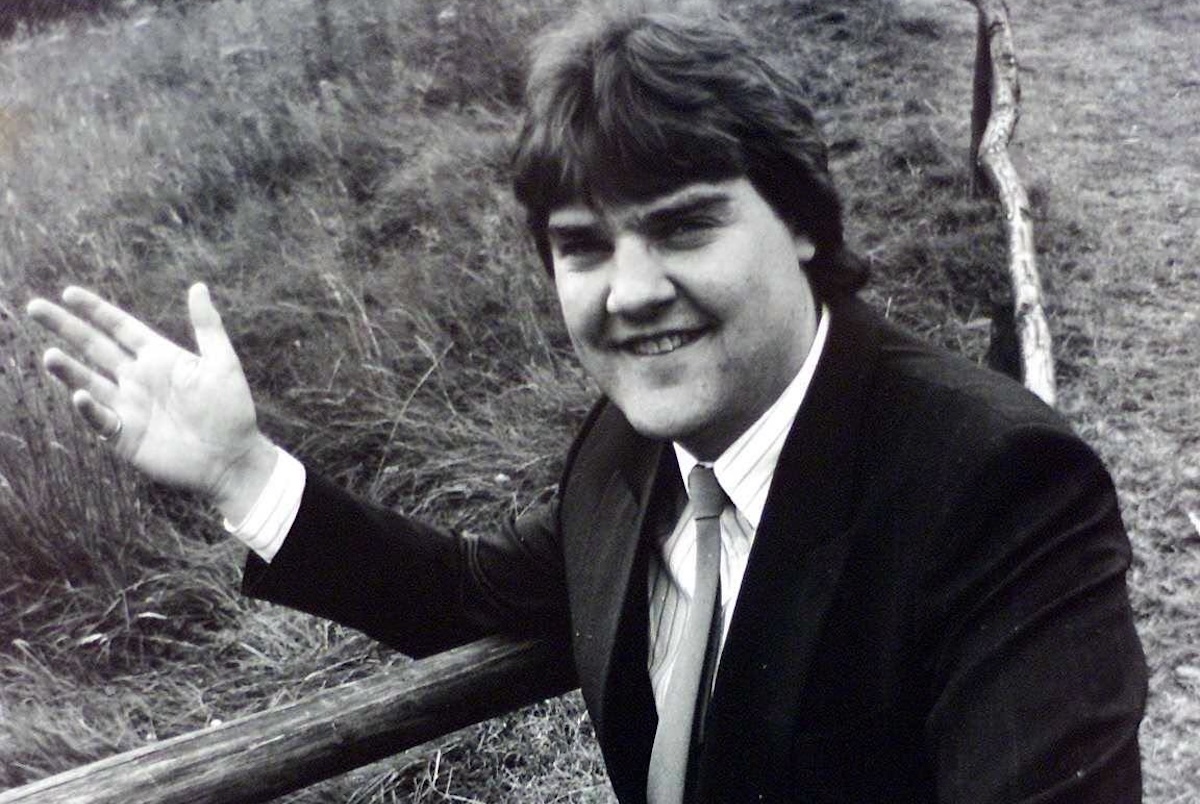
The young, “boisterous” Bryn Terfel
Having grow up on a farm in the hamlet of Pant Glas, North Wales, Terfel says he felt “like a fish out of water” at Guildhall, where many students arrived already comfortable with the world of opera, its vocabulary, languages and repertoire.
“We have a saying in Wales: ‘being outside the square mile’, and that’s exactly what I was,” Terfel smiles. “What I knew was agriculture and driving tractors. Guildhall was a new world in a lot of ways but at that time there was a high percentage of students in the same boat as me. We were very supportive of each other.”
English, French and Italian song classes exposed gaps he had to work hard to overcome. The library became a sanctuary where he could catch up, while visits home to make radio and television programs (often in Welsh) offered a different kind of reality check: the people who knew him before his musical transformation could now see the progress he was making.
Terfel’s advice to aspiring singers is therefore not simply about technique. It is also about allowing time for development, accepting that uncertainty is part of the process and understanding that the profession rewards qualities that cannot be measured in decibels.
His own early mentors extended beyond Luxon. The great Welsh bass-baritone Sir Geraint Evans heard him sing in a competition and, within days, arranged for him to audition for conductor Sir Georg Solti. That led to an engagement as the Gardener in Mozart’s The Marriage of Figaro.
“I didn’t know then, but I know now that if you sang with Sir Georg, people noticed,” Terfel says.

Bryn Terfel announcing the new Song Prize at the Royal Welsh College of Music and Drama. Photo © Edmond Choo
These are the kinds of encounters that can alter a young singer’s trajectory. Terfel knows how fortunate he was to receive that attention, and he has found other ways to support the next generation, including establishing the Song Prize at the Royal Welsh College of Music and Drama. Held every two years, the competition brings together a student selected by each participating music college, with competitors required to perform a song in Welsh.
For Terfel, it is a way to share the musical culture that shaped him while inviting others into it. His Sydney recital program, The Voice of Bryn Terfel, will similarly draw on the traditions of his homeland.
Joined by his wife, harpist Hannah Stone, pianist Andrea Lam and the Sydney Symphony Orchestra, Terfel will present music ranging from Welsh folk songs to classical song and musical theatre. The repertoire includes songs by Ivor Novello, alongside Welsh tunes, Schubert and settings of poetry by John Masefield, the UK’s Poet Laureate from 1930 until his death in 1967.
Terfel has a particular affection for Masefield’s writing, especially its evocations of water and the sea. He also enjoys the unexpected connections that emerge when looking back across a career: Masefield and Vaughan Williams, he notes, were among the earlier recipients of the Shakespeare Prize he won in Hamburg in 2006.
At the recital’s heart is the idea that Luxon was so keen to impress on the young Terfel: that vocal prowess is only one element of a compelling performance. Language, poetry, colour and character all matter.
Terfel will then join the Sydney Symphony Orchestra for Mendelssohn’s Elijah, on 30 and 31 October, under chief conductor Simone Young. The oratorio is one of his signature roles, and one he has sung in English, German and Welsh.
In Melbourne, Terfel will partner with conductor Jaime Martín and the Melbourne Symphony Orchestra for its Spring Gala on 19 and 21 November, performing in Brahms’s Ein Deutsches Requiem as part of a two-week festival devoted to the composer. Before the Requiem, Terfel will sing a selection of spiritual works, including traditional music and songs by Grace Williams, alongside Copland’s Old American Songs.
In Adelaide, Terfel will take part in two concerts of Holsts’s The Planets, singing Vaughan Williams’ Songs of Travel.
In between gigs, Terfel will travel around the country, with time for family, friends and an excursion to Kangaroo Island. He is especially looking forward to performing in Sydney with his partner, Hannah Stone. To create music with someone who knows you intimately and shares your life is a rare privilege in a professional singer’s life, Terfel says.
“I’m totally inspired by harpists. We sing with a harp from when you’re 10 years old in Wales. It’s called Cerdd Dant, where you sing a poem to a specific melody with a harpist and you’re adjudicated on. Really, that’s how I started singing and so I know the instrument inside out.”
“I actually met Hannah for the first time on stage, in a Christmas program in Swansea. She was the Royal Harpist to the Prince of Wales at the time and it was love at first accompaniment.”
Sir Bryn Terfel: Australia 2026
With the Sydney Symphony Orchestra:
Monday 26 October: The Voice of Bryn Terfel
Tuesday 27 October: Masterclass with Bryn Terfel
Friday 30 and Saturday 31 October Mendelssohn’s Elijah
_____
With the Adelaide Symphony Orchestra
11 and 13 November: The Planets
_____
With the Melbourne Symphony Orchestra
19 – 21 November: Spring Gala: Brahms German Requiem
Friday 20 November: Masterclass with Sir Bryn Terfel (Sold out)








Comments
Log in to start the conversation.