


It is rare for an otherwise little-known work of classical music to become a global phenomenon. Rarer still is for a work of contemporary classical music to achieve such success. In the early 1990s, however, Henryk Górecki’s Symphony No. 3 (Symphony of Sorrowful Songs) did just that.
Composed by someone then largely unknown outside his native Poland, the symphony was completed almost exactly 50 years ago, in 1976. Premiered the following year, it initially received an unfavourable reception from some Western critics, who thought Górecki had somehow betrayed what many still considered the one ‘true’ path for modernist music by writing a work grounded instead in traditional tonal and modal musical language.
Górecki, however, was a composer whose musical journey reflected the dramatic cultural and political changes Europe underwent during his lifetime. Initially associated with the post-war musical avant-garde, which explored harsh dissonance, unconventional textures and uncompromising modernist techniques, his music later moved towards a more austere and contemplative language, drawing on Polish folk traditions, liturgical music and the expressive power of repetition.
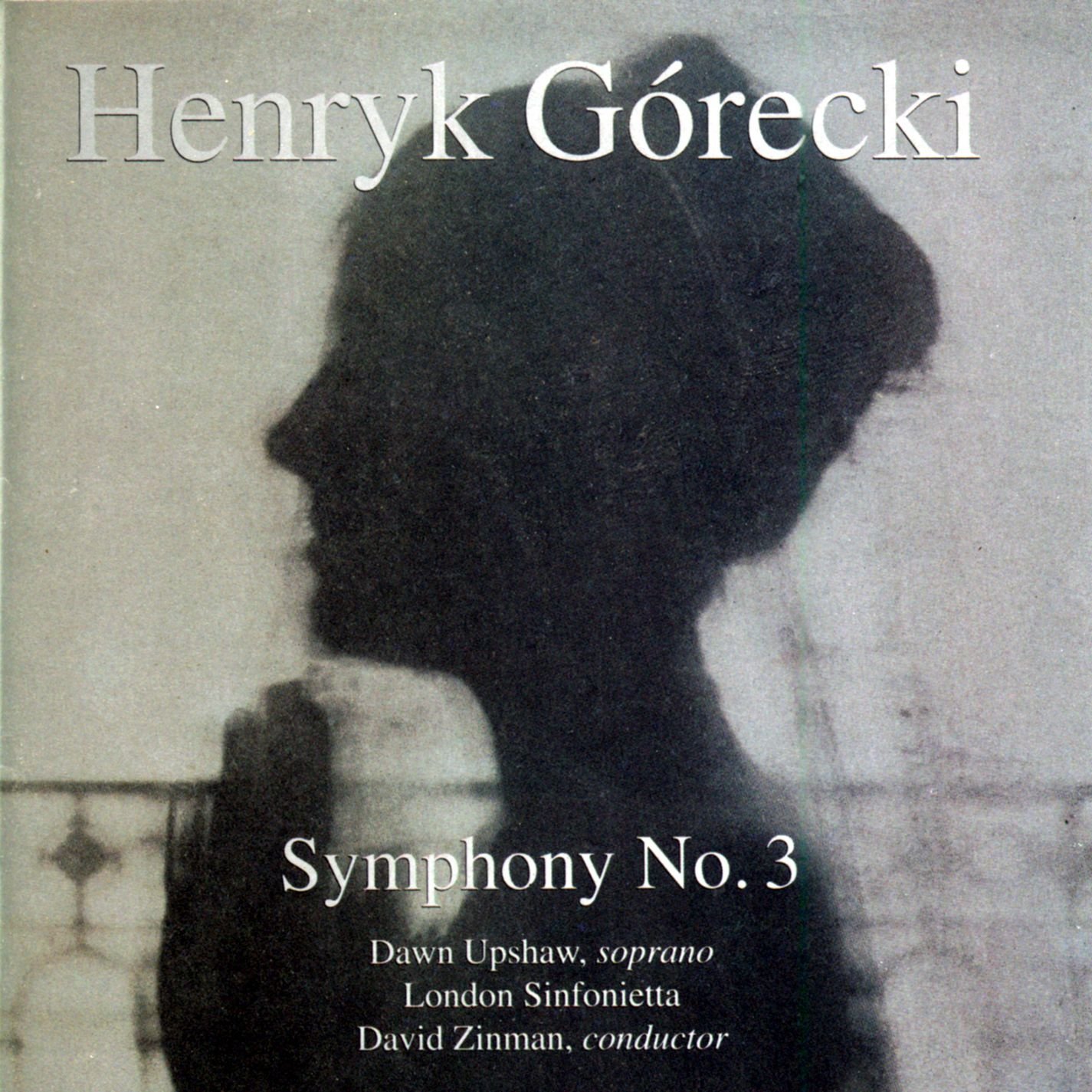
Even so, it was a surprise when, in 1992, a recording of the Symphony No. 3 featuring soprano Dawn Upshaw and the London Sinfonietta, conducted by David Zinman, became an international bestseller. It was reputedly the most successful contemporary classical album ever released.
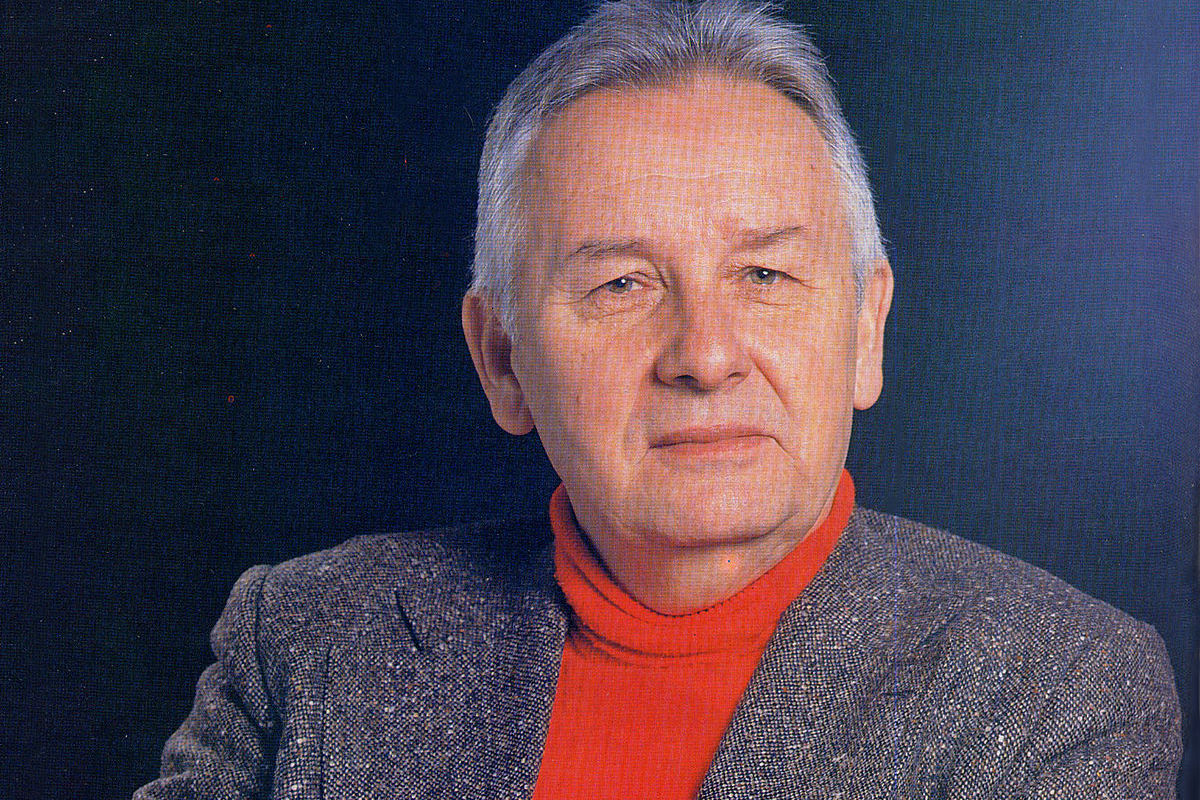
Henryk Górecki. Portrait supplied
Looking back, we can identify several reasons why the work resonated so widely beyond its original time and place. The recording appeared at the height of the CD boom and in the same year that the United Kingdom’s first dedicated classical music radio station, Classic FM, launched. The station became an early champion of both the recording and the work itself.
By then, Poland had also become a global symbol of faith and endurance in the face of suffering. This was embodied in the election of Pope John Paul II in 1978, the first non-Italian pope since the sixteenth century, and in the rise of Solidarity (Solidarność) from 1980, which became the largest social movement in the Eastern Bloc.
Górecki’s Symphony, which deals directly with themes of loss, remembrance and resilience, seemed to speak both to that historical moment and to wider concerns in the emerging post-Iron Curtain era. It did so in a way that felt uncontrived yet deeply expressive. Rather than relying on dramatic contrasts or virtuosic display, the symphony builds a spare musical framework, asking us to listen patiently and allow small musical changes to gather weight and significance. It is no exaggeration to suggest that the emotional effect can be extraordinary.
While such a minimalist musical style was still quite radical in 1976 (Philip Glass’s Einstein on the Beach had premiered just six months earlier), by the early 1990s it had become well established as a musical lingua franca, with a proven capacity to bridge the so-called ‘classical-popular’ divide and attract a broad audience.
The work, particularly its first movement, also bears some resemblance to Samuel Barber’s Adagio for Strings, composed in 1936. This suggests that it taps into a longing that, I suspect, persists across much of the Western world: for artworks that help us engage in public and private acts of remembrance in a world increasingly devoid of formal religious ritual.
Scored for soprano and orchestra, the symphony is built around settings of words expressing the anguish of a mother separated from her child. Its first movement draws on a 15th-century Polish lament in which the Virgin Mary mourns her dying son. The second sets words inscribed by an 18-year-old Polish woman, Helena Wanda Błażusiakówna, on the wall of a Gestapo prison during the Second World War, pleading with the Virgin Mary not to weep for her.
The final movement uses a Silesian folk song in which a mother searches for the body of her son, killed in an uprising. All three share a universal emotional core: the pain of separation and the enduring bond between mother and child.
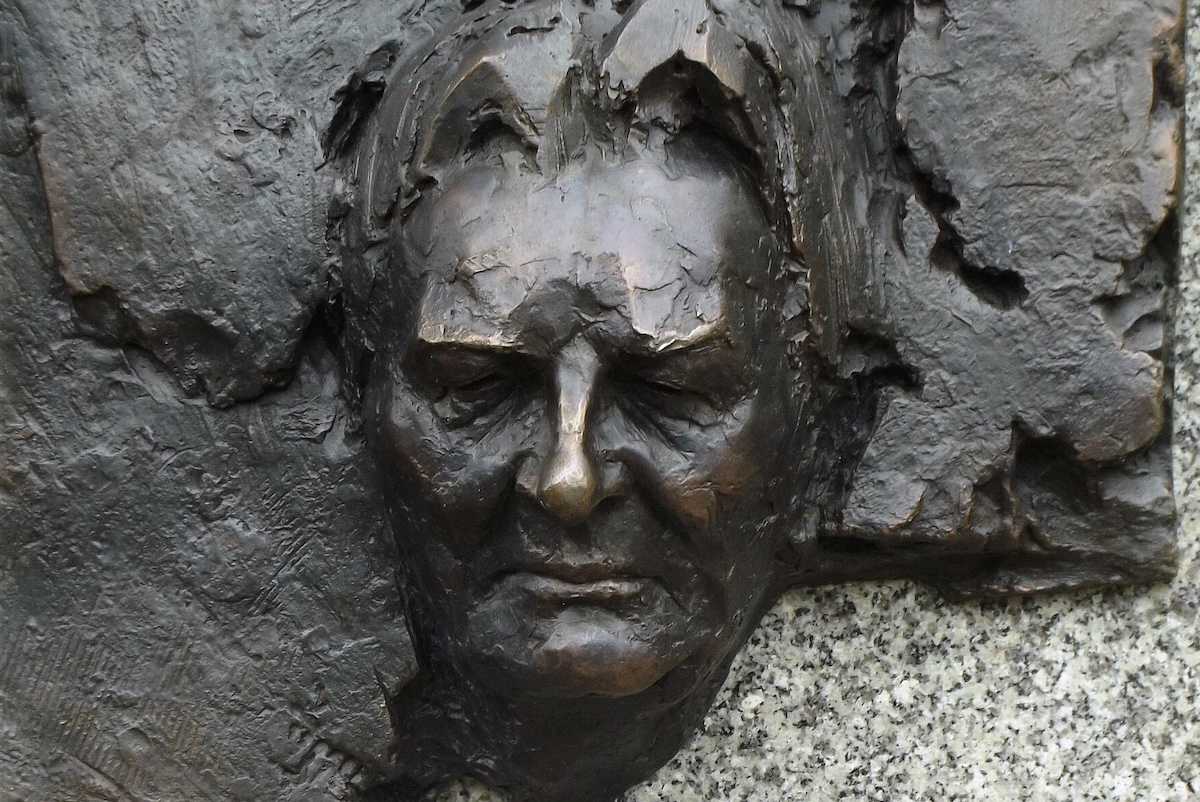
Detail of Henryk Górecki’s grave in Katowice, Poland. Photo © Michał Bulsa / Wikimedia Commons
On Saturday 14 November, as part of its occasional series of free, large-scale vocal and orchestral performances, St Paul’s Cathedral will host a service of music and readings featuring a complete performance of the symphony by Corpus Medicorum, with soprano soloist Kathryn Zerk.
Alongside marking the work’s 50th anniversary, the performance will commemorate Remembrance Day (11 November), the 86th anniversary of the bombing of Coventry Cathedral in England on 14 November 1940, and the 40th anniversary of Pope John Paul II’s historic visit to St Paul’s Cathedral in 1986.
Górecki himself was reluctant to tie the work’s significance to any one historical event or theme. Instead, he hoped listeners might find in it a moment of reflection and contemplation. Fifty years after its completion, the symphony continues to offer just that: a work of extraordinary emotional power whose relevance has not diminished.
Peter Tregear conducts a free public performance of Henryk Górecki’s Symphony No. 3 (Symphony of Sorrowful Songs) at St Paul’s Cathedral, Saturday 14 November 4pm.
The performance will also be livestreamed on St Paul’s Cathedral YouTube channel.







Comments
Log in to start the conversation.