


Why is it, asks Mischa Maisky, that people – parents, mostly – think that touring and playing music with your own children would be fraught in some way?
“Everyone thinks, oh, it must be so difficult, and you must fight so much,” he laughs.
In fact, he says, the opposite is true. The celebrated Russian-born, Belgium-based cellist and his pianist daughter manage to maintain a relationship that’s instinctive, mutually respectful and (mostly) sans drama.
Speaking from her home just a few minutes drive from her father’s house, Lily agrees. “We just feel music very similarly. It all happens so naturally.”
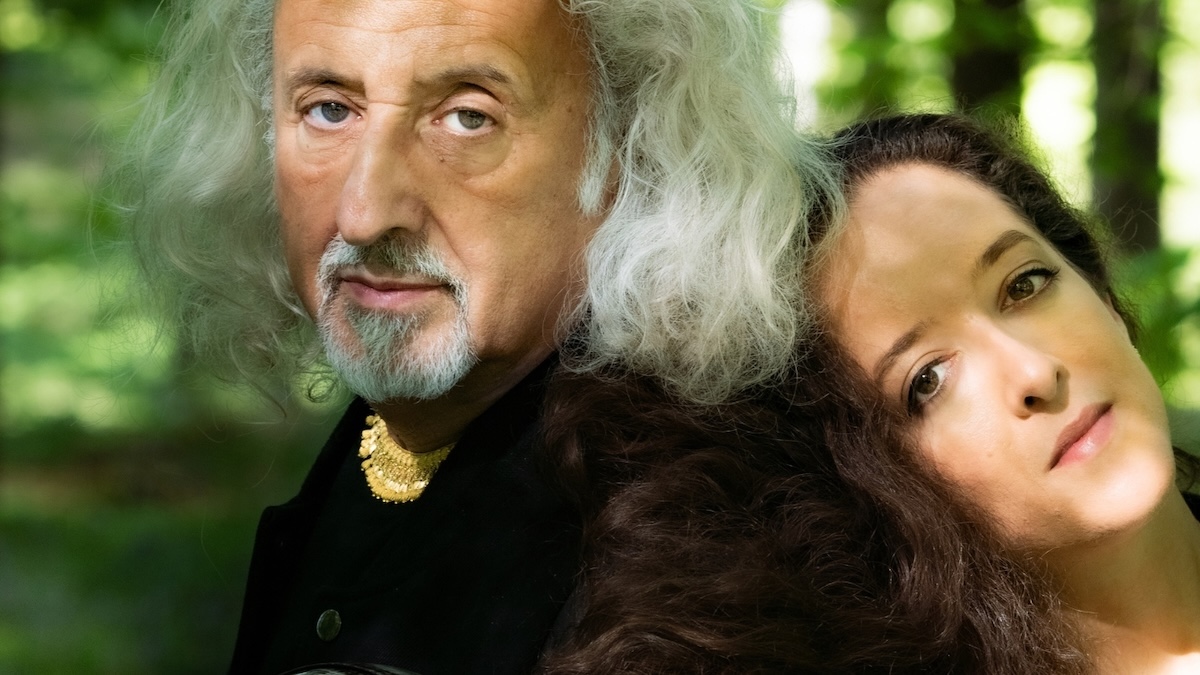
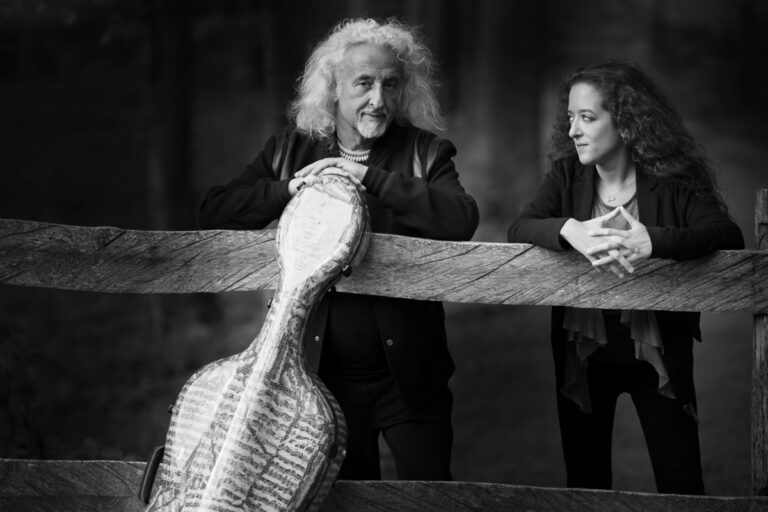
Mischa Maisky and Lily Maisky. Portrait supplied
Their first Australian tour as a father-daughter duo will take them to Melbourne, Sydney, Brisbane and Perth in November, with a program that moves from the intimacy of German song to the more turbulent territory of Russian music. Schubert, Schumann, Brahms and Mendelssohn feature in the first half; Rachmaninov and Shostakovich in the second.
For Maisky, the program fulfils a long-held ambition: a recital built around songs transcribed for cello and piano, allowing the cello to take on the expressive role of the human voice. The cello, he argues, is arguably the instrument closest to the human voice and carefully chosen vocal works can retain their expressive force without words, allowing the melody itself to communicate directly with listeners.
“I guess somewhere deep in my heart, I’m a frustrated singer,” he smiles.
A musical inheritance
Misha Maisky’s own musical lineage is formidable. Born and musically educated in the Soviet Union (where he also spent 18 months in a labour camp for buying a black market tape recorder), he went on to build an international career and a reputation for his rich instrumental tone and emotional intensity. He also studied with two giants of the instrument, Gregor Piatigorsky and Mstislav Rostropovich, and remains the only cellist to have studied with both.
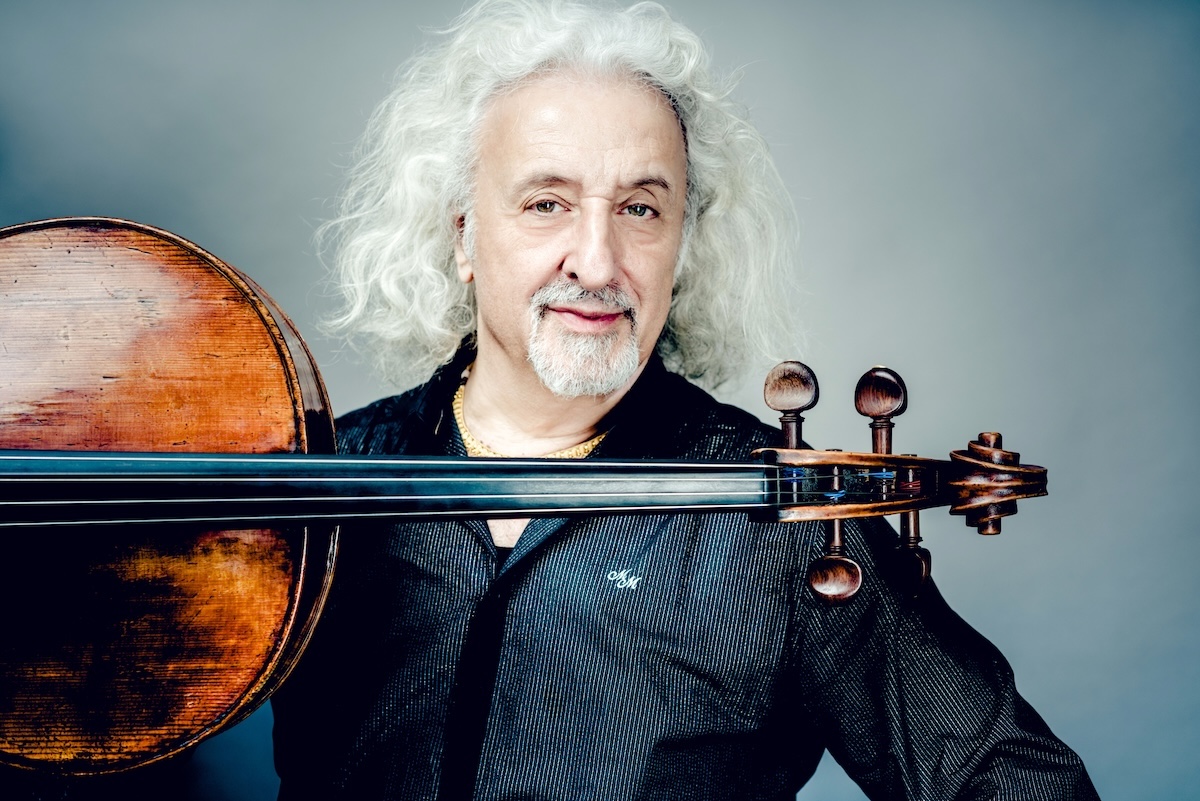
Mischa Maisky. Portrait supplied
Maisky’s career has included more than 35 recordings for Deutsche Grammophon, made with orchestras including the Vienna, Berlin and Israel Philharmonics, the London Symphony Orchestra and the Chamber Orchestra of Europe.
Paris-born Lily, meanwhile, has performed at major concert halls around the world and released recordings for Deutsche Grammophon, EMI and Avanti Classics. Despite what people might assume, she says, she wasn’t steered into a predetermined musical career. She and her siblings were encouraged, but within reason.
Did she ever want to rebel, Limelight asks?
“I actually wanted to become a writer when I was younger,” she says. “I was obsessed with reading. Now I can’t imagine doing anything else but playing music.”
Mischa chuckles. “You know, when I was a child I wanted as to become airplane pilot because at that time in Soviet Union the rumour was that airplane pilots were getting free chocolates.”
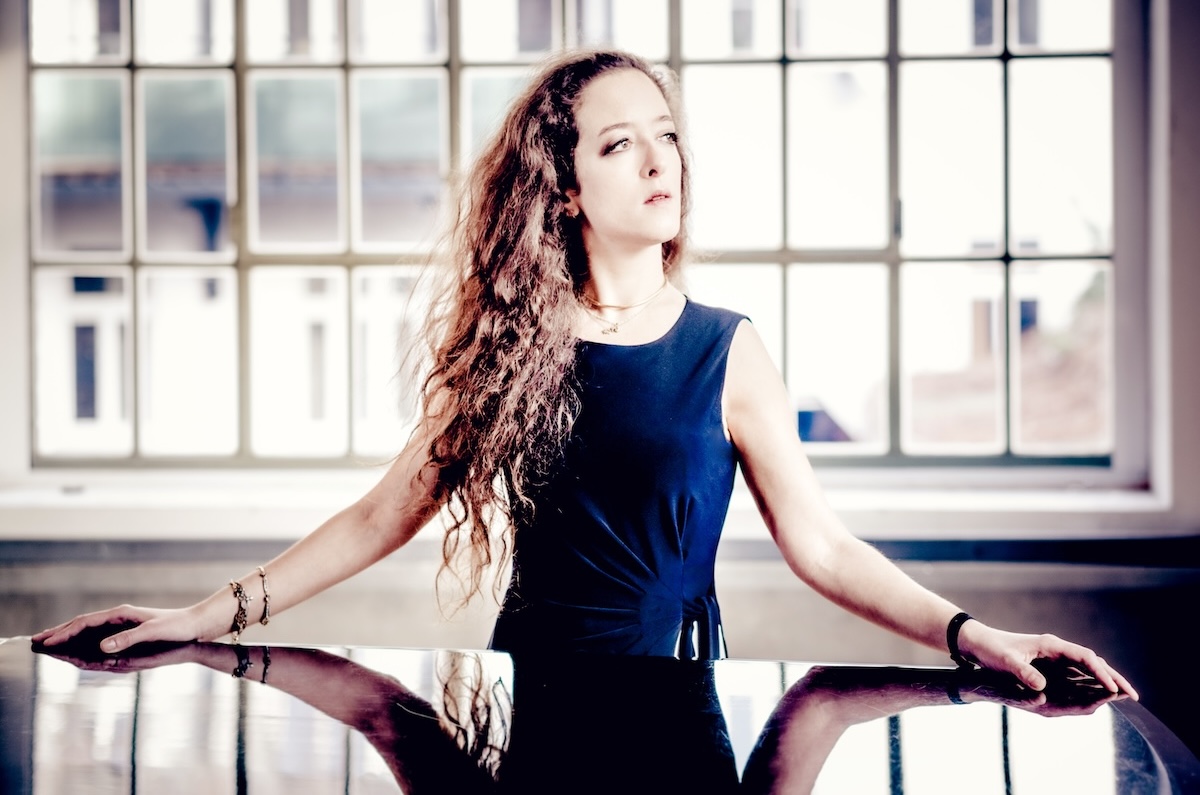
Lily Maisky. Portrait supplied
The idea to explore the ‘singing’ quality of the cello was one that arose organically between father and daughter. Maisky has long wanted to bring together a sequence of German Lied, parallel to Lily developing her own interest in the repertoire.
The program presented in Australia begins with Schubert songs including An die Musik and Du bist die Ruh, before moving to selections from Schumann’s Dichterliebe and Myrthen. Brahms’s Liebestreu and Immer leiser wird mein Schlummer deepen the emotional register, while Mendelssohn’s Lied ohne Worte continues the exploration of song without text.
Rather than treating each work as a separate item, Maisky prefers to link the pieces in a continuous sequence, allowing tonality and mood to guide the transitions.
“As much as we all enjoy, of course, the applause and appreciation of the audience, I prefer to leave it for the end,” he says.
Lily underlines the importance of experiencing the songs as a single musical arc. The words may be absent, but she believes the music can still reach its listeners.
The second half of the concert turns to Russia, with Maisky’s arrangements of Rachmaninov’s Mélodie and Vocalise, followed by Shostakovich’s Cello Sonata.
“I had privilege to actually meet Shostakovich myself on several occasions through my great teacher Rostropovich,” Maisky says. “Of course, I never met Rachmaninov, but his music is very close to my heart and to Lily’s.”
To prove the point, Lily scoops up her laptop to show Limelight a portrait of Rachmaninov on her living room wall, where she also hangs a close-up photo of his famous and magnificent hands.

Listening across generations
For Lily, one of the defining qualities of her father’s playing is the beauty of his sound, alongside the emotional commitment that has occasionally drawn criticism for its intensity.
Growing up with Maisky’s cello tone as her reference point, she says, she found it difficult as a child even to tolerate other cellists. Over time, that instinct has developed into a more conscious appreciation of what makes his playing distinctive.
Beyond the beauty of the sound, she admires his dedication to every note and every musical moment.
“I think maybe I got some of that as well,” she says. “Even when I’m practising alone, I’m fully involved in each note and each moment. And that’s what I find the most inspiring about him.”
And the cello makes three …
Maisky’s other longstanding musical partner is his cello, made around 1720 by the Venetian luthier Domenico Montagnana. He has played the instrument for more than 50 years, ever since it was given to him on permanent loan by an anonymous admirer following his 1973 Carnegie Hall debut.
“Every year on 29 November, I celebrate another anniversary of the day I met and fell in love with that beautiful instrument,” he says.
“Deep down, I’m a very faithful type, you know. I believe that perfection is the enemy of good. When you have something good and are always looking for something even better, you will never be happy. I’m incredibly lucky. I found ‘good’ and I stuck with it.”
Mischa & Lily Maisky perform on 6 November, Hamer Hall, Arts Centre Melbourne; 8 November, Concert Hall, Sydney Opera House; 11 November, Concert Hall, Queensland Performing Arts Centre, Brisbane and 15 November at Winthrop Hall, Perth.




Comments
Log in to start the conversation.